Let me start by saying something that might surprise you: most people who’ve worked with power transformers for years still don’t fully grasp how tap changers in step-up transformers actually operate. When I first started in the tap changer supply business a decade ago, I thought it was just a simple mechanism to adjust voltage—turns out, there’s a lot more to it, especially when your transformer is step-up, like the ones used in wind farms, hydroelectric dams, or thermal power plants. Back then, I’d been troubleshooting a faulty tap changer on a 2MVA step-up transformer at a local solar farm, and a client asked me, “Why can’t we just adjust the high-voltage tap without shutting the whole system down?” That question stuck with me, and it’s why I’ve spent years refining how I explain tap changer function to clients. Tap Changer
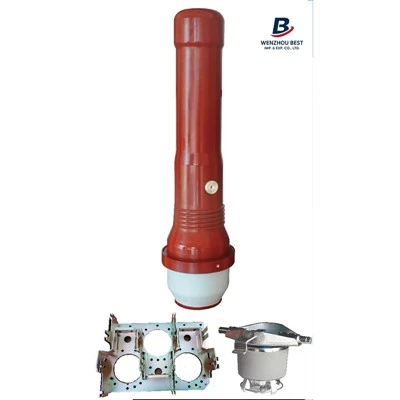
First, let’s ground this in what a step-up transformer does. Unlike step-down transformers, which lower voltage for distribution to homes and businesses, a step-up transformer takes the generated voltage from a power source (say, a wind turbine’s 690V output) and boosts it to transmission-level voltage—often 11kV, 33kV, or even 132kV—so it can travel long distances with minimal power loss. The key here is that the voltage ratio between the primary and secondary coils depends on the number of turns in each coil: V_secondary / V_primary = N_secondary / N_primary. If you want to increase output voltage, you either reduce the number of primary turns or increase the number of secondary turns. That’s where tap changers come in. A tap is a physical connection point on one of the transformer’s windings, designed to adjust the turns ratio without rewinding the entire coil. For step-up transformers, most taps are on the primary (low-voltage) side, because adjusting a lower-voltage coil is simpler and safer than working with high-voltage transmission lines.
Now, here’s where the engineering gets specific, and where I’ve seen too many operations teams cut corners. Tap changers aren’t just a set of switches that click between taps. They’re complex mechanisms that have to handle two critical problems: interrupting the load current smoothly and preventing arcing when the switch moves. Let’s break that down. When you shift from one tap to another, you’re changing the number of turns, which changes the voltage. But if you just flip a switch from tap 1 to tap 3 while current is flowing, you’d get a huge spark (arcing) that would burn the switch contacts and disrupt the power flow—no good, especially for a step-up transformer that’s feeding into a grid that can’t tolerate sudden voltage drops or spikes.
That’s why the tap changers we supply use a “resistor transition” design, specifically for step-up applications where load consistency is non-negotiable. Let’s walk through the cycle of a tap change, from start to finish, the way we train our technicians to walk clients through it. First, the tap changer gets a signal—usually from a SCADA system that detects a deviation in transmission voltage, or a manual control from an operator. The first step is to move the selector switch, which is connected to the fixed tap points, away from its current position. But before that selector can disconnect, a second switch (called the diverter switch) connects the current path through a pair of resistors. These resistors act as a temporary “bridge” between the old tap and the new one. For a split second, the current flows through both taps and the resistors, which equalize the voltage between the two points so there’s no sudden jump when the selector switches over. Once the selector is fixed on the new tap, the diverter switch breaks the connection to the old tap, and the resistors are disconnected. The whole process takes less than a second—fast enough that the grid doesn’t even register a voltage blip.
I once had a client in a wind farm in the Midwest tell me they’d been using a cheaper tap changer for three years, and every time they did a tap change, their grid voltage dropped by 2% for a few seconds, which made the wind farm’s inverters trigger temporary shutdowns. When we installed our resistor-transition tap changers, those shutdowns stopped entirely. That’s the kind of real-world impact I care about, because I’m not just selling a part—I’m solving a problem.
Now, let’s talk about why tap changers are especially critical for step-up transformers, compared to other transformer types. Step-up transformers operate in environments that are far more dynamic. A wind farm’s output changes with wind speed, a hydro plant’s output changes with water flow, and a thermal plant’s output varies with load demand. If the transmission grid’s demand changes, the utility might need to adjust the voltage coming into the grid—so the step-up transformer’s tap changer has to be responsive, but also reliable. A tap changer failure in a step-up transformer can shut down an entire power plant, which is why we test every tap changer we supply to withstand thousands of tap changes, even in harsh conditions. We also design our tap changers to be compatible with different transformer types: oil-immersed, dry-type, and even the large three-phase step-up transformers used in nuclear power plants.
Wait, I should address a common misconception here: some people think tap changers only adjust voltage for grid compatibility, but they also help extend the life of the transformer itself. If the generated voltage is too high, a tap change can reduce the primary turns, which lowers the secondary output, but it also reduces the stress on the transformer’s insulation. Over time, consistent overvoltage can break down transformer insulation, leading to costly repairs or replacements. A good tap changer keeps voltage within the manufacturer’s recommended range, so the transformer lasts longer. That’s a value-add that many clients don’t realize until they’ve had a transformer fail prematurely.
Now, let’s get into maintenance—because even the best tap changer needs upkeep, and I’ve seen more failures from lack of maintenance than from defective parts. For step-up transformers, which are often in remote locations (wind farms in the plains, hydro plants in mountain valleys), maintenance can be hard to schedule. That’s why our tap changers are designed for low upkeep, with sealed contact chambers that don’t need frequent oil flushing, and diagnostic sensors that send alerts if contact wear gets too high. We also provide clients with a maintenance checklist: every six months, check the tap changer’s control system for loose connections; every two years, test the transition resistors for continuity; every five years, do a full mechanical inspection of the selector and diverter switches. Last year, we had a client in Canada catch a worn contact on their tap changer during a routine check—if they’d waited another year, that contact would have burned through, and they would have had to shut down their 50MW hydro plant for a week. That’s the kind of proactive support we offer, beyond just supplying the part.
I want to be transparent about the challenges, too. No tap changer is 100% perfect, but the best ones minimize downtime. For example, if a tap changer does fail, you have two options: replace it or repair it. We offer both, but we always recommend replacement if the tap changer is more than 15 years old, because older models don’t have the resistor transition design we use, and they’re more prone to arcing. We also work with clients to upgrade their existing step-up transformers with our tap changers, which is a cost-effective alternative to replacing the entire transformer.
Let me circle back to that initial question I got a decade ago: why can’t you adjust the tap without shutting down the transformer? That’s because the old, unloaded tap changers (which don’t handle load current) do require a shutdown, but the tap changers we supply are on-load tap changers (OLTCs)—and that’s the key difference. On-load tap changers are designed to operate while the transformer is energized, which is non-negotiable for step-up transformers that can’t be taken offline. A wind farm can’t shut down every time the grid needs a voltage adjustment; a hydro plant can’t stop generating just to tweak a tap. That’s why OLTCs are standard for step-up transformers now, and why choosing the right one matters.
Here’s what I’ve learned from 10 years in this business: the best clients aren’t just looking for a tap changer—they’re looking for a partner who understands their specific application. A tap changer for a 1MW rooftop solar step-up transformer is different from one for a 100MW thermal power plant, and a tap changer for a remote wind farm needs to be more rugged than one for a urban substation. That’s why we take the time to ask clients questions: what’s the transformer’s rated capacity? What’s the operating environment? How often do you need to adjust the taps? No two setups are the same, so no one tap changer fits all.

If you’re dealing with a step-up transformer and you’re having voltage issues, or your current tap changer is giving you trouble, I want to be the person you talk to. I’ve helped hundreds of clients fix tap changer-related problems, from minor adjustments to full replacements, and I’d be happy to walk through your needs. Don’t hesitate to reach out to discuss your requirements.
600A Deadbreak Bushing References
- IEEE Std C57.13-2021, “IEEE Standard for Load Tap Changers for Power Transformers and Reactors”
- NEMA Standard TP 1-2018, “Load Tap Changers for Liquid-Immersed Transformers”
- Transformer Design Principles by Daniel A. Davies, CRC Press, 2018
- “On-Load Tap Changer Operations and Maintenance Guidelines,” Electric Power Research Institute (EPRI), 2020
- “Step-Up Transformer Application Guide,” International Electrotechnical Commission (IEC) Standard 60076-5, 2021
Wenzhou Best Imp. & Exp. Co., Ltd.
With abundant experience, Wenzhou Best Imp. & Exp. is one of the most professional tap changer manufacturers and suppliers in China. Please feel free to buy durable tap changer made in China here from our factory. Quality products and good service are available.
Address: Room 306, Building 14, Area C, Wuzhou Electrical Appliance City, No.3999, Liujiang Road, Liushi Town, Yueqing City, Wenzhou City, Zhejiang Province
E-mail: admin@bestenergytech.com
WebSite: https://www.besthvelectric.com/
