Hey there, fellow drillers, mine site managers, and anyone who’s ever dropped a chunk of cash on new drill rod tubes only to stare at your wallet wondering if that investment’s worth it. Let’s cut to the chase: I’m the guy who sells drill rod tubes—you know, the heavy-duty, hollow ones that are the backbone of every drilling operation, whether you’re chasing water for a small farm or core samples for a massive mine. And one question I get more than “what size tube do I need?” is this: Can a drill rod tube be reused after drilling? Spoiler alert: It’s not a flat yes or no, and there’s a whole lot of stuff you need to know before you decide to torch that old tube or toss it in the scrap bin. Let’s break it down like we’re hanging out in the equipment yard after a long shift. Tube for Drill Rod

First off, let’s get one thing straight—drill rod tubes aren’t like plastic water bottles or even steel pipe you’d use for fencing. They take a beating every single time you fire up the rig. When you drill, the tube’s twisting under torque, absorbing shock from the bit hitting rock, scraping against the hole walls, and sometimes even bending or getting nicked by hard, abrasive formations. So “reuse” here doesn’t mean just washing it off and sticking it back in the rack; it means checking for damage that could make it unsafe, ineffective, or a total waste of your time later.
Let’s start with the good news: A lot of drill rod tubes can absolutely be reused—if you do it right. I’ve seen guys pull a tube out of a soft sandstone hole, run a wire brush over it, check for cracks, and send it right back down. That tube’s still got plenty of strength left, right? But the problem comes when people skip the inspection step. Let’s talk about the big red flags you have to look for before even thinking about reusing a tube.
First, cracks. These are non-negotiable. I don’t care if it’s a tiny hairline crack on the outside or a deep split along the weld seam—cracks are a disaster waiting to happen. When you’re drilling, torque and downforce build up, and that crack can spread fast, leading to a broken tube stuck in the hole. Not only do you have to pull the whole drill string, but that stuck tube might cost you thousands in lost time, especially if it’s in a deep mine or a water well you can’t get to easily. I had a customer last year who tried to reuse a tube with a tiny crack he missed, and he ended up losing $2,500 in rig downtime. That’s a mistake you don’t want to make.
Next, bends. Drill rod tubes are made to be straight—super straight, actually, because if they’re even a little bent, they can throw off your drill angle, cause uneven wear on the bit, and even damage the rig’s head. I’ve seen guys try to “bend it back” with a pipe bender, but here’s the thing: Even if you get it straight, the metal’s been work-hardened. That means it’s weaker in the bent spot, so next time you drill, it might snap right there. Bends from hard formations or accidentally dropping the tube are the worst because you might not even notice they’re there until you’re a hundred feet down. Pro tip: Lay old tubes on a flat piece of metal or concrete and check for gaps under the middle—any gap means a bend, and that tube’s out.
Then there’s wear and tear from abrasive formations. If you’re drilling through something like granite, limestone with lots of quartz, or even gravel, the inside and outside of the tube get worn down. How do you check that? Grab a caliper and measure the wall thickness. Drill rod tubes have a spec wall thickness for a reason—if that thickness is 10% less than it should be, the tube’s structural integrity is shot. Think about it: A tube with a 0.5-inch wall, worn down to 0.45 inches, can’t handle the same torque and downforce as a new one. I had another customer who kept reusing tubes in a granite quarry, and he ended up with a tube that collapsed mid-drill, jamming the bit and ruining a $1,200 core bit. Total avoidable.
Wait, but what about light-duty drilling? Let’s say you’re drilling a small water well in your backyard, or doing some shallow soil sampling—can you reuse a worn tube there? Maybe, but with even more caution. Don’t use it for deep drilling, and definitely don’t use it in hard rock. Save the thin, worn tubes for shallow, soft ground where the stress is way lower. But for professional operations? No, that’s a no-go.
Now, let’s talk about the gray area—what happens if you have minor scratches or small nicks? Those aren’t the end of the world. A 1/8-inch scratch on the outside of a tube that’s still got full wall thickness? That’s fine. But if that nick is deeper than 1/16 inch, or it’s on the threaded end (the part that connects to the next tube), you need to fix it. Threaded ends get worn down from connecting and disconnecting, so if the threads are stripped or galled, you can rethread the end—no problem. But if the tube’s body has a deep nick, that’s a stress riser, and it’ll crack under pressure. I always tell customers: When in doubt, throw it out. It’s cheaper than replacing a whole drill string or dealing with a stuck hole.
Another thing a lot of people don’t think about is corrosion. If you’re drilling in wet conditions, or storing your tubes outside in the rain, they can get rusty. Surface rust? That’s easy to sand off, and as long as the wall thickness is still good, it’s fine. But if rust is pitting the metal—little deep holes all over the outside—that’s a sign the metal’s been compromised. Pitting means the tube’s weaker, and the rust can spread fast when you start drilling again. Store your tubes in a dry, covered area, and they’ll last way longer. That’s a simple maintenance step that makes reuse a lot easier.
Wait, let’s address a common myth: “If it’s not broken, fix it later and reuse it.” No, that’s not how drill rod tubes work. When a tube is working, it’s under constant cyclic stress—twisting, bending, stretching, repeating. Even a small flaw that’s not a problem today will grow with every drill run. So if you notice a crack or a bend, don’t wait to fix it—don’t reuse it at all. I’ve had customers who waited a month to fix a tiny crack, and by then, it was big enough that the tube was unusable anyway. Waste of time and money.
Now, for the good stuff: when reuse works great. If you’re operating in soft formations—like clay, sand, or unconsolidated soil—and you inspect each tube every time, you can get multiple uses out of a single rod. A lot of my regular customers do this, and it cuts their tube costs by 30% or more. They’ll pull a tube, clean it with a pressure washer, check for cracks, bends, and wall thickness, rethread the end if needed, and send it back out. But they never skip the inspection—never. That’s the key. Reuse isn’t about being cheap; it’s about being smart. If you cut corners on inspection, you’ll end up paying way more in repairs and downtime than you saved on reusing the tube.
Let me give you an example. Say a new drill rod tube costs $200. If you buy new every time, and you use each tube once, that’s $200 per hole. But if you inspect and reuse, and each tube gets used 3 times, that’s $66.66 per hole—huge difference. But only if you don’t have a failure. If you reuse a tube and it breaks, you’re looking at $200 for a new tube plus $1,500 in downtime. That’s $1,700 lost, which is way more than you saved. So it’s a trade-off, but the math works when you do it right.
Also, let’s talk about different types of drill rod tubes. Some are made for core drilling, some for water well drilling, some for mining. The ones for core drilling are usually thicker-walled because they need to handle harder rock, so their reuse window is a little smaller. The ones for water wells, which are often used in softer ground, can be reused more times. It’s important to match the tube to the formation you’re drilling in, because that affects how much wear it takes. That’s something I always help customers with when they’re ordering—make sure you’ve got the right tube for the job, so you can reuse it safely.
Wait, what about damaged tubes that can’t be reused? Can you recycle them? Absolutely. Steel is one of the most recyclable materials out there, so even if a tube is too bent or cracked to reuse, you can sell it for scrap, or cut it up and use it for other things on site—like stakes for holding down tents, or reinforcing something for construction. It’s not a total loss, which is a big plus.
Let me wrap this up. So to answer the original question: Can a drill rod tube be reused after drilling? Yes, if you inspect it thoroughly for cracks, bends, excessive wear, and corrosion, and only reuse it if it meets your spec requirements. No, if it has any of those flaws that compromise its structural integrity. Reuse is a great way to save money, but it’s not worth risking safety, downtime, or lost equipment.
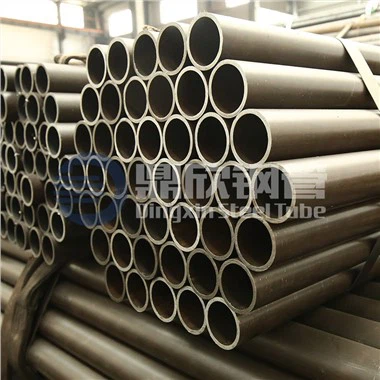
Now, if you’re looking for drill rod tubes that are built to last—tough enough to handle whatever formation you’re drilling, with clear specs for wall thickness, thread quality, and durability—hit me up. Whether you’re a small farm needing a few tubes for a shallow well, or a big mine with a whole fleet of rigs, I’ve got options that fit your budget and your needs. Don’t guess if your old tubes are safe to reuse—let’s talk through it, and we can help you figure out what’s worth saving, and what’s time for new.
Automotive Tube References:
- American Society of Mechanical Engineers (ASME) B106.1: Specification for Drill Rods and Hollow Drill Bars
- International Organization for Standardization (ISO) 10208: Drilling Equipment—Drill Rods
- National Drilling Association (NDA) Best Practices for Drill Rod Maintenance and Reuse
Zhejiang Dingxin Steel Tube Manufacturing Co., Ltd.
Zhejiang Dingxin Steel Tube Manufacturing Co., Ltd. is one of the most professional tube for drill rod manufacturers and suppliers in China. We have world-leading production equipment and strong manufacturing capabilities. Please feel free to wholesale high quality tube for drill rod at competitive price from our factory.
Address: Liuli Industrial Zone, Haiyan, Zhejiang Province, China
E-mail: sales@dingxintube.cn
WebSite: https://www.dingxinsteeltube.com/
