If you’ve ever walked through a processing plant, a factory floor, or an oil and gas refinery, you’ve probably seen all kinds of cables strung overhead—power cords, control lines, data cables, even Ethernet runs. And if you work with Fieldbus cables (which, let’s be real, is why you’re here), you’ve definitely wondered at some point: can I just run those bad boys overhead too? No digging through concrete, no trenching up the plant floor, no risking those tricky ground-level obstacles that trip up maintenance teams all the time. Fieldbus Cables

As a Fieldbus cable supplier, I get this question literally every week. And it’s not just from new guys trying to simplify installations—even veteran engineers who’ve been in the game for 20+ years hit a spot where overhead makes total sense. But the answer isn’t a straight yes or no. It depends on what kind of Fieldbus system you’re working with, the environment around the cable run, and how you actually install it. Let’s break this down like we would over a coffee at a trade show, no fancy jargon that makes you Google mid-sentence.
First, let’s refresh what Fieldbus is for, because that’s the base of everything. Fieldbus is that two-wire (sometimes four, but mostly two) communication line that connects sensors, controllers, actuators, and all the smart devices on an industrial site. It’s not like a regular power cable that just carries juice; it’s moving real-time data back and forth, so signal integrity is non-negotiable. If your cable drops, your temperature sensor’s readings are off, your valve doesn’t open when it’s supposed to, and suddenly you’re dealing with a whole mess of downtime.
Now, overhead runs—let’s define that quickly: strung on cable trays, hung from ceiling beams, tied to overhead pipes, that kind of thing. Most of the time, ground runs are the default because people assume overhead means more risk of damage, more signal interference, or just not compliant with standards. But that’s the old take. Modern Fieldbus cables are built way tougher than they used to be, and the trade-offs might just be worth it for your project.
Wait, but first—let’s talk about the hard no cases, because that’s where people get tripped up. If you’re in a super harsh environment: think extreme heat (like 180°F+ areas near furnaces or exhaust stacks), corrosive chemicals (chemical processing plants, fertilizer facilities where acid mist is constant), or outdoor runs where there’s constant UV exposure and big temperature swings. For these, overhead isn’t totally impossible, but you can’t just grab any Fieldbus cable off the shelf and hang it. You need plenum-rated, UV-stabilized, chemical-resistant Fieldbus cable—stuff designed specifically for overhead exposure. A regular, off-the-shelf general-purpose Fieldbus cable? It’ll hold up for maybe a year, tops, before the plastic jacket cracks from sun or corrosion, and that’s a safety hazard waiting to happen.
Another hard no: if your overhead run is going to be right next to high-power electrical cables or heavy machinery that causes tons of electromagnetic interference (EMI). Fieldbus operates on specific frequency bands, and if you’re running your Fieldbus cable 6 inches away from a 480V power line, that’s like trying to have a conversation in a rock concert. The signal will get garbled, data drops will be constant, and you’ll be troubleshooting for months. Even if you space them a few feet apart, but the power line is running constant variable frequency drive (VFD) power, that’s a big no-no. But here’s the caveat—if you use shielded Fieldbus cable and route it properly (separate from power cables per the NEC or IEC standards, which we’ll touch on later), this is avoidable. It’s not a hard rule that all overhead runs get EMI.
Now, the good stuff: when overhead Fieldbus runs are totally fine, and even better than ground runs. Let’s start with installation ease. If you’re retrofitting an old plant, digging trenches through existing floors or around heavy equipment is a nightmare. You have to rent excavation equipment, coordinate with maintenance teams to shut down areas, patch concrete, and that adds weeks to your project. Overhead runs? You can pull cable in a day or two, no digging, no disrupting operations. I had a customer last year at a food processing plant—they needed to add 50 new temperature and pressure sensors across a 100,000 sq ft facility. Ground trenching would’ve taken 3 weeks, cost $12,000 in labor and materials. Overhead, using our rated Fieldbus cable and proper cable trays, took 2 days, cost $2,800. They saved so much time they avoided a production delay that would’ve cost them $40,000 a day. That’s the kind of math that makes overhead runs worth it, no question.
Another big win: access for maintenance. Ground-level cables get kicked by forklifts, run over by pallet jacks, covered in spills, hidden under piles of supplies. If a cable fails on the ground, you have to move everything, clean the area, trace the run, and fix it—usually during a shutdown, which is costly. Overhead runs? They’re at eye level or higher, easy to inspect during routine checks, you can spot a frayed tie or a damaged cable before it fails. When our customer in that food plant had a minor cable issue a few months later, their tech just grabbed a lift, walked over, and fixed it in 10 minutes. If it was ground level, they’d have had to shut down an entire production line to move pallets and dig around.
But wait—you can’t just hang Fieldbus cable any old way. Installation best practices matter more for overhead than ground runs, because there’s nothing protecting that cable from falling, impact, or the elements. First, use approved cable trays or supports. Don’t just tie the cable to a random overhead pipe that’s vibrating nonstop—vibration is a silent killer of Fieldbus cables. Over months, constant vibration will wear through the jacket, fray the shield, and break individual conductors. We recommend using flexible cable trays with smooth edges (no sharp metal that can cut the jacket when you’re pulling) and securing the cable every 18 to 24 inches, not just a few spots every 10 feet. For runs longer than 50 feet, add a strain relief at both ends so the cable isn’t pulling on connection points when the building shifts (and buildings do shift a little, especially in areas with temperature changes).
Then, let’s talk about those standards I mentioned earlier—NEC in the US, IEC globally. The NEC Article 504 covers industrial control systems, including Fieldbus, and has specific rules for overhead runs. Basically, you can run Fieldbus cable overhead in cable trays, as long as it’s separated from power cables by at least 2 inches, or in a separate tray. If you’re running it exposed (not in a tray), you need to make sure it’s not accessible to unauthorized people, and that it’s not at risk of being hit by moving equipment. IEC 61158, which is the main Fieldbus standard, also endorses overhead runs for properly rated cables, as long as EMI and physical damage risks are mitigated.
What about common myths that make people scared to go overhead? Let’s bust a couple. First myth: overhead Fieldbus runs are way more prone to lightning strikes. Yeah, if you’re running it out in the open in an unprotected outdoor area. But if you’re running it inside a building, or in a properly grounded cable tray, that risk is practically zero. The metal tray acts as a Faraday cage, protecting the cable from lightning and nearby EMI. Second myth: the cable will sag and cause issues. Modern Fieldbus cables have a tensile strength way higher than they used to, and if you space the supports correctly, sag is minimal. Even for 100-foot runs, you might get an inch of sag at most, which doesn’t affect signal at all. We tested that last year on a 150-foot overhead run, no issues with signal integrity at all.
Wait, what about outdoor overhead runs? That’s a whole other ballgame, but it’s doable if you use the right cable. If you need to run Fieldbus between two buildings, overhead is way better than burying a direct burial cable that might get damaged by digging animals or construction. For outdoor overhead, you need UV-stabilized Fieldbus cable, and you have to use messenger wires to support the cable, so it doesn’t stretch or sag too much in wind or snow. We supply all that, too—we don’t just sell the two-wire core, we have the correct jacket material, tensile strength, UV protection for outdoor runs. I had a customer in a solar farm last year who needed to run Fieldbus between the control room and 20 inverter arrays spread across 2 acres. Overhead with messenger wires was the only way—burial would’ve required crossing underground power lines, and they couldn’t dig there. The cable has held up for 18 months in constant sun and temperature swings, no issues.
Now, let’s get real about the mistakes we see customers make when they go overhead. First, using the wrong cable. They grab a cheap general-purpose Fieldbus cable, think “it’s just wires, right?” and hang it. A year later, the jacket cracks, water gets in, signal drops, and they have to pull it all out. That’s a waste of money. Second, not separating it from power cables. We had a customer last quarter who ran their Fieldbus cable overhead right next to a VFD power line in a chemical plant. Within a week, all their valve actuators were glitching, and they had to re-run the whole cable. It was avoidable—just spacing or a shielded cable would’ve fixed it. Third, not securing the cable properly. Tying it with cheap zip ties that degrade in heat or sun, so the cable sags, rubs against metal edges, and frays. We recommend using nylon cable ties rated for industrial temperatures, or metal clamps for permanent runs.
So, wrapping this up: can Fieldbus cables be run overhead? The short answer is yes, 9 times out of 10—you just need to do it right. Use the correctly rated Fieldbus cable for your environment (general purpose for indoor, UV-stabilized for outdoor, chemical-resistant for harsh areas), install it properly in cable trays, separate it from power sources to avoid EMI, and follow the relevant standards. It’s often faster, cheaper, and more maintenance-friendly than ground runs, especially for retrofits or hard-to-dig areas.
If you’re sitting there thinking “this applies to my project, but I’m not sure what cable I need,” or “I’ve been having issues with my current overhead runs,” that’s what we’re here for. As a Fieldbus cable supplier, we don’t just sell you a spool of wire—we walk through your layout, point out potential EMI hotspots, recommend the right cable and installation method, and help you avoid those costly mistakes. We’ve been doing this for years, so we’ve seen every scenario from food plants to refineries to solar farms, and we can help you pick what works for yours.
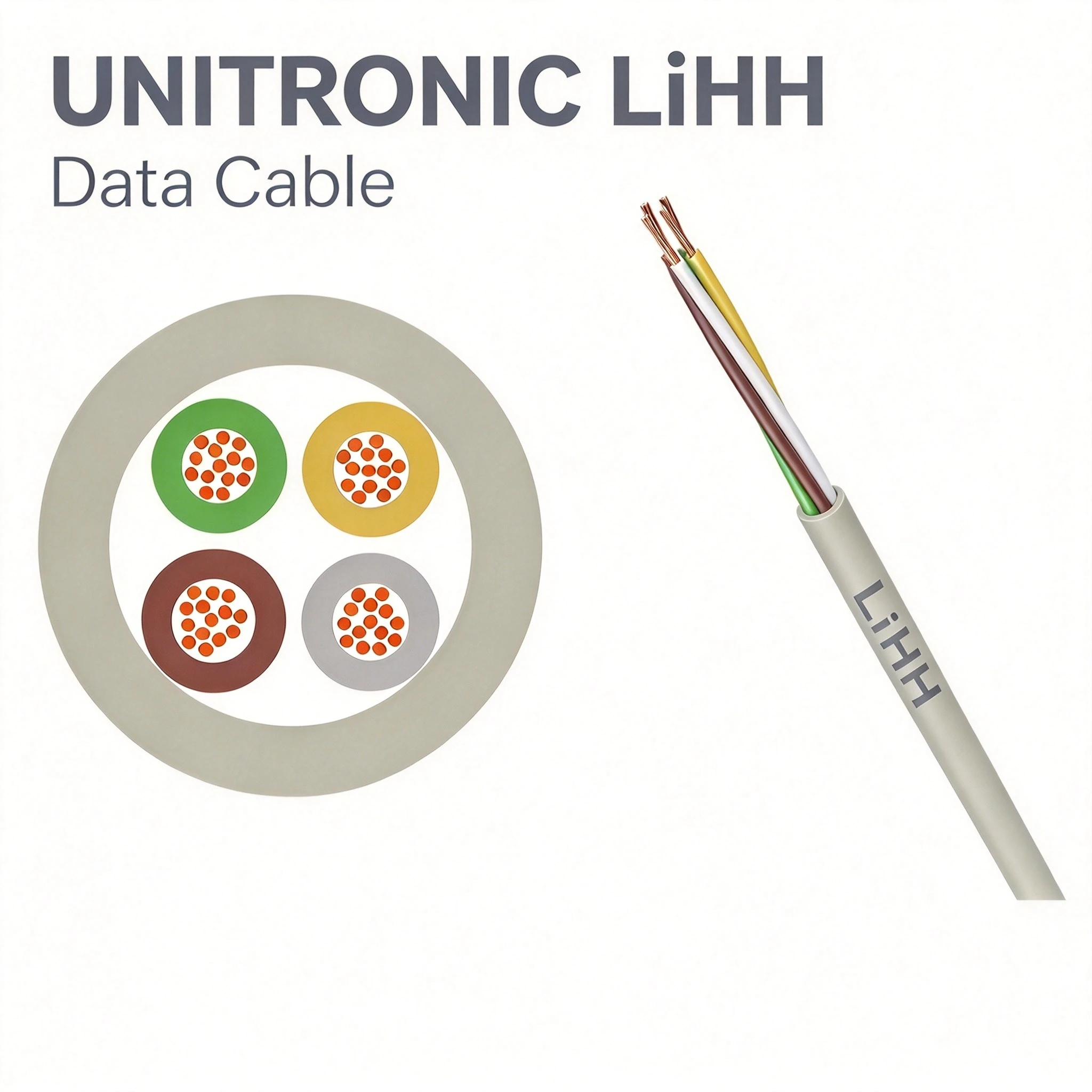
Don’t waste time and money on installations that cause downtime, or pulling out bad cable later. Reach out to us, tell me about your project—where you’re running the cable, the environment, any existing issues, and we can give you the straight scoop on whether overhead is the right move, and exactly what you need to make it work.
Signal Cables References:
National Electrical Code (NEC) Article 504: Industrial Control Systems
IEC 61158: Industrial communication networks – Fieldbus specifications
Fieldbus Foundation Installation Guidelines for Fieldbus Cables
Xiamen Kabasi Electric Co., Ltd.
Xiamen Kabasi Electric Co., Ltd. is one of the most professional fieldbus cables manufacturers and suppliers in China. With abundant experience, we are committed to providing high quality customized cables with competitive price. Please feel free to buy the newest fieldbus cables in stock here and get quotation from our factory.
Address: Third Floor, Building 6, Baochen Science and Technology Park, No.15 Dongfu West Road 2, Xinyang Street, Haicang District, Xiamen, China
E-mail: sale3@kabasi.cn
WebSite: https://www.kabasicable.com/
