If you’ve ever stood in front of a wood-fired pizza oven, watching a margherita pizza blister and char perfectly in 90 seconds flat, you might’ve wondered why that same pizza would turn soggy in a home oven set to the same temperature. The secret isn’t just the heat—it’s the stuff lining the inside of the oven. As someone who’s spent the last decade supplying pizza ovens to restaurants, food trucks, and backyard enthusiasts alike, I’ve lost count of how many times customers ask me why we don’t just use regular brick or some cheap concrete to line the interior. The truth is, pizza oven interior materials aren’t arbitrary; they’re the unsung heroes that turn a good pizza into a great one, and choosing the wrong one can kill your oven’s performance before you even fire it up for the first time. Pizza Oven

Let’s start with the basics: what does a pizza oven interior actually do? It’s not just a place to hold heat. A high-quality oven interior needs to retain intense, even heat, radiate that heat directly onto the pizza, resist thermal shock (the damage that happens when cold dough hits a super-hot surface), and stand up to years of exposure to wood smoke, grease splatters, and cleaning. Cut corners here, and you’ll end up with an oven that cracks after a few months, cooks uneven pies, or can’t reach the 800°F (425°C) minimum you need for Neapolitan-style pizza.
The most common material people associate with pizza ovens is fire brick, and for good reason. We’re talking about dense, refractory fire brick here—not the lightweight stuff you might use in a home fireplace. Refractory bricks are made from clay and other minerals that can withstand temperatures up to 3,000°F (1,650°C), far hotter than any pizza oven will ever reach. The density is key: a dense fire brick has more mass, which means it holds more heat, so when you slide a cold pizza peel into the oven, the surface temperature drops just a little instead of plummeting, which would slow cooking and lead to a soggy crust. I’ve seen cheap, lightweight fire brick fail repeatedly for our customers—they crack after a single winter of use, or can’t maintain consistent heat during a long service shift. That’s why at our company, we only use Grade 23 fire brick for our wood-fired ovens; it’s a standard in the industry for a reason, balancing heat retention, durability, and cost. It’s also porous enough to breathe a little, which allows moisture from the dough to escape instead of getting trapped on the surface, a small detail that makes a huge difference in crispiness.
Another material you’ll see, especially in high-end or commercial ovens, is refractory concrete, also called castable refractory. Unlike fire brick, which you stack like masonry, castable is a wet mixture of refractory cement, aggregate, and water that you pour into a mold to form a solid interior. Some customers prefer it because it creates a seamless surface—no gaps between bricks where ash or grease can get trapped, which makes cleaning easier. It also distributes heat more evenly across the oven floor, which is why many commercial pizza shops opt for it for their main cooking surfaces. That said, castable has a downside: it’s heavier, so it adds a lot of weight to the oven, and if it’s not mixed or cured properly, it can develop cracks from thermal shock over time. We only use castable for the floors of our commercial ovens, where even heat distribution for high-volume cooking is non-negotiable, and our team follows strict curing protocols to prevent that cracking.
Wait, what about those countertop ovens you see online that use stone for the interior? Pizzas stones have been popular for home use for decades, and for small, low-volume ovens, they work—sort of. Most pizza stones are made from cordierite, a mineral that can handle high temperatures. But here’s the catch: a stone is thin, so it can’t hold nearly as much heat as a 2-inch thick fire brick. If you’re cooking just one pizza at a time, that’s fine. But if you’re running a food truck and need to cook 10 pies an hour, a stone will cool down too fast, and you’ll end up with uneven cooking. Also, cordierite can crack if you expose it to rapid temperature changes—like sliding a cold peel with dough into a 800°F oven. That’s why, for any oven designed for regular use, a thick fire brick or castable surface is a better bet than a stone. We even recommend against using generic pizza stones in our high-performance ovens, because the thin surface can’t handle the consistent heat our ovens are built for, leading to premature failure.
There are a few other materials you’ll see used in niche ovens. Some small gas-fired pizza ovens use ceramic fiber insulation as a lining, but that’s mostly for insulation, not direct contact with heat. Ceramic fiber is great for keeping heat from escaping the oven’s outer shell, but it can’t stand up to direct contact with a hot pizza or wood embers—you’d end up with fibers all over your pies, which is a health hazard. That’s why it’s always used as a secondary layer, behind the main heat-facing surface.
Now, let’s talk about the mistakes we see customers make when choosing interior materials. The biggest one is going for the cheapest option. A lot of budget ovens use lightweight fire brick, which is cheaper to manufacture, but it crumbles after a few uses. I had a customer last year who bought a $500 countertop oven from a big-box store, and within three months, the interior brick had cracked so badly the oven wouldn’t hold heat. He reached out to us, and we explained that the $1,200 oven we supply uses Grade 23 fire brick, which is twice as dense and twice as durable. The higher cost upfront saves him from having to replace the oven every six months. Another common mistake is ignoring moisture permeability. If your oven interior is too non-porous, moisture from the dough can’t escape, leading to a soggy bottom. That’s why we test every oven we supply by baking a batch of margherita pizzas—if the crust is wet or undercooked, we adjust the interior material or thickness before it leaves our warehouse.
What about maintenance? A good interior material makes a huge difference in how easy your oven is to keep clean. Fire brick is porous, so grease splatters can get trapped in the surface over time, leading to smoke and off-flavors. That’s why we recommend a annual deep clean: scrub the interior with a stiff brush once the oven is cold, and for stubborn grease, use a small amount of baking soda and water. Castable surfaces are easier to wipe down, because their seamless surface doesn’t have gaps, but they’re also more prone to staining, which can affect flavor over years of use. Stones, as I mentioned earlier, are thin and need to be replaced when they crack, but they’re simple to clean—just scrape off burnt residue with a metal spatula.
As a supplier, we don’t just sell ovens—we stand behind the materials we use, because we know the difference they make. Last month, a pizzeria in downtown Chicago switched to our commercial wood-fired oven after their old oven’s castable interior cracked during a busy weekend. They told us their sales went up 20% in the first month because their pizzas were cooking evenly, with a crisp char on the bottom and soft, bubbly crust, instead of half-baked centers and soggy edges. That’s the impact of choosing the right interior material: it’s not just a construction detail, it’s a tool that makes your food better.
If you’re in the market for a pizza oven—whether you’re a restaurant owner looking to upgrade your line, a food truck operator needing something durable for the road, or a home baker wanting restaurant-level results—don’t overlook the interior materials. It’s the detail that will make or break your oven’s performance, and it’s the reason some pizzas taste like they came from a professional shop, not your kitchen.
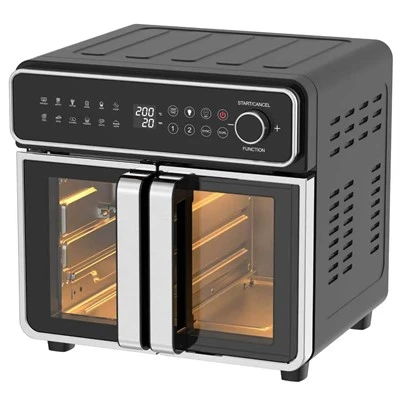
If you’re ready to discuss your needs, from small countertop models to large commercial installations, get in touch with our team to talk through which interior material is right for your space and how often you’ll use your oven. We’re here to help you pick the right oven that fits your budget and cooking style.
Pizza Oven References
- "Refractory Materials for High-Temperature Applications" by the International Fire Clay Association
- Pizza Oven Design and Performance, Journal of Foodservice Research, Vol. 12, No. 3, 2018
- "Cordierite Ceramics for Thermal Shock Resistance", American Ceramic Society Bulletin, Vol. 95, No. 4, 2016
- Wood-Fired Pizza Oven Construction, National Restaurant Association, 2020
Guangdong Qiaokang Electrical Appliances Co., Ltd.
As one of the most professional pizza oven manufacturers and suppliers in China, we have world-leading production equipment and strong manufacturing capabilities. Please rest assured to buy advanced pizza oven made in China here from our factory. Customized orders are welcome.
Address: No. 18, Jinxiang Road, Sanjiao Town, Zhongshan City, Guangdong Province
E-mail: sales01@gdboling.com
WebSite: https://www.qiaokanghome.com/
