Hey folks, let’s cut to the chase: if you’re in a space where standard fans rust out in months instead of years, you know corrosion-resistant fans aren’t a “nice-to-have”—they’re a lifeline. But here’s the thing I get questions about all the time (I’m the guy customers call when their current fan is already failing in a saltwater plant, chemical processing line, or marine rig): how do you actually calculate the CFM you need? Because guessing just leads to overpaying for a fan that’s overkill, or worse, underpowered to keep corrosive fumes (or moisture) moving, which equals faster decay. Corrosion-resistant Fan
First, let’s make sure we’re on the same page: CFM means Cubic Feet per Minute—straight-up the volume of air a fan moves in a minute. This isn’t just a random number; it’s tied to your specific corrosive environment, and if you skip a step, you’re setting yourself up for trouble. I’ve seen customers grab a fan with a “10,000 CFM” label and wonder why it can’t keep up with their outdoor chemical storage unit—turns out, they forgot to account for ductwork drag and that coastal salt air weighs more than dry office air.
Let’s break this down step by step, no fancy jargon, just stuff I’ve walked through with refinery techs, shipyard managers, and food processing folks (those wet, acidic washdown lines are rough on fans, by the way).
Step 1: Calculate Your Total Room Volume (The Easy Part)
First, measure the space you’re venting. This isn’t just “length x width x height” if you have weird nooks—if it’s a chemical processing tank farm with half-open bays, add in every enclosed nook and cranny where corrosive vapors can get trapped. Let’s use a real example: a 20ft long x 15ft wide x 10ft tall chemical mixing bay. That’s 201510 = 3,000 cubic feet. That’s your base number here.
But wait—if you’re dealing with super corrosive stuff, you don’t want to just change the air once. I recommend 8 to 12 air changes per minute for heavy-duty corrosive spaces (like acid storage or saltwater exhaust) and 4 to 6 for milder stuff (like a warehouse with occasional chemical fumes). Why? Corrosive air lingers—if you only swap it once, it’s like leaving a rust spot on a metal beam instead of pulling it out before it eats through. For that 3,000 sq ft mixing bay, 10 air changes would be 3,000 * 10 = 30,000 CFM. That’s your starting point, but this is where most people mess up—ductwork, obstacles, and air density change that number.
Step 2: Factor in Duct Pressure Loss (The Hidden Drag)
Most of the time, you’re not dealing with an open window—you’ve got ductwork running from the fan to the vent. Ducts aren’t frictionless. A short, straight duct with big diameter has almost no drag, but a long duct with bends, elbows, or small vents? That eats up CFM fast. I’ve had a customer with a 20ft duct with two 90-degree elbows go from a calculated 30,000 CFM to needing 35,000 CFM because those bends slowed the air down.
Here’s the quick rule of thumb: for every 10 feet of straight duct, add 10% to your base CFM. For every 90-degree elbow, add another 15% (45-degree elbows are half that, so 7.5%). And if you’ve got grilles or vents on the end? Add another 10%—those metal grates don’t just stop bugs, they resist airflow. Let’s go back to that mixing bay: if the duct is 25ft long, has two 90s, and a grille, that’s 25ft of duct = 25% add, two elbows = 30% add, grille = 10% add. Total drag is 65%—so take that original 30,000 CFM and add 65% = 49,500 CFM. That’s the minimum you need for the duct run in that space.
Step 3: Adjust for Corrosive Air Density (Not All Air Is The Same)
This is the part that gets overlooked a lot, especially for outdoor or heavy corrosive environments. Dry office air is light, but salt spray, acidic fumes, or hot, humid corrosive air is heavier. Heavier air means the fan has to work harder to move the same CFM—so you can’t use standard CFM numbers, you need to account for density.
Let’s keep that example: coastal chemical plant. The air here is 5% heavier than standard air (standard air is 0.075 lbs per cubic foot; coastal can be 0.07875 lbs). To adjust for that, multiply your CFM by 1.05 for coastal salt air, 1.1 for medium corrosive fumes (like sulfur from refineries), and 1.15 for super corrosive stuff (like hydrofluoric acid, which is nasty). That 49,500 CFM becomes 49,500 * 1.1 = 54,450 CFM. That’s your adjusted number right there.
Step 4: Don’t Forget Safety Margins (Fans Aren’t Set It And Forget It)
I always tell customers: don’t buy the exact number. Add a 10 to 15% safety margin. Why? Because over time, ductwork gets dirty—dust and corrosive residue build up in the ducts, making more drag. If you run at exact CFM, once that gunk builds up, your fan’s not moving enough air. Also, if you add a new piece of equipment to the space later, you don’t want to have to replace the fan right away. That 54,450 CFM gets boosted by 10% to 59,895 CFM. We usually round that up to 60,000 CFM for a fan in that bay.
Wait—let’s test this with another scenario to make sure it’s not just for chemical bays. What about a marine engine room? That’s heavy salt moisture, enclosed space, lots of exhaust. Let’s say that room is 4,000 cubic feet. Air changes? Marine engine rooms need a lot—15 air changes, so 4,000 * 15 = 60,000 CFM. Ductwork: it’s long (30ft) with three 90-degree elbows, so add 30% (for 30ft) + 45% (for 3 elbows) = 75% drag, so 60,000 * 1.75 = 105,000 CFM. Corrosive air? Super salt, so 1.15 adjustment, so 105,000 * 1.15 = 120,750. Safety margin 10%: ~132,825 CFM. A lot of guys would buy a 120k CFM fan and it’d die in a year because they skipped the adjustment and margin. I’ve seen that happen way too many times—don’t be that guy.
Common Mistakes I See All The Time
Let’s hit the stuff that trips people up, because even if you do all the math right, one small mistake messes it up. First: using standard CFM for high-corrosive spaces. If you’re dealing with sulfuric acid fumes, standard 60k CFM fan isn’t enough—those fumes eat away at the fan blades, but also, the air is heavier. Second: ignoring duct layout. A straight, 12-inch duct is way better than a 6-inch duct with two elbows. Smaller ducts = more drag = higher CFM needed. Third: not accounting for the space’s purpose. If it’s a semi-open space (like a loading dock for chemical drums), you don’t need the same air changes as a fully enclosed lab. Too many people just copy their neighbor’s number, which works for their facility but not yours.
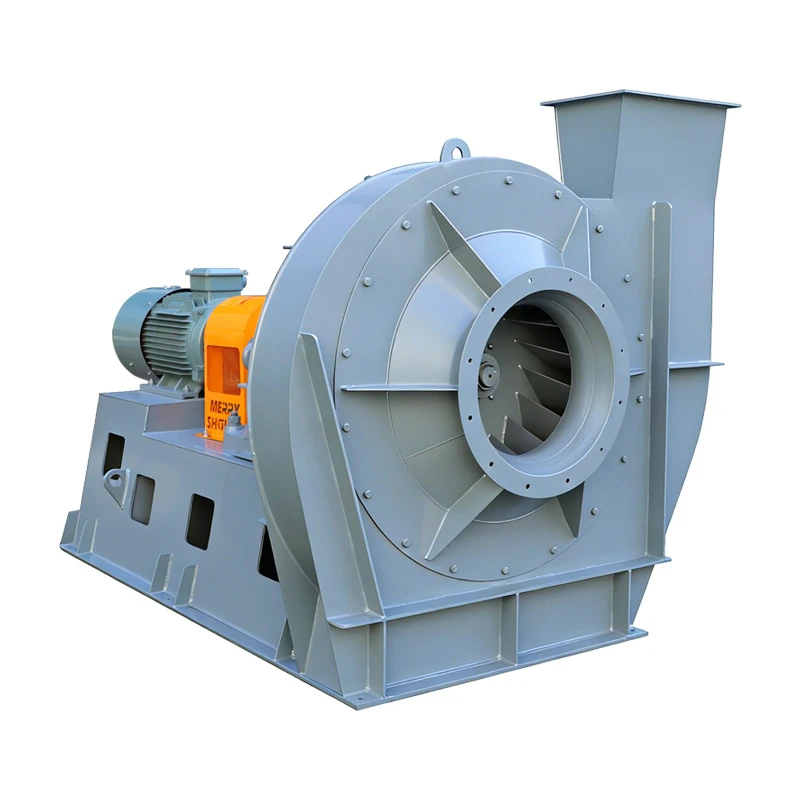
Another quick tip: if you’re using a centrifugal fan (the kind we make for corrosion-resistant jobs—they handle corrosive air way better than axial fans in most cases), the static pressure rating matters too, not just CFM. Static pressure is the resistance the fan has to push against, which is exactly that duct drag we talked about. So when you’re calculating, make sure your fan has a static pressure rating that matches the total drag you found—otherwise, even the right CFM number won’t work.
Why This Matters For Corrosion-Resistant Fans (Not Just Any Fan)
Standard fans have mild steel blades and motor housings that rust in corrosive environments, but even if you get that right, wrong CFM = the fan can’t move the corrosive air out fast enough. That air settles on the fan, eats away at parts, and you’re back to replacing the fan in 6 months instead of 5 years. We build corrosion-resistant fans with coated blades, stainless steel motors, and sealed housings, but they still need the right CFM to do their job. I’ve had customers come to us with a standard fan that rusted out in 3 months, got a corrosion-resistant one, but it was too low CFM so it still failed—because they skipped the math.
Now, let’s tie this back to what you should actually do next. Don’t just plug numbers into a calculator and hit go. If you’re not sure about your duct layout, air change needs, or how corrosive your air is, just reach out. We don’t do generic “10,000 CFM” fans for corrosion applications—we help you run the numbers specific to your space. Whether it’s a food processing washdown bay, a refinery tank farm, or a ship’s engine room, we’ve walked through this math with hundreds of customers, so I can help you skip the trial and error.
Wait, let’s recap that quick formula to make it easy to write down:
- CFM Base = (Room Volume) x (Recommended Air Changes per Minute: 4-6 mild, 8-12 heavy, 12-15 extreme)
- CFM Adjusted for Drag = CFM Base x (1 + (Duct Length/10)*0.1 + (Number of 90 elbows)*0.15 + (Grille/Vent)0.1)
- CFM Adjusted for Corrosive Air = CFM Drag Adjusted x (1.05 coastal, 1.1 medium corrosive, 1.15 extreme corrosive)
- Final CFM = CFM Corrosion Adjusted x 1.1 to 1.15 (safety margin)

That’s it. No fancy spreadsheets needed, just plug in your numbers.
Centrifugal Fan If you’re still staring at duct measurements or not sure what air change rate applies to your space, don’t guess. Corrosion-resistant fans are an investment—you don’t want to waste money on a fan that’s too small, or one that’s too big and wastes energy. We’ve got the expertise to run through your specific details, no sales pitch, just straight talk about what you need. Drop us a message or reach out to discuss your requirements, and we’ll walk through the calculation step by step to make sure you get the right fan that lasts.
References
- ASHRAE Handbook—HVAC Applications, Chapter 24: Ventilation for Industrial Processes (2021)
- Corrosion-Resistant Fan Selection Guide, Air Movement and Control Association International (AMCA), 2020
- Marine Ventilation Standards, International Maritime Organization (IMO) Resolution MEPC.181(59), 2008
- Food and Drug Administration (FDA) Guidelines for Washdown Ventilation in Food Processing Facilities, 2019
Nantong Nanyang Fan Manufacturing Co., Ltd.
As one of the leading corrosion-resistant fan manufacturers and suppliers in China, we also support customized service with low price. Please feel free to buy discount corrosion-resistant fan made in China here from our factory. For quotation, contact us now.
Address: North End of Jiuwei Port Bridge, Nantong City, Jiangsu Province
E-mail: nyfji@126.com
WebSite: https://www.nanyangfan.com/
