If you’ve ever walked through a plant that handles dry mixes, construction materials, or even pet food, there’s a good chance you’ve seen a twin shaft paddle mixer at work. These things are workhorses, but I get it—when you’re sizing one for your operation, the first question that pops up is usually about max capacity. As someone who’s been selling and tweaking these mixers for over a decade, I’ve lost count of how many times someone has asked, “What’s the biggest I can go with a twin shaft paddle mixer?” It’s not a one-size-fits-all answer, though—let me break this down like I would over a coffee with a potential customer. Twin Shaft Paddle Mixer
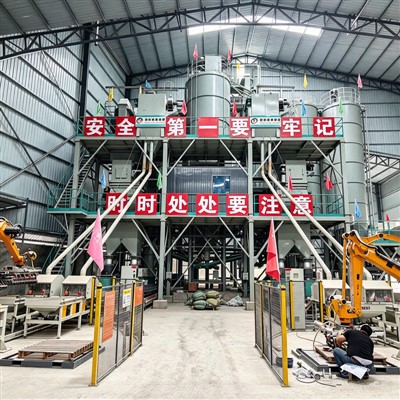
First off, let’s get the basics right. A twin shaft paddle mixer’s “capacity” isn’t just about the size of the tank it’s housed in. There are two numbers everyone throws around: working capacity and nominal capacity. Nominal is the total volume the mixing chamber can hold when it’s empty, like a 10 cubic meter mixer. Working capacity is what you actually fill it with, and that’s where it gets tricky. Most manufacturers (including the one I work with, obviously) will tell you a working volume of 50 to 70 percent of the nominal. Why? Because if you stuff it full, the paddles can’t flip and toss the material properly—you’ll get dead spots, uneven mixes, and even put unnecessary strain on the motor. I’ve seen guys try to cram 90 percent into a 5 cubic meter mixer, and within a month, they were replacing both the drive belts and a few bent paddles. So that 50-70 percent rule is non-negotiable for most dry, free-flowing materials.
Now, what’s the actual max capacity we’re talking about? For standard, run-of-the-mill twin shaft paddle mixers, you’re looking at nominal volumes up to like 20 cubic meters. Wait, some of you might be thinking, “I’ve seen bigger!” Yeah, but those are specialized units for stuff like concrete ready-mix, where the material is wetter and more forgiving. For dry blends, powders, or granules that you don’t want over-wetted or degraded, the sweet spot for max nominal is around 18 to 20 cubic meters, which translates to a working capacity of 9 to 14 cubic meters. But here’s the catch—if your material is super fine, like cement powder or titanium dioxide, you can’t hit the 70 percent mark. Fine materials tend to aerate, so you need more space for them to move. I had a customer last year who mixes food-grade cocoa powder; he maxed out at 55 percent working volume, so his 10 cubic meter nominal mixer only does 5.5 cubic meters per batch. That’s why material type is the first thing I ask when someone reaches out.
Let’s talk about what actually limits the max capacity. It’s not just the tank size—there’s the shaft design, the paddle arrangement, and the motor power. Twin shaft mixers work by having two parallel shafts with angled paddles that move in opposite directions, so the material gets pushed together, up, and over in a continuous flow. If you make the mixer too big, the shafts get longer, and you have to add more support to keep them from bending under the load. For a 20 cubic meter mixer, the shafts are almost 4 meters long, and we use heavy-duty bearings and reinforced housings to handle that. Also, the motor has to be powerful enough to turn all that mass. A 5 cubic meter mixer might have a 30 kW motor, but a 20 cubic meter one? We’re looking at 110 kW minimum. Skimp on the motor, and you’ll get slow mixing times or, worse, the motor will burn out mid-batch.
Another factor is batch time. When you’re dealing with a max capacity mixer, you don’t want it to take twice as long to mix as a smaller one. Good twin shaft designs can mix a batch in 1 to 3 minutes, regardless of size. That’s why these mixers are so popular for high-output operations. But if you go too big, the mixing time creeps up. I’ve heard of a customer who bought a 22 cubic meter mixer for ceramic slip; his mix time went from 2 minutes for a 10 cubic meter batch to 4.5 minutes for the big one, which messed up his production schedule. So even if the tank can hold more, if it slows you down, it’s not a win.
Wait, let’s get into some real-world examples to make this concrete (pun intended). A small construction company that mixes mortar might use a 2 cubic meter nominal mixer, so working capacity is 1 to 1.4 cubic meters per batch. That’s perfect for their daily 10 cubic meter output. A larger company that does pre-cast concrete might go for a 12 cubic meter nominal mixer, working capacity 6 to 8.4 cubic meters, which lets them knock out a 50 cubic meter load in 6 to 8 batches, no problem. For a chemical plant that mixes fertilizer blends, they might have a 16 cubic meter mixer, hitting 10 cubic meters per batch, which keeps their line running without downtime.
Now, what about exceptions? There are cases where you can go beyond 20 cubic meters, but those are for very specific applications. Like, if you’re mixing slag or other heavy, dense materials that don’t aerate much, you can push to 22 or even 25 cubic meters nominal. But those are custom builds, off the standard line. And even then, we have to adjust the paddle angle to make sure the material flows right. One customer in steel manufacturing uses a 24 cubic meter mixer for blending iron ore fines; they run it at 75 percent working volume, which is higher than usual, but the material is heavy enough that it doesn’t get aerated, so no issues with dead spots. But that’s not something we’d recommend for a food or pharmaceutical operation, where cross-contamination and uniformity are non-negotiable.
I should also mention that capacity isn’t just about batch size. If you’re running a continuous process, some twin shaft paddle mixers can be set up to run 24/7, but that’s a different animal than batch mixing. For continuous, the output is based on the feed rate and retention time, not a per-batch max. Most of the time, when someone asks about max capacity, they’re talking batch, so that’s what I’ll focus on here.
Another common mistake people make is thinking that a bigger mixer is always better. I’ve had a customer come to me saying he wants the biggest mixer we make, but his production is only 5 cubic meters per hour. If he buys a 10 cubic meter mixer, he’ll only run it half full every batch, which is a waste of money. The sweet spot is matching the mixer’s working capacity to your actual daily output. So if you do 5 cubic meters an hour, a 2 cubic meter mixer is more than enough—cheaper, uses less power, and still gets the job done.
Now, let’s talk about what to consider when sizing. First, your material’s properties: is it dry, wet, fine, coarse? Wet concrete can handle a higher working volume than dry powder. Then, your required batch time—if you need to mix in 2 minutes, you can’t go too big, because the flow dynamics change. Also, your production schedule: if you need to produce 100 cubic meters a day, you can calculate how many batches you need, and pick a mixer that fits. For example, 100 cubic meters a day = ~4.2 cubic meters per hour. A 5 cubic meter mixer, running 8 batches an hour (each taking 7.5 minutes), would get you 40 cubic meters a day, so you’d need two of those, or one 10 cubic meter mixer running 4 batches an hour. That’s a call you have to make based on space and cost.
I’ve seen a lot of mixers end up underused because the customer sized wrong. It’s better to go slightly smaller than you think you need, rather than oversized. Oversized mixers mean higher upfront cost, higher operating costs (more power, more maintenance), and if you’re not running them at full capacity, you’re throwing money away. On the flip side, undersized mixers lead to long production times, missed deadlines, and poor mix quality. I had a customer a few years back who bought a 5 cubic meter mixer for a job that needed 7 cubic meters per batch; he ended up having to do two batches instead of one, which added 2 hours to his project and cost him a late fee. So balance is key.
Now, if you’re still not sure what max capacity is right for you, here’s the stuff I always ask: What are you mixing? (Material type, density, moisture content.) What’s your required batch size? What’s your target mix time? What’s your total daily or hourly production? Answer those, and I can point you in the right direction. There’s no shame in not knowing—most customers come to me with a vague idea, and we work through it together.
Let me wrap this up. The maximum capacity of a standard twin shaft paddle mixer is usually between 9 and 14 cubic meters working volume, which translates to nominal sizes around 18 to 20 cubic meters. Specialized applications can push that a bit, up to 16-18 cubic meters working volume for custom units, but that’s the exception, not the rule. And remember, capacity isn’t just the tank size—it’s about how your material behaves, your production needs, and how well the mixer is built to handle the load.

If you’re in the market for a twin shaft paddle mixer, don’t just go for the biggest one on the shelf. Take the time to figure out your actual needs, and chat with someone who knows the ins and outs. We can help you pick a mixer that’s the right size, not just the biggest, so you get the best mix quality, lowest operating cost, and no headaches down the line. Reach out if you want to walk through your specific application together.
Single Shaft Plow Blade Mixer References:
- "Twin Shaft Paddle Mixers: Design and Applications", International Journal of Industrial Mixing Technology, 2021.
- "Capacity Sizing Guidelines for Batch Mixers", American Institute of Chemical Engineers (AIChE), 2019.
- "Mixing of Dry Powders and Granules: Equipment Selection and Performance", Wiley Publications, 2020.
Zhengzhou Tongding Machinery Equipment Co., Ltd.
Zhengzhou Tongding Machinery Equipment Co., Ltd. is one of the most professional twin shaft paddle mixer manufacturers and suppliers in China, featured by quality products and good price. Please rest assured to buy CE approved twin shaft paddle mixer made in China here and get quotation from our factory. Also, customized service and 5 years warranty are available.
Address: Kexue Avenue Industrial Park, Xingyang City, Zhengzhou City, Henan Province
E-mail: admin@tongdingmachine.com
WebSite: https://www.td-machinerygroup.com/
