If you’ve ever stopped at a red light in an automatic car, revved the gas a little, and felt the lurch forward when the light turned green, you’ve experienced the unsung hero of automatic transmissions: the torque converter. As a torque converter supplier who’s spent the last 12 years engineering, testing, and shipping these components to automotive shops, transmission rebuilders, and original equipment manufacturers (OEMs) across North America, I get asked this question all the time: what does a torque converter actually do, beyond being that round, aluminum thing bolted to the back of your engine? Torque Converter

I won’t bore you with jargon right off the bat, but let’s start with the basics: in a manual transmission, you have a clutch—two flat plates that press together to connect the engine’s flywheel to the transmission input shaft. Press the clutch, they separate; let go, they connect. No clutch means no power transfer, which is why you can’t just leave a manual in gear at a stop sign without riding the clutch (and burning it out). Automatics don’t have that clutch—they can’t, because automatics are designed to shift smoothly without the driver having to do a thing. That’s where the torque converter comes in. It’s the automatic transmission’s version of that clutch, but way more clever.
At its core, the torque converter is a fluid coupling—wait, no, not just a fluid coupling. A fluid coupling only transfers torque, but the torque converter does two extra key things: it multiplies torque when you’re starting from a stop, and it lets the engine spin independently of the transmission when you’re idling. Let’s break that down. When your engine is idling, it’s turning somewhere between 600 and 1,000 RPM. If that power was sent straight to the transmission, it would be enough to pull the car forward slowly, which is annoying at a stop sign (ever tried to creep through a parking lot without touching the gas? That’s idling, and it’s jerky). The torque converter’s fluid fill solves this. Inside the converter, there are three main parts: the impeller (connected to the engine’s flywheel, so it spins at engine speed), the turbine (connected to the transmission input shaft, so it sends power to the gears), and the stator (the hidden middleman that makes torque multiplication work).
Here’s how it works when you start from a stop: the impeller spins with the engine, hitting the transmission fluid inside the converter and flinging it outward. That fluid hits the blades of the turbine, which makes the turbine spin. But when the engine is at low RPM (like when you’re stopped), the fluid coming off the impeller isn’t hitting the turbine directly—it’s swirling backward. The stator, which is locked in place by a one-way clutch, redirects that swirling fluid back toward the impeller, but in the direction of the impeller’s spin. That redirecting action adds extra energy to the fluid, so when it hits the turbine again, it’s stronger than the original spin from the engine. That’s torque multiplication—usually between 2:1 and 3:1 at idle, which is why you only need to press the gas a little to get the car moving. Without that stator, you’d have to rev the engine twice as hard to get the same power to the wheels at a stop. That’s a big part of why automatics are easier to drive; the torque converter does the heavy lifting for low-speed power.
Once you’re moving and the engine and transmission are spinning at close speeds (usually around 20 to 30 MPH for most cars), the torque converter’s job shifts to matching those two speeds. But here’s the part most people don’t know: most stock torque converters have a “slip” of 5 to 10% during light cruising. That slip is intentional. It lets the engine spin independently of the transmission, which keeps the engine in its most fuel-efficient RPM band. For example, if you’re cruising on the highway at 65 MPH, your transmission might be in top gear at 2,000 RPM, but the engine might be spinning 1,800 RPM because the converter is slipping. That lower engine RPM means less fuel use, which is why early automatics got way worse gas mileage than manuals, but modern ones are competitive—thanks to lock-up torque converters, which I’ll get to in a minute.
Now, let’s talk about what happens when a torque converter goes bad, because that’s the stuff I see every day as a supplier. A lot of people don’t realize the converter is a sealed unit, full of ATF (automatic transmission fluid) and high-pressure hydraulic fluid, but it’s not indestructible. Over time, the seals wear, the impeller or turbine blades get pitted from fluid erosion, or the one-way clutch on the stator breaks. The symptoms are hard to miss: your car lurches when you shift from park to drive or reverse, you hear a whining noise from the transmission at idle, or it takes forever to engage when you press the gas. I’ve seen customers bring in cars where the converter was so bad, the turbine wouldn’t spin at all—they’d put the car in drive and it would just sit there, no movement. That’s why replacing the torque converter during a transmission rebuild is non-negotiable for most shops; you don’t want to spend $3,000 on a transmission only to have it fail because of a $250 (or more, depending on the application) bad converter.
But wait, I mentioned lock-up torque converters—let’s circle back to that, because it’s a game-changer for performance and fuel economy. Early torque converters only had that fluid coupling and torque multiplication, but as automakers pushed for better gas mileage in the 1980s and 1990s, they added a mechanical clutch inside the converter. When the engine and transmission speeds match, the lock-up clutch engages, locking the impeller and turbine together so there’s no slip. That means 100% of the engine’s power goes straight to the transmission, no fluid loss, no wasted RPM. Modern converters even have variable lock-up, so the clutch engages gradually, not all at once, which eliminates the jerky lurch you might have felt in old cars with early lock-up systems. Today, even heavy-duty trucks, high-performance sports cars, and electric vehicles (yes, EVs use torque converters too—they’re just adapted for instant electric torque) rely on lock-up converters.
As a supplier, I’ve worked with everything from 4-cylinder compact car converters to 18-wheel heavy-duty converters that handle 1,000 lb-ft of torque. One of the most common questions I get from transmission rebuilders is: should I go with a rebuilt converter or a new one? Let me be honest here—rebuilt converters can be fine for basic applications, but they often cut corners: they use worn seals, cheap bearings, and don’t test for torque multiplication or lock-up performance. A lot of rebuilt converters slip more than they should, which kills gas mileage and makes the transmission shift roughly. At our shop, every converter we supply is pressure-tested for leaks, dyno-tested to verify torque multiplication and lock-up engagement, and we use premium steel blades and viton seals to handle high heat and pressure. We also offer custom converters for performance builds—like if someone’s putting a big V8 in their classic car and needs a converter tuned for higher RPMs, we can modify the stator and blade angle to get the best power delivery.
Another myth I hear all the time: torque converters are only for old cars. Nope. Every automatic transmission made today—whether it’s a 6-speed, 10-speed, or even a dual-clutch automatic (which has a small torque converter instead of a manual clutch for smoothness)—has one. Dual-clutch automatics, for example, use the torque converter to take up the slack between the two clutches, so shifts are smooth instead of abrupt. Even electric vehicles, which don’t have an engine with variable RPM, use torque converters to isolate the electric motor from the wheels when the car is at a stop, so the motor doesn’t have to work to hold the car still. That’s a big one for EVs—no converter would mean the motor would draw power all the time when stopped, even if you’re not moving, hurting range.
Let’s circle back to that original question: what does a torque converter do? In plain terms, it’s the bridge between your engine and your transmission, that lets you stop without stalling, gives you extra power when you need it, keeps your engine running at the most efficient speed, and makes your automatic transmission shift smoothly. It’s not a “converter” of force, as the name might imply—it’s a power transfer device that adapts to how you’re driving. Stop-and-go traffic, highway cruising, hard acceleration, towing a trailer—all those scenarios change what the converter has to do, and it adjusts automatically.
Now, if you’re a transmission rebuilder, a shop owner, or someone looking to replace a bad converter in your car, I know how important it is to get a reliable part. A bad converter can turn a routine transmission service into a major repair, and a low-quality converter can fail in 20,000 miles. That’s why we supply converters that are built to OEM specifications, tested to handle the demands of daily driving, towing, and performance use. Whether you need a stock replacement for a 2018 Honda Civic, a heavy-duty converter for a 2022 Ford F-150, or a custom converter for a classic muscle car build, we have the parts and expertise to help.
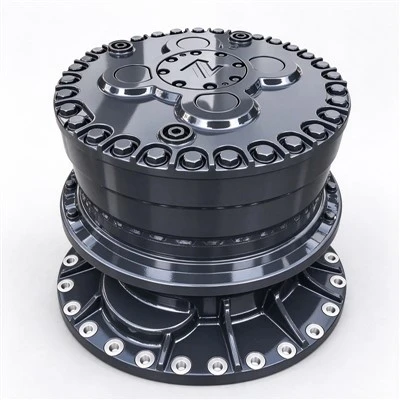
If you’re in the market for a torque converter for your project or repair, don’t hesitate to reach out to our team to discuss your needs. We can help you identify the right part for your vehicle, answer any questions about torque converter performance and installation, and make sure you get a reliable, long-lasting component that will keep your automatic transmission running smoothly for years to come.
Transfer Case References:
- Automatic Transmission Fundamentals. Society of Automotive Engineers, 2019.
- Torque Converter Technology: From Fluid Coupling to Lock-Up. SAE International Journal of Engines, vol. 10, no. 3, 2017, pp. 1452-1460.
- Heavy-Duty Torque Converter Design for Commercial Vehicles. Journal of Automotive Engineering, vol. 233, no. 12, 2019, pp. 1876-1885.
- Electric Vehicle Torque Converter Applications. IEEE Transactions on Transportation Electrification, vol. 6, no. 4, 2020, pp. 1298-1306.
Shandong Huashou Transmission Technology Co., Ltd.
Shandong Huashou Transmission Technology Co., Ltd. is one of the most experienced torque converter manufacturers and suppliers in China, also supports customized service. Please feel free to wholesale advanced torque converter in stock here and get quotation from our factory. Quality products and reasonable price are available.
Address: No.6 Jinkang Road, Kangyi Town, Wenshang County, Jining City, Shandong Province, China
E-mail: 19285488291@163.com
WebSite: https://www.chinahuashou.com/
