As a wood chipper machine supplier, I often get asked by customers – from small-scale tree service operators to large landscaping companies – about the differences between the various types of chippers on the market. It’s a valid question, because choosing the right chipper isn’t just about horsepower or price; it’s about matching the machine to the work you do, the materials you process, and the volume you handle. Over the 12 years I’ve been in this industry, I’ve seen first-hand how picking the wrong chipper leads to frustration, downtime, and wasted money. That’s why I’m breaking down the main types of wood chippers, how they work, and what each is best for – so you can make an informed choice before you buy. Wood Chipper Machine
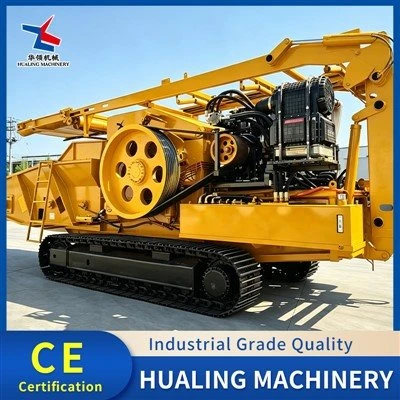
First, let’s start with the most common classification people hear about: drum chippers vs. disc chippers. These two are the heavyweights of the wood chipper world, and every other type I’ll cover branches off from one of these two designs. Let’s dive into drum chippers first, because they’re often the go-to for many of our regular customers. A drum chipper gets its name from its central rotating component – a thick, cylindrical drum, usually made from hardened steel, that holds two or more sharp, replaceable chipping blades. When the drum spins (typically 500 to 1,000 revolutions per minute, depending on the model), branches and logs are fed into a hopper, and the blades pull the material against a curved anvil plate, shearing off uniform wood chips. The key here is the drum’s design: it’s built to handle uneven, dense, or large-diameter materials, like whole logs up to 18 inches in some industrial models.
What makes drum chippers stand out is their versatility for mixed material loads. Many of our tree service clients love drum chippers because they can process a mix of softwood branches, hardwood logs, and even small stumps (with the right attachments) without too much adjustment. They’re also more forgiving if you accidentally feed in a small amount of non-wood debris, like nails or rocks, though we always warn customers to remove foreign materials first to prevent blade damage. The downside? Drum chippers tend to produce a wider range of chip sizes – from ½ inch up to 2 inches – and they’re a bit louder and heavier than disc chippers of the same horsepower. That said, for jobs where you need to process a mix of materials quickly, drum chippers are hard to beat. A lot of our mid-sized commercial models – like the 24-inch drum chipper we supply to municipal parks departments – balance power with maneuverability, making them ideal for jobs that move between urban sites.
Now, disc chippers – the other main type. A disc chipper’s rotating component is a large, flat steel disc (often 2 to 4 feet in diameter) lined with blades that project outwards from the center. Unlike drum chippers, disc chippers rely on the disc’s high RPM (usually 1,000 to 2,000 RPM) to generate force. When material is fed into the hopper, it’s pressed against the spinning disc, and the blades cut the wood against a stationary anvil, resulting in much more uniform, consistent chips. That uniformity makes disc chippers the top choice for applications where chip size matters – like mulch production, which requires chips of a specific size to decompose evenly or look neat for landscaping.
Disc chippers are also lighter and more compact than drum chippers of equivalent power, which makes them popular for small to mid-scale operations. But they have a catch: disc chippers struggle with very large logs or dense, knotty wood. The disc’s flat design doesn’t wrap around material the way a drum does, so large-diameter logs can get stuck or require more force to process. We often recommend disc chippers for residential landscapers, or for businesses that focus on softwood materials like pine branches, rather than heavy hardwood logs. Another point to note: disc chippers produce finer chips, which might be a plus or minus depending on your end use. For compost, finer chips decompose faster, but for erosion control, slightly coarser chips are more durable.
Beyond these two core types, there are several specialized wood chipper machines that serve specific niches, and I get a lot of questions about these too. Let’s start with horizontal feed chippers. Wait, is that a separate type? Actually, horizontal feed is a feeding mechanism that’s used with both drum and disc designs, but it’s worth calling out because it’s a key differentiator from the other common feeding setup: vertical feed. Horizontal feed chippers have a flat, elevated feeding table where you place logs or branches, which are then pushed horizontally into the cutting chamber by a hydraulic ram. This design is perfect for large, heavy logs because the hydraulic ram applies consistent, powerful force, eliminating the risk of kickback (a big safety concern with vertical feed models). Many of our industrial drum chippers use horizontal feed, and they’re commonly used at wood processing plants, pulp mills, or landfills that handle tons of wood waste daily.
Vertical feed chippers, on the other hand, have a hopper that sits directly above the cutting chamber, so material is fed straight down vertically. These are usually smaller, lighter models – think the 15-horsepower chippers that tree care crews use to process small branches on job sites. They’re easier to transport, which is why many freelance arborists prefer them, but they have a higher risk of kickback if the operator isn’t careful. That’s why we always tell new operators of vertical feed chippers to never stand directly in front of the hopper – if a small branch gets caught and shoots out, it can cause injury.
Then there are self-propelled chippers, which are a game-changer for people who work in remote, uneven areas. Unlike tow-behind chippers that you hook up to a truck or trailer, self-propelled chippers have their own engine and wheels (or tracks, for extra stability on mud or steep slopes). We supply a lot of these to forestry operations or disaster response teams, where you need to move the chipper around job sites without relying on another vehicle. Self-propelled models are usually mid-sized – between 20 and 50 horsepower – and they combine the power of a drum chipper with the mobility of a small tractor. One of our customers, a forestry company in the Pacific Northwest, uses a self-propelled drum chipper to process fallen trees after winter storms, and they say it saves them hours of time that they used to spend towing and setting up a separate chipper.
I should also mention mulcher chippers, sometimes called combination chippers. These are designed not just to chip wood, but also to grind smaller materials like leaves, brush, and even yard waste into a fine mulch. Most mulcher chippers are disc-based, because the high RPM creates the fine particle size needed for mulch. They’re popular with residential users and small landscaping companies that need a single machine for both chipping branches and processing yard waste. The downside is that they’re less powerful than dedicated drum chippers, so you can’t feed large logs into them. For someone who only processes light materials, though, a mulcher chipper is a cost-effective choice.
Another specialized type is the stump chipper – wait, no, actually, stump chippers are a separate tool, but some wood chippers have stump grinder attachments, which is a common question I get. A lot of people ask if a wood chipper can grind stumps, and the short answer is: some can, but dedicated stump chippers are different. Stump chippers are designed with a heavy-duty rotor that has sharp teeth to grind through the dense, woody core of a stump, including roots. If you’re a tree service company that regularly removes stumps, a dedicated stump chipper (or a chipper with a compatible attachment) is a better bet than trying to use a standard wood chipper, which can damage its blades if you feed in a thick stump.
Now, let’s talk about how to match these types to your needs, because that’s the part that most suppliers don’t explain clearly. Let’s say you’re a small residential landscaper, processing up to a few cubic yards of brush and small branches a week. A horizontal feed disc mulcher chipper, with 10 to 15 horsepower, is perfect. It’s lightweight, easy to tow behind a pickup, and produces uniform chips for mulch. If you’re a mid-sized tree service that processes 10 to 50 cubic yards of wood a week, handling a mix of small branches and medium logs up to 12 inches, a vertical feed drum chipper with 25 to 40 horsepower is ideal – it’s versatile enough for mixed materials and doesn’t require a big trailer to tow. If you’re a large municipal department or wood processing plant handling hundreds of cubic yards of logs daily, a horizontal feed industrial drum chipper, with 50+ horsepower, is the way to go – it can handle large logs, process high volumes, and the hydraulic feed is safe for heavy materials.
I’ve seen too many customers buy the cheapest chipper they can find, only to realize a month later that it can’t handle the volume of work they have, or the types of materials they process. For example, a few years ago, a small landscaping company bought a cheap vertical feed disc chipper because it was $1,000 less than a drum chipper, but within two weeks, they were trying to feed 10-inch logs into it, jamming the machine and breaking two blades. They ended up trading it in for a mid-sized drum chipper, and I told them I’d rather have them buy the right machine the first time, rather than lose money on repairs and a bad investment.
As a supplier, I also always emphasize safety, no matter which type of wood chipper you choose. Every type has its own safety considerations: drum chippers are heavier, so proper securing on a trailer is important; vertical feed chippers have kickback risks, so operators need to wear safety gear (goggles, gloves, steel-toe boots) and follow the manual; self-propelled chippers require extra caution on slopes to prevent tipping. All the models I supply meet industry safety standards, but I always tell customers that a machine is only as safe as the person operating it.
If you’re still unsure which type of wood chipper is right for your needs, I’m here to help. Whether you’re a small operation just starting out or a large company looking to upgrade your equipment, I can walk you through the specs of each model, explain the pros and cons, and help you find a machine that fits your budget and your work. Don’t make the mistake of guessing – reach out to talk through your requirements, and I’ll make sure you get a wood chipper that serves you well for years.
Tub Grinder References
- Forest Products Laboratory, U.S. Department of Agriculture. (2020). Wood Chipper Technology and Safety Guidelines for Commercial Applications.
- International Society of Arboriculture. (2019). Guide to Wood Processing Equipment for Tree Care Operations.
- Equipment Manufacturers Institute. (2021). Wood Chipper Design Standards and Performance Metrics.
- Compost Manufacturing Alliance. (2020). Specifications for Wood Chips Used in Commercial Mulch and Compost Production.
Shandong Hualing Machine Manufacturing Co., Ltd.
As one of the most professional wood chipper machine manufacturers and suppliers in China, we also support customized service with low price. Please rest assured to buy discount wood chipper machine in stock here from our factory. If you have any enquiry about quotation, please feel free to email us.
Address: Industrial Park, Dagong Village, Changshan Town, Zouping City, Shandong Province
E-mail: hualing@sdhualing.com
WebSite: https://www.hualingmachine.com/
