If you’ve ever held a metal part for a car engine, a kitchen appliance, or even a hand tool, chances are it started as a sand casting. For decades, sand casting has been one of the most versatile, cost-effective, and widely used manufacturing processes for metal components, and as a sand casting supplier, I see its applications in nearly every industry you can name. But what makes sand casting so ubiquitous? It’s not just about the process itself—it’s about its ability to scale from small, custom orders to large production runs, work with nearly every metal alloy, and produce parts with complex shapes that would be too expensive or impossible to make with other methods. Let’s break down the most common, impactful applications of sand casting, why they rely on this process, and how our team as a sand casting partner delivers consistent, high-quality parts for every use case. Sand Castings
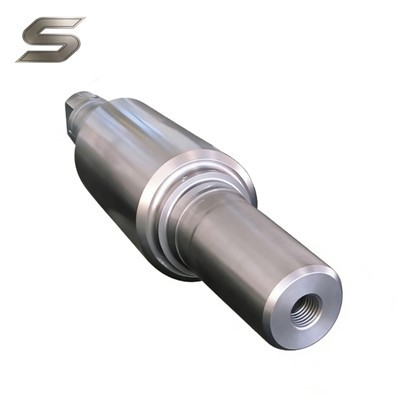
Automotive: The Backbone of Mobility
When I talk to our automotive clients, they almost always start with engine components, and for good reason—sand casting is non-negotiable here. The engine block, cylinder head, intake manifold, and crankshaft are all made via sand casting, usually from aluminum, cast iron, or steel. These parts need to withstand extreme heat, pressure, and mechanical stress, and sand casting allows us to create internal passages, thin walls, and intricate shapes that are critical for engine performance. For example, the intake manifold’s internal runners must be precisely shaped to optimize air-fuel mixture flow, a detail that is far easier to achieve with sand casting than with machining alone.
It’s not just under the hood, either. Transmission cases, brake calipers, steering knuckles, and even parts for commercial trucks and electric vehicle (EV) drivetrains come from sand casting. For EV manufacturers, in particular, sand casting has become essential for producing large, lightweight aluminum parts like motor housings and battery cooling plates. Unlike more modern processes, sand casting can handle the low volumes common in early EV model development and the high volumes needed for mass production, making it a flexible choice for automakers as they transition to electric powertrains. Our team works with both prototype shops and full-scale automakers, delivering parts that meet strict automotive industry standards for strength and dimensional consistency.
Agriculture: Building Tools for the Land
The agricultural industry relies on tough, durable parts that can handle mud, vibration, and heavy loads, and sand casting is a perfect fit. Tractors, combines, and irrigation systems use cast components like gear housings, plow shares, wheel hubs, and pivot arms. These parts need to resist wear and tear, and cast iron—one of the most common metals for sand casting—has excellent abrasion resistance, making it ideal for parts that dig into soil or handle heavy material. What I love most about working with agricultural clients is that many of them need custom, one-off parts for old equipment that’s no longer manufactured. Sand casting excels at small-batch, custom orders: instead of paying for expensive tooling that only makes a few parts, we can create a custom sand mold to replicate an exact replacement part, keeping farmers’ equipment running instead of forcing them to buy a new machine.
Heavy Industrial Machinery: Strength That Stands the Test of Time
For construction, mining, and material handling equipment, sand casting is the go-to process for large, high-strength components. Cranes, excavators, and mining trucks use parts like bucket teeth, crane hooks, gear blanks, and frame brackets that weigh hundreds of pounds. These parts require exceptional tensile strength and impact resistance, and steel or high-grade cast iron sand castings deliver that reliably. Another advantage here is size: sand casting can produce parts much larger than most other casting processes, up to several tons in weight, which is impossible with investment casting or die casting. Our team has experience casting large industrial components for construction projects, where a single faulty part can lead to costly downtime, so we prioritize precise mold-making and quality testing to ensure every part holds up to rigorous use.
Consumer Goods: Everyday Parts You Use Without Thinking
Sand casting isn’t just for industrial machinery—it’s all around us in everyday consumer products. Kitchen appliances like refrigerators, stoves, and dishwashers use cast iron grates, appliance frames, and pump housings. Even small items like fire pits, garden tools, and metal hardware often come from sand casting. For example, the base of a wood-burning stove needs to be heavy and heat-resistant, making cast iron sand casting the ideal choice. Another common consumer application is decorative metalwork: architectural elements like door knobs, handrail brackets, and exterior trim pieces are often sand cast, especially for historic restoration projects that need to match original, custom designs. Working with consumer goods manufacturers, we balance cost efficiency for large runs with the precision needed for parts that are visible and often handled daily.
Renewable Energy: Powering the Future With Cast Metal Parts
As the world shifts to renewable energy, sand casting has found a critical new role in this growing industry. Wind turbines, for example, rely on large, precision sand cast components like gearboxes, hub assemblies, and pitch bearings. These parts need to withstand wind forces, temperature fluctuations, and decades of outdoor use, and sand casting’s ability to produce large, complex metal parts at scale makes it essential for wind turbine manufacturers. The same goes for solar energy: components for solar tracking systems, which follow the sun to maximize energy output, often use sand cast parts like motor housings and mounting brackets. Even hydroelectric power plants use cast components for turbine blades and penstocks, which handle water pressure and corrosion. As a sand casting supplier, we’re proud to partner with renewable energy firms, helping them build the infrastructure that will power the world for generations.
Why Sand Casting Still Outperforms Other Processes for These Applications
You might be wondering why, in an era of advanced manufacturing like 3D printing and die casting, sand casting remains so widely used. The answer comes down to three key benefits that align perfectly with the applications I’ve outlined: cost flexibility, material versatility, and design freedom. Unlike die casting, which requires expensive metal molds that only make sense for high-volume runs, sand casting uses cheap, reusable sand molds, making it perfect for small batches, prototypes, and custom parts. We can also work with almost any metal alloy—aluminum, cast iron, steel, brass, bronze, and even specialty alloys for high-temperature or corrosive environments—something more limited processes can’t match. And because sand molds are easy to modify, designers can create complex internal shapes, thin walls, and integrated features that would require multiple separate parts if made with machining alone, reducing assembly time and costs.

Our team as a sand casting supplier understands that every application has unique requirements. When we work with an automotive client, we focus on tight dimensional tolerances and high volume consistency. For an agricultural client, we prioritize custom part replication and durability. For a renewable energy client, we emphasize large-part capability and corrosion resistance. We don’t just provide a standard sand casting service—we tailor our process to meet the specific needs of each industry and project.
Zinc Alloy Die Castings If you’re working on a project that requires a reliable, cost-effective metal component, and you’re looking for a sand casting partner that can handle everything from prototypes to full production runs, we’re here to help. Whether you need a custom replacement part for old equipment, a large industrial component for construction, or precision parts for an automotive or renewable energy project, our team has the expertise to deliver high-quality parts on time. Don’t hesitate to reach out to us to discuss your requirements, get a quote, or ask any questions about how sand casting can benefit your project.
References
- Campbell, J. (2000). Castings: Processes, Properties, and Quality. Butterworth-Heinemann.
- ASM International. (2008). Sand Casting: Design, Materials, and Processes. ASM Handbook Volume 15: Casting.
- Kleiner, M., Chatti, W., & Lueg-Althoff, J. (2013). Manufacturing of metallic parts for wind energy applications. Procedia CIRP, 7, 3-10.
- ASTM International. (2020). Standard Specification for Steel Castings, Carbon, High-Strength Low-Alloy, and Low-Alloy, for General Application, A27/A27M-20.
Hebei Shata Machinery Co., Ltd.
As one of the most experienced sand castings manufacturers and suppliers in China, we have advanced foundry technique and professional production team. Welcome to buy high-grade sand castings for sale here from our factory. All custom made products and OEM products are with high quality and competitive price.
Address: No.11 Cangshun Rd., Shijiazhuang, Hebei, China
E-mail: Info@shatamachinery.com
WebSite: https://www.shatamachinery.com/
