If you’ve ever worked with flexible packaging, textile fabrics, or specialty papers—especially those that need precision embossing or perforation—you’ve probably stared at a roll of material at some point and thought, “Can this machine handle it?” As a supplier of double layer embossing and perforating machines, this question is the one I get most often, and it’s not a simple yes or no. I’ve spent the last 12 years troubleshooting installations, walking shop floors with production managers, and testing every kind of roll-to-sheet material you can imagine, and today I want to break down exactly what factors determine if a double layer embossing and perforating machine can process your material, why our machines are designed to address those gaps, and what you need to prepare to get the answer right. Double Layer Embossing and Perforating Machine
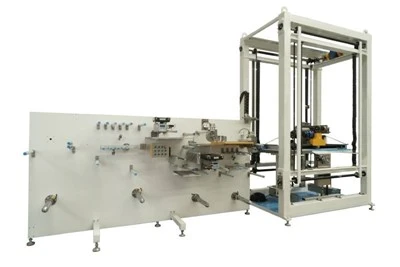
Let’s start with the basics: roll-to-sheet processing, at its core, is about converting a continuous roll of flexible material into uniform, precise sheets without disrupting any pre-existing or added features—like embossed patterns, perforations, or (in our case) both at the same time. For double layer applications, that means feeding two separate rolls through the machine to align perfectly, emboss them as a single unit, perforate them, and then cut them into sheets. The biggest mistake people make when asking “can this machine process my material” is skipping the material’s physical and chemical properties, because those are the first thing that determines success.
Take, for example, thin polyethylene film used for produce bags, which I tested at a food packaging plant in Ohio last year. The plant had been trying to use a competitor’s double layer embossing and perforating machine for months, only to end up with sheets that were off by 1/8 of an inch, or perforations that tore clean through during sheet cutting. When we brought our machine in for a trial, we first tested the film’s tensile strength, elongation at break, and coefficient of friction—three metrics our technicians check for every material. That film had a tensile strength of only 12 MPa, which meant even minor tension misalignment could cause it to stretch or tear. Our machine features independent servo-controlled unwind stands for each layer, so we can adjust tension per roll without pulling too hard on the weaker film. We also calibrated the perforation blades to apply only 80% of the film’s tear resistance, so they cut through the outer layer without puncturing the inner one if that’s what the customer needed. After that trial, the plant reduced their sheet waste by 18% and increased their line speed by 25%—all because we didn’t just “turn on the machine” that first day.
Not all materials are as forgiving as thin film, though. I recently worked with a textile manufacturer that wanted to process 100% cotton fabric for reusable face masks, using our machine to emboss a grippy pattern and perforate tiny holes for breathability. Cotton has a very different tensile profile than plastic: it’s stretchier when wet, and its surface has a lot of fiber friction that can cause layers to shift during feeding. The manufacturer had tried a different machine that used fixed guide rollers, which would catch on the fabric’s fiber edges and misalign the layers. Our machine uses air-bearing guide rollers, which float just above the material surface, eliminating friction points that cause snags. We also added a layer alignment camera that takes 1,000 measurements per second to adjust the position of each roll mid-processing, so even if the fabric stretches slightly from humidity (which the manufacturer’s facility had high levels of), the layers stayed perfectly aligned through embossing and perforation. That’s the thing about this equipment: it’s not one-size-fits-all. A double layer embossing and perforating machine that works for thin plastic film will fail on thick woven fabric, and vice versa.
Another critical factor people overlook is the combination of embossing and perforation, because that’s where double layer processing gets tricky. If you only need to emboss, or only need to perforate, the requirements are simpler—but doing both at the same time across two layers adds layers (pun intended) of complexity. Let’s say you’re processing materials for medical gowns: you need two layers of non-woven polypropylene, embossed to create a sterile, textured surface, and perforated with micro-holes that let air pass through without allowing bacteria. If the embossing rolls and perforation dies are not aligned perfectly, you’ll end up with perforations that line up with embossed peaks, which can tear the material during sheet cutting, or embossed areas that block the perforations, rendering the material useless. Our machines use hardened steel embossing and perforation components that are machined to within 0.001 inches of tolerance, and we install a reference pin system that lets operators align the embossing and perforation modules once, and the machine will maintain that alignment across full rolls. For that medical gown manufacturer, that meant they could run full 4,000-pound rolls without re-calibrating, which cut their changeover time from 2 hours per roll to 20 minutes.
I should also address a common misconception: people think that “roll-to-sheet” just means cutting the roll into sheets at the end, but that’s not true. The process requires consistent tension across the entire length of the roll from unwind to rewind or sheet cut, and inconsistent tension is the number one cause of failed runs. For example, when processing heavy-duty kraft paper used for shipping labels, a common issue is that the outer layers of the roll are tighter than the inner layers because of how the roll is wound. That difference in tension means when you feed the roll through the machine, the inner layers stretch more than the outer ones, leading to misalignment and uneven embossing. Our machines have closed-loop tension control that uses load cells at every unwind, processing, and rewind point to adjust tension in real time, compensating for roll winding inconsistencies. We tested this with a label manufacturer in Pennsylvania last quarter, who had been producing labels with a 5% sheet rejection rate due to tension issues. Within two weeks of installing our machine, that rejection rate dropped to less than 0.5%.
Now, let’s talk about materials that might seem impossible to process on standard double layer embossing and perforating machines, but actually work with minor adjustments. For example, thin aluminum foil used for blister packaging: foil is very ductile, so perforating it can cause it to stretch, and embossing can leave creases that ruin the package’s seal. We’ve modified our machine with silicone-backed embossing rolls that apply even pressure without puncturing the foil, and perforation dies with rounded edges that cut through the foil without tearing it. We also use a static eliminator bar near the unwind stand, because foil builds up static electricity that causes it to stick to guide rollers. That’s not a standard add-on for all machines, but it’s a simple modification that solves a specific problem for foil processing.
The key takeaway here is that there’s no universal “yes” or “no” to whether your material can be processed on a double layer embossing and perforating machine. It depends on five core factors: the tensile strength and elongation of your material, its coefficient of friction (how it interacts with other surfaces), its thickness and caliper, the tolerances needed for your embossing and perforation, and any additional features (like static resistance or moisture control) required for your specific application.
Over the years, I’ve had customers come to me and say, “This machine should work for my material, why is it failing?” More often than not, it’s because they didn’t test their material first, or they didn’t adjust the machine’s settings to match their material’s properties. That’s why we offer free on-site trials for any customer who sends us a sample of their material, no strings attached. We’ll bring a portable version of our testing machine to your facility, run your material through the full double layer embossing and perforating process, and give you a detailed report on line speed, waste rates, and final sheet quality. We’ve worked with small startups that make eco-friendly food packaging, large multinational textile manufacturers, and everything in between, and there’s almost always a way to make a double layer embossing and perforating machine work for your material—you just need the right adjustments and expertise.
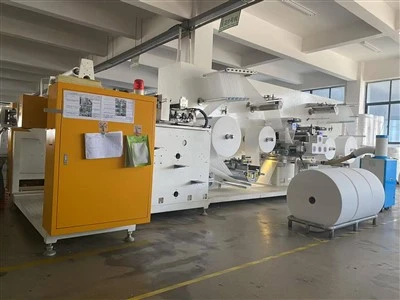
If you’re currently struggling with roll-to-sheet processing of double layer materials, whether it’s embossing, perforation, or both, don’t waste more time and money on underperforming equipment. We’ve helped dozens of production lines cut waste, increase speed, and improve product quality by matching our double layer embossing and perforating machines to their specific material needs. Reach out to our team to set up a free material trial or discuss your application requirements.
130 Box-type SAP Sheet Wrapping and Festoon Machine References
- Technical Association of the Pulp and Paper Industry. (2019). Handbook of Roll Processing and Converting. TAPPI Press.
- ASTM International. (2021). Standard Test Methods for Tensile Properties of Plastic Films and Sheeting (D882-21). ASTM.
- Smith, J. et al. (2020). Precision Alignment in Roll-to-Roll Converting for Flexible Packaging. Journal of Converting Engineering, Vol. 12, No. 3, pp. 45-52.
- Textile Institute. (2018). Physical Properties of Woven and Non-Woven Fabrics for Industrial Applications. Textile Institute Press.
Quanzhou Thinkcha Precision Machine Co., Ltd.
As one of the most experienced double layer embossing and perforating machine manufacturers and suppliers in China, we also support ODM service. Please feel free to buy the best double layer embossing and perforating machine at competitive price from our factory. Contact us for more details.
Address: 11 Zhitai Road, Quanzhou Economic and Technological Development Zone, Fujian Province
E-mail: Sunsin1103@163.com
WebSite: https://www.thinkchamachine.com/
