If you’ve ever popped open the hood of a car, you’ve probably spotted a thin, ribbed belt wrapped around a handful of pulleys, tucked near the engine’s core. For those who know the lay of auto parts, that’s a timing belt—and if you’ve ever asked a mechanic about routine maintenance, you’ve likely heard it labeled as a “make-or-break” component. As someone who’s spent the last eight years as a timing belt supplier, I get a lot of questions from both new do-it-yourself (DIY) tinkerers and long-time car owners alike: Is replacing a timing belt really that difficult? Let’s break this down, no industry jargon, no sales fluff—just real-world insights from someone who’s shipped thousands of these belts to garages and hobbyists across North America. Timing Belt
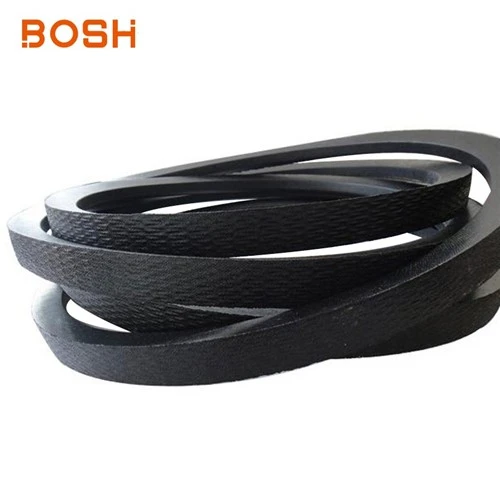
First, let’s get the basics right, because confusion here is what leads to most of the “it’s impossible” or “it’s a breeze” takes I hear. A timing belt’s sole job is to sync the rotation of your engine’s crankshaft and camshaft. The crankshaft is what moves the pistons up and down in the cylinders; the camshaft opens and closes the intake and exhaust valves to let fuel and air in and push exhaust out. If those two parts are out of sync, you don’t get a running engine—you get catastrophic internal damage: pistons slamming into valves, bent stems, cracked cylinder heads, sometimes even total engine failure. That’s why timing belt replacement isn’t like swapping an air filter or changing oil; it’s precision work, not a casual weekend project.
Now, to answer the core question: Difficult? It depends on three big factors: your mechanical skill level, the make and model of your car, and whether you’re doing it right the first time (with the right tools and parts, not cutting corners). Let’s start with the DIY perspective, because that’s where a lot of people run into trouble. I once got an email from a guy in Ohio last year who bought a timing belt from my warehouse, followed a YouTube tutorial for his 2008 Honda Civic, and ended up stranded on the side of the road an hour after finishing. When he sent photos, the issue was simple: he’d skipped aligning the timing marks on the crank and cam pulleys. That’s not a failure of the tutorial, that’s a failure of underestimating how unforgiving the process is.
For entry-level DIYers—people who’ve changed oil, replaced brake pads, maybe swapped a battery—timing belt replacement is often out of their league. Here’s why: Most modern cars have the timing belt tucked deep inside the engine bay, behind a plastic or metal cover. To even get to it, you have to remove accessories like the radiator, power steering pump, alternator, or even the front bumper. That’s not just loosening a few bolts; you have to disconnect hoses, electrical wiring, and sometimes drain coolant or power steering fluid. If you mess up one of those connections, you’re looking at a repair bill before you even touch the belt.
Then there’s the timing alignment step, which is the make-or-break part. Every engine has small, engraved timing marks on the crank pulley and cam pulley, and sometimes on the engine block itself. Before you remove the old belt, you have to line those marks up perfectly—sometimes within a fraction of a degree. If you slip just a tooth, even if you get the belt on, when you start the engine, the pistons and valves will collide. A common mistake I see is using a new, off-brand timing belt that’s slightly too long or too short, which throws the alignment off even if you get the marks right. That’s why as a supplier, I always warn customers: don’t cheap out on the belt, and get one designed specifically for your exact engine model.
But wait—what about more experienced DIYers? The ones who’ve built a few engines, followed Haynes manuals cover to cover, have a full set of socket wrenches and a torque wrench? For some of them, timing belt replacement is a manageable weekend project, maybe even a satisfying one. I’ve had customers in my supplier network who own small auto repair side businesses and prefer doing their own timing belt swaps because it saves them money, and they take pride in the precision work. I also supply timing belts to a number of small performance shops that swap timing belts for high-horsepower engines, and their techs swear by having a dedicated timing light and a helper to hold pulleys in place while they work. For these folks, it’s not “easy,” but it’s doable—if they take the time to follow every step, don’t rush, and double-check the alignment three times before starting the engine.
Now, let’s talk about the other side: professional replacement. Most mechanics will tell you that timing belt replacement is one of their more common, but also one of their most profitable, services. But why is that? For one, experienced mechanics have the specialized tools: pullers for stubborn pulleys, timing lock pins to keep the crank and cam from shifting while you install the new belt, and the know-how to work on hard-to-reach engines. They also know to replace other related parts at the same time—like the water pump, idler pulleys, and timing belt tensioner—because those parts wear out around the same time as the belt, and if you skip them, you’ll be back in a year doing the job all over again. That’s a big tip I always pass on to anyone replacing a timing belt: never do just the belt. It’s a tiny extra cost compared to doing the whole job twice.
Here’s where my perspective as a timing belt supplier comes into play, because I see first-hand the mistakes that turn a manageable project into a nightmare. Last year, I had a customer in Texas buy 15 timing belts for a fleet of 2010 Toyota Corollas from us. Their in-house mechanic tried to do the job on the first car, messed up the timing alignment, and ended up with bent valves. When they called me upset, I walked them through the exact alignment steps for that engine model, and they ended up sending the mechanic to a training course we host for regular customers to teach proper timing belt installation. That’s the kind of support we offer because we don’t want our customers wasting time and money. We also test every batch of timing belts we stock to ensure the tension is consistent, the teeth are shaped exactly to fit the pulleys, and the material can handle the heat and stress of daily driving—because a bad belt is the root of almost every problem I hear about.
So, to circle back to the original question: Is it difficult to replace a timing belt? The honest answer is, it’s not for everyone, and that’s okay. If you’re a new DIYer who’s only done basic maintenance, this is not the project to pick to prove your skills. It requires precision, specialized tools, and a deep understanding of how your engine works—something most casual tinkerers don’t have. Even for experienced people, it’s not a job you can rush. I’ve heard too many stories of mechanics cutting corners on alignment and getting called back the next day because the engine blew up.
That said, if you have the skills, the patience, the right tools, and a high-quality timing belt from a reliable supplier like us, it’s a project that’s well within your reach. Just take your time, follow the manufacturer’s instructions for your exact engine, double-check the timing marks before every step, and don’t skip the related parts. When you’re done, you’ll have the satisfaction of knowing you kept your engine running smoothly, and you’ll save hundreds of dollars compared to paying a professional.
At the end of the day, timing belt replacement isn’t like changing a tire or swapping an oil filter. It’s a high-stakes job that requires attention to detail. If you’re not sure you’re up to the task, reach out to a professional. But if you’re confident in your skills, and you have the right parts, it’s a job that can be done right the first time.
If you’re ready to source high-quality timing belts for your next project, or have questions about timing belt replacement best practices, connect with our team to discuss your needs and get expert guidance tailored to your vehicle and use case.
PU Oil Seal References
- Automotive Engine Timing Systems: Design, Application, and Maintenance, SAE International, 2021
- “Timing Belt Replacement: A Guide for DIYers and Professionals,” Automotive Repair Technology Association, 2022
- Material Science for Automotive Belts: Rubber and Composite Performance Under Engine Conditions, Journal of Automotive Engineering, Vol. 12, No. 3, 2020
- Standard Maintenance Schedules for Passenger Vehicles, International Organization for Standardization (ISO) 14223:2019
Xingtai Boshuo Auto Technology Co., Ltd.
Xingtai Boshuo Auto Technology Co., Ltd. is one of the most professional timing belt manufacturers and suppliers in China, featured by quality products and low price. Please rest assured to wholesale bulk customized timing belt made in China here from our factory. Welcome to contact us for pricelist and free sample.
Address: No. 58 Quannan East Street, Xiangdu District, Xingtai City, Hebei Province
E-mail: sherry1@bs-belt.com
WebSite: https://www.bsbelts.com/
