If you’ve ever stared up at a row of rusted, lanky steel skeletons stretching over hills, across rivers, and through tiny towns, you’ve probably wondered one thing: “What even are these things for, beyond just holding up wires?” As the owner of a mid-sized transmission tower supplier, I’ve fielded this question from customers, curious contractors, and even my own kid’s 4th grade science class a hundred times. The short answer? They’re not just tall metal sticks. They’re the unsung backbone of how our power market actually works—something most people only think about when the lights go out. Let me break this down without the boring corporate jargon, promise. Electrical Transmission Tower
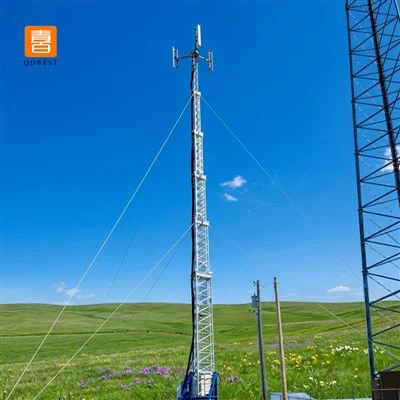
First, let’s get real about the power market: it’s way more than just power plants cranking out electricity and plugging it into your wall. It’s a super dynamic, 24/7 dance between supply, demand, and getting that juice from where it’s made to where people are using it. Think about it: the cheapest, most reliable power often comes from big, centralized plants—like nuclear reactors in the desert, wind farms blowing across the Great Plains, or hydroelectric dams up in the mountains. But most big cities (the places that need that power the most) are nowhere near those sites. That’s where transmission towers come in. They’re like the highways for electricity, right? Instead of cars driving from point A to B, high-voltage lines strung between these towers move massive amounts of power over hundreds of miles, way more efficiently than the tiny poles outside your neighborhood.
Here’s the thing the utility guys don’t always yell about: transmission towers are the bottleneck that makes or breaks the power market’s bottom line. Let’s say a wind farm in Iowa cranks out extra power on a windy Tuesday afternoon, and Texas (wait, no, let’s pick something fairer—Ohio) has a big manufacturing plant that needs more juice. If the transmission lines between Iowa and Ohio are already maxed out because old towers can’t hold enough lines or can’t handle higher voltage, that wind power can’t get there. Instead, the Ohio plant has to buy more expensive power from a nearby natural gas plant, making everyone’s monthly bills go up. Last year, I had a utility client in the Southeast tell me they lost $1.2 million in a single month because a storm took out three old towers, and they couldn’t redirect power to a hurricane-ravaged coastal city that needed it most. That’s not just a outage—that’s the power market failing, and towers were the problem.
Now, I know what you’re thinking: “Okay, so they move power, but why does that matter for the market’s operations specifically?” Let’s dive a little deeper (no physics degree required, I swear). The power market runs on what’s called “grid congestion pricing”—super fancy term for when lines are too full, the power gets more expensive. Transmission towers directly determine how much congestion there is. If you build taller towers with thicker steel that can hold more high-voltage lines, you add more capacity to the grid. That extra capacity means power can flow from cheaper, abundant sources to where it’s needed, bringing overall prices down. My team and I have helped three solar farm developers in the Southwest upgrade their transmission tower links to California over the last two years. Before, they could only send 500 megawatts of power to the Golden State—enough for 400,000 homes. After we installed taller, more durable towers rated for higher voltage, that jumped to 1.2 gigawatts. That’s almost a million more homes getting cheaper solar power, and the utility saved their customers $35 million in a year. That’s not just “doing construction”—that’s shaping how the entire power market functions.
Another big part of the role: reliability, which is the #1 rule of the power market. No one wins when the grid goes down. Towers have to handle everything from 100-degree heat to ice storms, hurricanes, even bird nests that short out lines. A few years back, we supplied a set of anti-corrosion coated towers to a client in upstate New York, right on Lake Ontario. They had a problem with salt air eating through old steel towers, leading to frequent outages in the winter when they needed extra power for heating. The new towers we put up? No issues in three years. The utility’s outage numbers dropped by 70%, and they didn’t have to pay $200,000 in penalties for missed delivery of power to a local hospital. That’s the hidden cost of bad towers—they don’t just break, they cost the market real money when they fail.
Wait, let’s also talk about the transition to renewable energy, because that’s the biggest shift in the power market right now. Everyone’s talking about ditching coal and gas for wind and solar, but those sources are intermittent—wind doesn’t always blow, sun doesn’t always shine. That means we need to move power from where it’s abundant at a given time to where it’s needed. For example, Texas’ wind farms crank out tons of power at night, when demand is lower. The transmission towers there needed to be upgraded to carry that power from West Texas to the big cities in Austin and Dallas, or else that wind power gets wasted and they have to fire up more expensive gas plants at peak times. Our team’s been working with ERCOT (the Texas grid operator) on upgrading 200 miles of towers over the last two years, and we’re on track to help them add 2 gigawatts of wind capacity by 2025. That’s not just good for the planet—it’s making the power market more flexible, cheaper, and less reliant on fossil fuels.
I get it, to most people, towers are just big metal things you pass on the highway. But as a supplier who’s built and upgraded hundreds of these things over the last 15 years, I see them as the unsung players in the power market. They’re the reason your neighbor’s solar farm can send power to your house 500 miles away, why your monthly electric bill isn’t $300 more, and why the lights stay on when you need them most. The market can have the best power plants, the smartest grid software, but if your transmission towers are falling apart or can’t handle extra capacity, none of that matters.
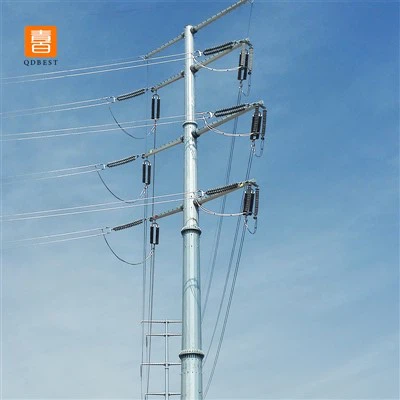
If you’re a utility company, a grid operator, a renewable energy developer, or anyone who needs to upgrade or expand their transmission infrastructure, let’s chat. I’ve worked on small-town upgrades and multi-state projects, and my team knows how to build towers that are durable, code-compliant, and tailored to your specific needs. No generic sales pitches, no jargon—just straight talk and quality work that keeps your power market running smoothly.
Telecommunication Tower References:
- North American Electric Reliability Corporation (NERC). (2022). Transmission Infrastructure Reliability Trends.
- U.S. Energy Information Administration (EIA). (2023). The Role of Transmission in Grid Modernization and Renewable Energy Integration.
- Electric Power Research Institute (EPRI). (2021). Congestion Pricing and Transmission Capacity Improvements in U.S. Power Markets.
- Federal Energy Regulatory Commission (FERC). (2022). Renewable Energy Transmission Expansion and Market Outcomes Report.
- World Bank Group. (2023). Transmission Tower Durability and Cost Impacts on Power Market Operations.
Qingdao BEST Steel Structure Co., Ltd.
Qingdao BEST Steel Structure Co., Ltd. is one of the most professional electrical transmission tower manufacturers and suppliers in China. We warmly welcome you to buy customized electrical transmission tower made in China here from our factory. If you have any enquiry about OEM service, please feel free to email us.
Address: Jiaobei Industrial Park, Qingdao, China
E-mail: sales@qdbsstower.com
WebSite: https://www.qdbsstower.com/
