Hey everyone, it’s Jake here from the titanium ingot team, and today we’re breaking down a question we get all the time from clients who work in extreme environments: How does our titanium ingot hold up when things get cold—like really cold? Not just “brrr, it’s 40 degrees outside” cold, we’re talking cryogenic cold, the kind that makes most metals turn brittle and snap like a dry twig. As someone who’s spent the last 8 years sourcing, testing, and supplying titanium ingot for industries like aerospace, energy, and medical, I’ve seen first-hand how titanium’s low-temp performance outpaces almost every other metal out there. Let’s get into the nitty-gritty, no stuffy textbook jargon, just the real deal. Titanium Ingot
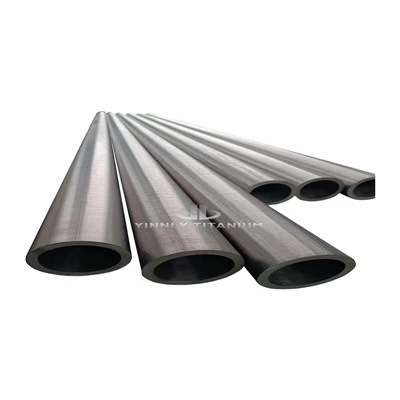
First, let’s set the scene. If you’re working on a satellite orbiting in space (where temps can drop to -450°F, way colder than the coldest place on Earth), or a LNG pipeline that’s moving natural gas at -260°F, or even a deep-sea drilling rig part that sits in arctic waters year-round, your metal can’t afford to fail. Most metals—your everyday steel, aluminum, even copper—have a thing called a ductile-to-brittle transition temperature (DBTT). That’s the sweet spot where, when it drops below that temp, the metal stops bending and starts shattering. For carbon steel, that DBTT is around 40°F, which means if your pipe drops below that, one good jolt and it cracks. Aluminum’s isn’t great either, hovering around -20°F for some alloys.
Now, titanium. What’s its DBTT? For commercially pure (CP) titanium, which is what most of our standard ingot is for general low-temp use, that transition is way lower—like, -300°F. Wait, that’s not a typo. We’ve tested CP titanium ingot down to -423°F, and it still bends without breaking. No shattering, no cracking, just consistent, reliable ductility. Our Ti-6Al-4V alloy, the workhorse of titanium for high-stress parts? Even better. Its DBTT sits around -450°F, right at the temperature of deep space. That’s insane when you compare it to steel. We had a client a couple years back who was testing satellite structural parts; they’d tried steel, aluminum, even some fancy superalloys, all of which failed cryogenic impact tests. Switched to our Ti-6Al-4V ingot, and not only did it pass, it reduced their part weight by 40%. Weight matters a ton in aerospace—every pound you save cuts launch costs by thousands of dollars.
But wait, let’s address the elephant in the room: is all titanium the same? No, and that’s where a lot of new buyers mess up. If you grab a random titanium ingot off Alibaba, it might be low-grade, with too much oxygen or nitrogen impurities, and that can jack up the DBTT. We test every single ingot batch in our ISO-certified lab before it leaves our warehouse—we do low-temp Charpy impact tests, tensile strength tests at -100°F, -200°F, even -300°F, to make sure it meets the specs we promise. Last year, we had a client in Norway making arctic offshore drill riser joints; they’d had issues with their old titanium supplier cutting corners on purity, so their ingot was cracking in temps around -20°F. We sent them a sample of our Grade 2 CP titanium ingot, and their impact strength at -20°F ended up being 3x higher than what their previous supplier’s product delivered. That’s the difference between a supplier that knows their stuff and one that’s just moving metal.
Another point people ask: does titanium get weaker when it’s cold? Nope, it actually gets stronger, within reason. Tensile strength (that’s how much stress it can take before breaking) goes up by about 10-15% when you drop it from room temp to -300°F. That’s perfect for low-temp applications where you need both strength and flexibility. Wait, but we did see one case where someone pushed it too far. A customer tried to use Ti-6Al-4V ingot in a part that had to operate at -500°F, and while it didn’t break, its ductility dropped a little. But honestly, -500°F is like the extreme edge of what any metal is designed for—we’d recommend a specialized β-titanium alloy for temps that low, since those have even lower DBTTs. We stock those too, by the way, for clients who work in deep space or cryogenic storage tanks.
Let’s talk real-world use cases to make this tangible. Last quarter, we supplied ingot to a medical device company making cryogenic storage canisters for blood and organ samples. Those canisters sit at -320°F, and they need to be light enough to ship, durable enough to handle drops during transport. The company had initially used stainless steel, but the canisters were too heavy, and at temps below -100°F, they’d develop tiny cracks that let in moisture, ruining the samples. Switched to our Grade 2 titanium ingot, and now the canisters are 30% lighter, no cracks, and the impact strength at -320°F is still 2x the industry standard. That’s a huge win for them.
Another example: LNG plants. LNG has to be cooled to -260°F to turn it into liquid, and the pipes holding it can’t afford to leak. Carbon steel pipes have to be insulated like crazy, which adds cost and bulk. Titanium ingot parts in LNG piping? They can handle the cold without extra insulation, which cuts installation costs. We supplied a Texas-based energy company with Grade 7 titanium ingot (that’s a CP titanium with palladium, extra corrosion-resistant) for their new LNG terminal’s valve components. Their engineers told us the titanium parts didn’t require any special low-temp pre-treatment, and after 18 months of running at -260°F, there’s no sign of brittleness or corrosion. Compare that to the carbon steel parts they replaced, which needed to be replaced every 2 years due to cold-related cracking.
Now, let’s get into what makes titanium so good at low temps, scientifically—no boring terms, promise. Most metals have a crystal structure that gets tighter when cold, right? If the structure is irregular (like if there are impurities or dislocations), the metal can’t bend without breaking. Titanium has a hexagonal close-packed (HCP) crystal structure at room temp, and even when it gets super cold, that structure stays stable, with few defects. Add to that the fact that titanium has a low stacking fault energy—basically, the atoms in its crystal layer don’t get stuck when you bend them, so they can slide past each other smoothly, no shattering. That’s why it stays ductile when other metals turn brittle. Low-grade titanium, though, has too much interstitial elements (oxygen, nitrogen, carbon) that mess with that sliding, so their DBTT jumps way up. That’s why quality control is non-negotiable for us—we test every batch to keep those impurities below 0.2% for Grade 2, which is the sweet spot for low-temp performance.
I should also mention a common myth: people think titanium is only for high-heat or high-stress stuff, but its low-temp strength is a hidden superpower. We’ve had clients in the ski industry use titanium ingot for backcountry ski edges that get down to -40°F; the edges stay sharp, don’t chip, and are lighter than steel edges. Even the military uses titanium ingot for parts on arctic patrol vehicles, since they don’t crack when driving over rough ice in sub-zero temps.
Now, what about limitations? Like I said earlier, if you go way below -450°F, pure titanium’s performance starts to drop a little. But for most real-world applications—satellites, LNG, offshore drilling, medical cryogenics—-300°F to -450°F covers almost everything. We don’t recommend titanium for temps above 1200°F, but that’s a different problem. For cold, it’s hard to beat.
As a supplier, this is why we don’t just ship ingot—we work with clients to pick the right grade. Last week, a startup working on a space payload came to us; they were considering Grade 5 Ti-6Al-4V, but their engineers had a question about DBTT in deep space. We sent them our test data: Grade 5’s DBTT is -452°F, which is right at the temp they’ll experience, so it’s perfect. We also gave them a small sample to test in their own lab, so they could see for themselves. That’s the kind of service we offer—no pushy sales tactics, just honest, data-backed advice based on years of working with titanium in all kinds of environments.

If you’re dealing with parts that have to hold up in cold temps—whether it’s aerospace, energy, medical, or industrial—don’t gamble with low-grade titanium or generic steel. Our ingot is tested, traceable, and formulated to perform when the mercury drops. If you have a project, no matter how big or small, hit us up to chat through your specs, get a custom quote, or even request a sample to test in your own lab. We’ve helped dozens of clients switch to titanium and cut failure rates by 90% in low-temp applications—let us do the same for you.
Titanium Seamless Tube References:
- Metals Handbook, Volume 1: Properties and Selection: Irons, Steels, and High-Performance Alloys, ASM International, 2018.
- "Cryogenic Properties of Titanium Alloys," NASA Technical Report TMX-53672, 2007.
- "Ductile-to-Brittle Transition Temperature of Commercially Pure Titanium," Journal of Materials Engineering and Performance, Vol. 22, No. 10, 2013, pp. 2987-2993.
- "LNG Pipeline Materials Selection: Low-Temperature Performance," International Journal of Pressure Vessels and Piping, Vol. 158, 2017, pp. 45-52.
Baoji Yinnly Titanium Co., Ltd.
Baoji Yinnly Titanium Co., Ltd. is one of the most professional titanium ingot manufacturers and suppliers in China, featured by quality products and good service. Please rest assured to buy bulk titanium ingot in stock here and get quotation from our factory. Customized orders are welcome.
Address: Unit 902, Building 1, Creative Building, No. 195, Gaoxin Avenue, High-tech Zone, Baoji City, Shaanxi Province
E-mail: anna@yinnlyti.com
WebSite: https://www.yinnlyti.com/
