Hey everyone, let’s cut to the chase—if you’re here, you’ve probably stared at a thermal imager’s spec sheet and gone “wait, what the heck does ‘resolution’ even mean for this thing?” I get it. For years, I worked in the field, testing every thermal unit that comes through our warehouse, and I’ve lost count of how many customers call in confused about why a 320×240 imager isn’t “better” than a 240×180 one for their job. Today, I’m breaking this down real simple, no jargon overload, and since we’re the thermal imager folks you can trust, I’ll throw in a few real-world use cases that’ll make it click. Thermal Imager
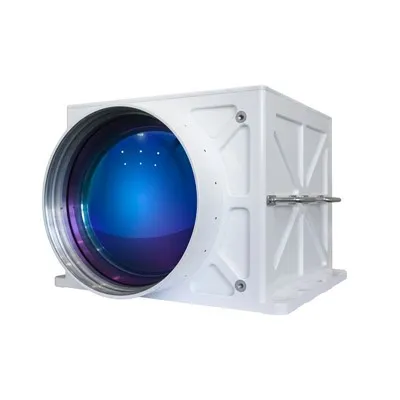
First off, let’s ditch the camera analogy for a sec—because thermal is totally different from your phone camera. Your phone has megapixels, which are tiny sensors that pick up visible light to make a picture you can hold. A thermal imager has infrared (IR) pixels, right? Those tiny little heat sensors that catch the IR radiation everything emits (yes, even you, even a rock). So thermal resolution is just how many of these tiny IR pixels the unit has. That’s the core. But here’s the twist: it’s not just the number. It’s how those pixels are arranged, how big they are, and what the imager can actually do with that data.
Wait, let’s talk numbers first because that’s what everyone obsesses over. You’ll see specs like 160×120, 320×240, 640×512, even 1280×1024. That’s rows times columns of pixels, duh. A 320×240 imager has 76,800 pixels total, while 640×512 has 327,680—way more, right? But more pixels don’t automatically mean a better image. That’s the part most sales pages gloss over. Let’s use a practical example: an electrician checking a circuit breaker panel. If you’re looking at a panel, the breakers are small, spaced maybe an inch or two apart in a tight grid. A 160×120 imager can pick up that one overheating breaker from across the room, no problem. A 320×240 will let you zoom in and see which of the tiny wires connected to the breaker is the hot one, too. But you don’t need a 1280×1024 unit for that—it’s overkill, and way more expensive.
Now, here’s the part that trips people up: pixel pitch. That’s the physical size of each individual IR pixel on the imager’s sensor. If two imagers have the same resolution but different pixel pitches, their quality is totally different. Let’s say we have two 320×240 units. One has a 17μm (micrometer) pixel pitch, the other has 12μm. The 12μm pixels are smaller—so you can cram more of them onto the same sensor, basically. Smaller pixels mean the imager can capture finer heat details, and it’s better at picking up faint temperature differences (that’s called thermal sensitivity, or NETD—Noise Equivalent Temperature Difference, but we’ll just call it sensitivity for now). The 17μm one might miss a tiny hot spot on a tiny pipe, while the 12μm one will pick it up instantly. That’s why two units with the same resolution can have a $2000 price gap—not all 320x240s are created equal.
Next, let’s talk about two other terms you’ll see in specs that get mixed up with resolution: spatial resolution and thermal resolution. Wait, hold on, I said I’d keep it simple, so I’m not gonna make you memorize acronyms. Spatial resolution is how small a heat source the imager can actually “see” clearly at a given distance. That’s where your field of view (FOV) comes into play. If an imager has a narrow FOV (like a telephoto lens for a camera), it’s good for long-range stuff—like checking a solar panel array on a roof a hundred feet away. A wide FOV is better for close-up, big areas, like inspecting a whole building’s walls for insulation gaps. If your resolution is too low for your FOV, the picture will be blurry, like standing 10 feet away from a friend and trying to read the fine print on their shirt. Thermal resolution, by contrast, is how precise the imager’s temperature readings are. A higher thermal resolution means it can tell the difference between a 72°F spot and a 72.5°F spot—super important for things like medical screening (though we don’t mess with that, we do industrial and commercial) or checking for tiny insulation leaks where the difference is barely a degree.
Let’s test this with real jobs, because that’s what matters. If you’re a maintenance tech doing routine HVAC checks in a warehouse—looking for blocked vents, malfunctioning motors, leaky ducts—what do you need? A 320×240 imager with 17μm pixels is perfect. It’s not too bulky, it’s cheap enough to have one per team, and it can pick up every hot or cold spot you need to catch before it becomes a costly breakdown. I’ve seen techs using 160×120 units for this, but they have to stand way closer, and they’ll miss tiny issues. Now, if you’re a building inspector checking a 50,000 sq ft office for water damage behind drywall, or a solar installer auditing hundreds of panels on a distant roof? You’ll want at least a 640×512 imager. Why? Because you can zoom in without losing detail—you won’t have to walk around the whole building to get a clear shot of a small water spot, and you can spot a faulty solar panel from the ground instead of climbing on the roof. The 1280×1024 units? Those are for super specific use cases, like aerospace or precision manufacturing—if you don’t need to spot a hot spot on a tiny circuit board from 10 feet away, you’re wasting your money.
Wait, let’s address the myth that higher resolution is always better. Last year, we had a customer who bought a $15k 1280×1024 imager for their small electrical contracting business. They called us a week later, super frustrated, saying it was overkill and heavy, and they couldn’t use most of the features. Turns out, their average job was checking residential panels and small commercial breakers—stuff a $3k 320×240 unit would do better. The high resolution just made the picture bigger, not more useful for their work. That’s the thing about thermal resolution: it’s not a “more is better” number, it’s a “right for your job” number.
Now, how do manufacturers cheat when it comes to resolution? Oh, you didn’t think I’d skip that, right? Some companies will advertise “digital resolution” instead of real, native resolution. Native resolution is the actual number of physical IR pixels on the sensor—this is the real, hard data the imager uses. Digital resolution is when the imager stretches the native pixels to make a bigger picture, like zooming in on a JPEG and getting a blurry mess. So if you see a spec that says “640×512 native” that’s way better than “1280×1024 digital.” Always check for “native” when comparing— that’s the real resolution.
Let’s wrap this up with a few quick takeaways so you don’t get fooled next time you’re shopping: First, real thermal resolution is native IR pixel count—forget digital. Second, pixel pitch matters more than you think when comparing same-number resolutions. Third, pick resolution based on your job: small, close-up work? 320×240 is more than enough. Long-range, big areas, or precision work? Step up to 640×512. Fourth, don’t buy a unit with higher resolution than you need—you’ll throw money away on features you’ll never use.
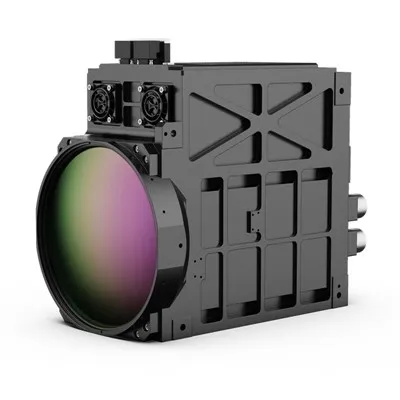
If you’re in the market for a thermal imager, whether it’s for HVAC, electrical, building inspection, solar, or any other field, we’ve got units for every use case and budget. We don’t do the fancy overkill stuff for no reason, and our techs will help you figure out exactly what resolution you actually need, not just push the most expensive one. No sales pressure, no confusing jargon—just real advice from people who’ve been using these things for years. If you want to chat through your specific needs, shoot us a message. We’re here to help you get the right thermal imager, not just the biggest spec sheet.
SWIR 640 References
- International Organization for Standardization (ISO). (2017). Non-destructive testing – Thermal imaging – Qualification of thermal imagers. ISO 18436-7.
- Flir Systems Inc. (2022). Thermal Imaging Fundamentals: Resolution and Pixel Count. Technical Guide.
- Therma-Research Corp. (2021). Comparing Native vs. Digital Resolution in Thermal Imagers. Application Note.
- American Society of Mechanical Engineers (ASME). (2020). Standard for Thermal Imaging in Predictive Maintenance. ASME PTC 19.3.
Xi’an Zhongke Lead Ir-Tech Co., Ltd.
We are one of the most experienced thermal imager manufacturers in China, specialized in providing high quality OEM products with the industrial grade. We warmly welcome you to wholesale high performance thermal imager at an affordable price from our factory.
Address: Building 8,Hard Technology Enterprise Community No.3000,Biyuan 2nd Rd,High-Tech Zone Xi’an,Shaanxi,China
E-mail: sales@lead-ir.com
WebSite: https://www.leadinfrared.com/
