When I first started my glove supply business, I got so many questions from clients that made me go, “Wait, really?” One of the most common ones? “Can your glove dispensers hold glove pairs or single gloves?” At first, I thought this was a basic thing everyone knew—like, duh, dispensers are built for one or the other, right? But nope. I soon realized there’s a whole lot of confusion here, and it’s not just new clients. Even some long-time facility managers I’ve worked with for years will still mix this up now and then. So I figured I’d break this down straight, no jargon, no fancy marketing fluff, just what I’ve learned from supplying dispensers for 7 years. Glove Dispenser
Let’s start with the basics: what’s a glove pair vs. single gloves here. A “glove pair” is two gloves, still connected, usually folded so one’s inside the other. You’ll see these at doctor’s offices sometimes, or retail beauty counters—they’re packed that way to save space in boxes. Single gloves are loose, individual, not connected, just stacked or rolled in a box. Now, the big question: can dispensers do both? Short answer? Sometimes. But it depends on the type of dispenser, the glove size, even the glove material.
First, let’s talk about the most common dispensers we sell: wall-mounted upright ones. These are the go-to for restaurants, factories, cleaning crews—places that need quick access. When I first started, my old dispensers only did single gloves. But a few years back, a food processing plant client came to me, mad. He said, “Your dispensers won’t hold our pair gloves—they keep jamming when I pull one out.” I went to check, and realized their pair gloves were nitrile, 6 mil, and folded tight. The dispenser’s spring mechanism was calibrated for loose single gloves, so when he slid the pair in, it squeezed the fold too hard, and two gloves would come out when he only wanted one. That’s a headache no one needs—especially in a factory where one extra glove per worker a day adds up to wasted money and slower tasks.
Fast forward to now: I’ve adjusted our dispenser models. The spring tension is adjustable, right in the base, with a tiny dial so you can turn it soft for thin, foldable pair gloves, or crank it a little tighter for thick single gloves. That’s a game-changer. But here’s the catch—even with adjustable springs, pair gloves and single gloves aren’t always interchangeable. Let’s take disposable latex gloves, for example. Latex pair gloves are usually folded with a crease that makes them thinner at the fold. If you put that in a dispenser meant for single latex gloves, the crease can get caught on the dispenser’s inner lip. I’ve had a café owner tell me she tried it, and now she has a dispenser that spits out half a glove sometimes. Not good when you’re handling food.
Then there’s the other type: countertop dispensers, for smaller spaces—like nail salons or office break rooms. These are shallower, right? I used to think they were only for single gloves, but then a salon owner told me she wanted to put pair gloves there so her clients wouldn’t have to touch two at once. I tested it, and realized if the pair gloves are the standard 9-inch, they fit fine in a countertop dispenser. But if they’re extra-large pair gloves, they won’t—they’re too long to stack without bending, and bending makes them bunch up. That’s another thing I learned the hard way: size matters, even more than you’d think.
Wait, let’s get into the science of why. Glove pair dispensers work because of that connected fold. When you pull one glove, the other stays put, right? The dispenser’s design holds the top glove tight so the pull doesn’t disturb the one below. Single glove dispensers are made for loose gloves, so they don’t have that grip—they’re just a slot for gloves to slide out. If you force a pair glove into a single dispenser, there’s nothing holding the lower glove, so when you pull the top one, the lower one comes with it. That’s the jam. I’ve seen that happen hundreds of times, and I can’t tell you how many clients have called me panicking because their line got backed up over a glove dispenser.
But here’s a secret most suppliers won’t tell you: some dispensers are actually “dual-compatible,” but only if you use the right gloves. For example, our new model has a wider inner track. I tested it with 5 mil nitrile single gloves and 5 mil nitrile pair gloves—both fit, no jams, no two-glove pulls. But when I tried thick 8 mil gloves? Nope, even the wider track didn’t work because the material is stiffer. Thick single gloves can’t fold into the pair shape without creasing too much, which gets stuck. That’s a real limitation, not just a “our product is better” sales line.
I’ve also learned that facility managers don’t always think about their workflow when they pick a dispenser. Let’s say you’re a hospital. Nurses need to grab one glove fast, so single gloves make sense—they don’t want to mess with pulling out a pair. But a small clinic might have front desk staff who offer gloves to clients, so pair gloves are better because the client gets two ready to use. So the dispenser has to match how you use the gloves, not just what fits. I had a clinic manager who switched to my dual-compatible dispensers last year—she was using pair gloves for clients and single for staff, and the dispensers worked for both. That’s the sweet spot, right there.
Wait, let’s talk about mistakes people make. A lot of guys will order a dispenser online, no questions asked, then call me a month later saying it’s broken because they put pair gloves in it. I get it—easy to not read the fine print. The key is: check two things before you buy. First, what’s the maximum glove thickness the dispenser can handle? Second, what’s the recommended glove format—pair or single? Some of our dispensers clearly say “single only,” and that’s not a mistake—it’s a design choice for heavy-use areas, like a butcher shop where gloves are used non-stop. If you try to put pairs in there, you’ll be reloading every hour, which is annoying.
Another thing: material. Latex gloves are stretchy, so pair latex gloves will flex a little in the dispenser. Nitrile gloves are stiffer, so pair nitrile gloves need a dispenser with a smoother inner surface to prevent catching. Vinyl gloves? Super thin, so pair vinyl gloves can work in almost any dispenser, as long as the spring isn’t too tight. I’ve had a bakery client switch to vinyl pair gloves, and they put them in a wall-mounted single glove dispenser, and it worked—for a while. Then the spring wore out, and the jams started. So even material wears down, and that affects fit.
Let me give you a real example from last month. A restaurant chain reached out to me, saying their 12 locations have dispensers that keep jamming. Turns out, they were buying cheap pair gloves from a big box store that were folded unevenly. The gloves were lopsided, so one was thicker than the other. When you put that in a dispenser, the uneven thickness makes the top glove pull out too hard, and the lower one comes with it. I told them to switch to premium pair gloves, and adjust the spring on their dispensers. Now they haven’t had a jam in 3 weeks. That’s the thing—it’s not just the dispenser, it’s the combination of dispenser, gloves, and how you use them.
So back to the original question: Can glove dispensers hold glove pairs or single gloves? The answer is, it depends. If you pick a dispenser that’s designed for both, you can switch, but only with the right glove type and size. If you need a dispenser for only pairs, get one calibrated for the fold. If it’s only single, go with a standard upright or countertop model. And if you’re unsure, don’t guess—ask someone who’s been in the game, like me.
I know this sounds like a sales pitch, but it’s not. I’ve seen too many clients waste money on dispensers that don’t work for their needs, and that’s the last thing I want. When I started this business, I promised myself I wouldn’t sell someone a dispenser that’s just a “one size fits all” garbage. Because that’s how you get jams, wasted gloves, and frustrated workers.

Now, if you’re reading this and you’re tired of your dispensers not working right—whether you’re trying to use pairs, singles, or both—hit me up. I’ll walk you through what will fit your space, your glove type, and how you use them. No pressure, just straight advice. I’ve been doing this long enough to know what works for cafes, factories, salons, hospitals—you name it. Don’t keep dealing with jams or wasted gloves. Let’s figure out the right dispenser for you.
Stainless Steel Soap Dispenser References
- Occupational Safety and Health Administration (OSHA). (2022). Glove Selection and Use Guidelines for Workplace Safety.
- American Society for Testing and Materials (ASTM). (2021). Standard Specification for Disposable Gloves Used in Food Service Operations.
- Journal of Occupational and Environmental Hygiene. (2020). Efficiency of Glove Dispenser Design in Reducing Cross-Contamination Risk.
- National Restaurant Association. (2023). Food Service Equipment Best Practices: Glove Dispenser Compatibility.
- U.S. Food and Drug Administration (FDA). (2022). Disposable Medical Gloves: Packaging and Dispensing Recommendations.
Fanda Hygiene Co., Ltd.
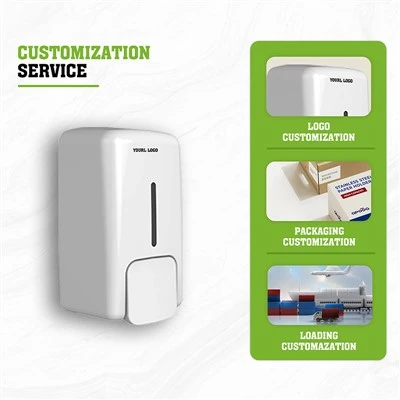
As one of the most professional glove dispenser manufacturers and suppliers, we also support customized service. With a professional production team, we are able to meet the needs of the majority of our customers. Welcome to wholesale bulk glove dispenser in stock here and get quotation from our factory.
Address: No.18-25, Changsheng Ln., Sec. 1, Huanzhong Rd., Beitun Dist., Taichung, Taiwan
E-mail: Sales03@fanda.com.tw
WebSite: https://www.fanda-hygiene.com/
