Hey there! As a supplier of PVDF ultrafiltration membranes, one question I get asked a lot is, "Is PVDF ultrafiltration membrane hydrophilic or hydrophobic?" It’s a great question, and the answer isn’t as straightforward as you might think. So, let’s dive in and explore this topic together. PVDF Ultrafiltration Membrane
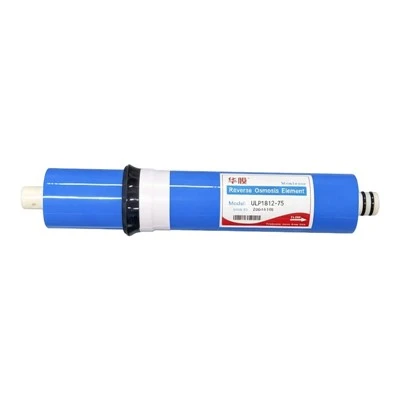
First off, let’s talk a bit about PVDF. PVDF stands for polyvinylidene fluoride. It’s a type of thermoplastic fluoropolymer that’s known for its excellent chemical resistance, mechanical strength, and thermal stability. These properties make PVDF a popular choice for a wide range of applications, including ultrafiltration membranes.
Now, onto the main question: hydrophilic or hydrophobic? Well, PVDF itself is a hydrophobic material. That means it doesn’t like to interact with water. When you put a drop of water on a PVDF surface, it’ll bead up and roll off, just like water on a duck’s back. This hydrophobic nature is due to the fluorine atoms in the PVDF molecule. Fluorine is highly electronegative, which means it attracts electrons strongly. This creates a non – polar surface that water molecules don’t want to stick to.
But here’s the thing. In the world of ultrafiltration membranes, hydrophobicity can be a bit of a problem. Ultrafiltration is all about separating different substances from a liquid, usually water. If the membrane is hydrophobic, water has a hard time passing through it. This can lead to a low flux rate, which means the membrane can’t filter water as quickly as we’d like. It can also cause fouling, where particles in the water stick to the membrane surface and clog it up.
So, what do we do? We make the PVDF ultrafiltration membrane hydrophilic! There are several ways to do this. One common method is surface modification. We can use chemical treatments to add hydrophilic groups to the surface of the PVDF membrane. For example, we might use plasma treatment or graft polymerization. Plasma treatment uses a high – energy plasma to break the bonds on the PVDF surface and create reactive sites. Then, we can introduce hydrophilic monomers that will attach to these sites, making the surface more water – friendly.
Graft polymerization is another option. In this process, we use a chemical initiator to start a polymerization reaction on the PVDF surface. The monomers we use are hydrophilic, and when they polymerize, they form a hydrophilic layer on the membrane surface. This layer reduces the contact angle between the water and the membrane, making it easier for water to penetrate the membrane.
Another way to make the membrane hydrophilic is by blending PVDF with hydrophilic polymers. We can mix PVDF with polymers like polyvinylpyrrolidone (PVP) or polyethylene glycol (PEG). These polymers have hydrophilic groups that can attract water molecules. When we blend them with PVDF, the resulting membrane has a more hydrophilic surface.
So, while PVDF is naturally hydrophobic, most PVDF ultrafiltration membranes on the market are actually hydrophilic. This hydrophilicity is crucial for the membrane to work effectively in water filtration applications.
Let’s talk about the benefits of having a hydrophilic PVDF ultrafiltration membrane. First of all, as I mentioned earlier, it has a higher flux rate. Since water can pass through the membrane more easily, we can filter more water in less time. This is great for applications where large volumes of water need to be treated, like in water treatment plants or industrial processes.
Secondly, hydrophilic membranes are more resistant to fouling. The hydrophilic surface repels particles in the water, preventing them from sticking to the membrane. This means the membrane can operate for longer periods without needing to be cleaned or replaced. It saves time and money in the long run.
There are also some challenges in making and using hydrophilic PVDF ultrafiltration membranes. One challenge is maintaining the hydrophilicity over time. The hydrophilic groups on the surface can sometimes be removed or degraded during the filtration process, especially if the water contains harsh chemicals or high – energy radiation. So, we need to develop ways to improve the stability of the hydrophilic layer.
Another challenge is the manufacturing process. Making hydrophilic PVDF membranes requires careful control of the surface modification or blending process. If the process isn’t done correctly, the membrane might not have the desired hydrophilic properties, or it could have other issues like uneven surface properties or reduced mechanical strength.
Now, if you’re in the market for PVDF ultrafiltration membranes, you should know that the hydrophilic versions are generally a better choice for most water – based applications. But of course, the specific requirements of your project will determine which membrane is the best fit.
If you’re working on a project that involves filtering water with high levels of organic matter, for example, you might need a membrane with a very high level of hydrophilicity to prevent fouling. On the other hand, if you’re working in an environment where chemical resistance is the top priority, you’ll want to make sure the membrane can still maintain its important PVDF properties even after being made hydrophilic.
At our company, we’ve spent a lot of time and effort perfecting the process of making hydrophilic PVDF ultrafiltration membranes. We’ve done extensive research and development to come up with formulations and manufacturing techniques that result in membranes with excellent hydrophilicity, high flux rates, and long – lasting performance.
We have a wide range of PVDF ultrafiltration membranes to suit different applications. Whether you’re treating municipal water, industrial wastewater, or looking for a solution for a specific laboratory process, we’ve got you covered. Our membranes are tested rigorously to ensure they meet the highest quality standards.
If you’re interested in learning more about our PVDF ultrafiltration membranes or if you think they might be a good fit for your project, don’t hesitate to reach out. We’re here to answer any questions you have, provide you with technical information, and help you choose the right membrane for your needs. Just start a conversation, and we can get the ball rolling on discussing a potential purchase.

In conclusion, while PVDF is a hydrophobic material, most PVDF ultrafiltration membranes are made hydrophilic to improve their performance in water filtration. The hydrophilicity offers many benefits, but there are also challenges to overcome. As a supplier, we’re constantly working to improve our products and provide the best solutions for our customers. So, if you’re in the market for PVDF ultrafiltration membranes, give us a shout, and let’s see if we can work together.
Nanofiltration Membrane References
- Cheryan, M. Ultrafiltration Handbook. Technomic Publishing Co., Inc., 1986.
- Strathmann, H. Synthetic Membranes: Science, Engineering and Applications. Springer, 2017.
- Mulder, M. Basic Principles of Membrane Technology. Kluwer Academic Publishers, 1996.
Fujian Huamo Technology Co., Ltd.
Fujian Huamo Technology Co., Ltd. is one of the most professional pvdf ultrafiltration membrane manufacturers and suppliers in China, featured by quality products and good service. Please rest assured to wholesale the best pvdf ultrafiltration membrane made in China here and get price list from our factory. Contact us for custom service and OEM service.
Address: No.6 Hengtong Rd, Shanmei Village, Xiamei Town, Nanan City, Fujian Province, China
E-mail: info@huaromembrane.com
WebSite: https://www.hmromembrane.com/
