Hey there! I’m a supplier of non-standard flanges, and I often get asked about how to ensure the alignment of these non-standard flanges. It’s a crucial issue because proper alignment can prevent leaks, reduce stress on the piping system, and extend the overall lifespan of the equipment that uses these flanges. Non-standard Flange
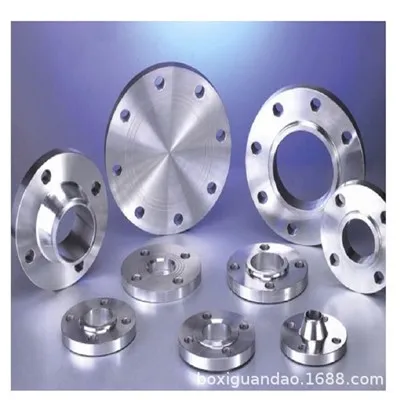
So, let’s start with understanding what non – standard flanges are. As a supplier, I know that non – standard flanges are those that don’t conform to the standard dimensions, materials, or pressure ratings set by industry standards like ASME, DIN, or JIS. They’re designed and manufactured according to specific customer requirements, which means they can be a bit trickier to handle when it comes to alignment.
First off, before you even start the alignment process, you need to have a clear plan. Understand the application where the flange will be used. For example, if it’s in a high – pressure chemical processing plant, the alignment needs to be much more precise compared to a low – pressure water distribution system. You also gotta know the type of fluid or gas that will be flowing through the pipes connected to the flange. Some substances are more corrosive or have different thermal expansion rates, which can affect alignment over time.
When it comes to the actual alignment, measurements are key. I always recommend using high – quality measuring tools. A good set of calipers can help you measure the flange’s dimensions accurately. Check the outer diameter, inner diameter, and the thickness of the flange. Make sure these measurements match the design specifications. Any deviations can lead to misalignment. Also, use a micrometer to measure small tolerances, especially if the flange has tight fit requirements.
Another important thing is to check the flatness of the flange faces. A warped flange face can cause all sorts of problems. You can use a straightedge and a feeler gauge to check for flatness. Place the straightedge across the flange face and use the feeler gauge to measure any gaps between the straightedge and the flange. If there are significant gaps, you may need to have the flange face ground or machined to make it flat.
Now, let’s talk about alignment during installation. One common method is the use of alignment pins. These pins are inserted into holes in the flanges to help position them correctly relative to each other. Make sure the alignment pins fit snugly in the holes, but don’t force them if they don’t seem to go in easily. That could indicate a problem with the hole dimensions.
Another technique is to use laser alignment tools. These tools are super handy as they can provide very accurate alignment information. They work by emitting a laser beam that can be used to check the alignment of the flanges in multiple axes. You can adjust the flanges until the laser readings show that they’re perfectly aligned.
During the installation process, it’s also important to tighten the bolts correctly. And this is where a lot of people make mistakes. You don’t want to just tighten the bolts randomly. Instead, use a specific tightening sequence. A common sequence is to start with one bolt and then tighten the bolt directly opposite it. Then, move to the next pair of bolts and so on. This helps to distribute the pressure evenly across the flange faces and ensures a proper seal.
It’s also crucial to use the right torque when tightening the bolts. Over – tightening can damage the flange or the gasket, while under – tightening can lead to leaks. Use a torque wrench to ensure that you’re applying the correct amount of torque. The recommended torque values can usually be found in the flange manufacturer’s documentation.
As a non – standard flange supplier, I know that each flange is unique, and sometimes the alignment process might need to be adjusted based on its specific design. For example, if the flange has a custom shape or a non – standard hole pattern, you’ll need to come up with a different approach. In these cases, it’s always a good idea to work closely with the engineering team that designed the flange. They can provide valuable insights into the best way to align the flange.
Another aspect to consider is the gasket. The gasket plays a very important role in the alignment and sealing of the flange. Make sure you choose the right gasket material based on the application. For example, if the flange is used in a high – temperature environment, you’ll need a gasket that can withstand those temperatures without deforming. Also, when installing the gasket, make sure it’s centered properly on the flange face. A misaligned gasket can cause leaks even if the flanges are perfectly aligned.
After the initial alignment and installation, it’s a good practice to do some post – installation checks. Monitor the system for any signs of leakage or unusual vibrations. If you notice any issues, it could be a sign that the flanges are not properly aligned. In such cases, you may need to realign the flanges.
I also want to mention that training your installation team is crucial. Make sure they understand the importance of proper alignment and the techniques involved. Provide them with training on how to use the measuring tools and how to follow the correct installation procedures. A well – trained team can significantly reduce the chances of alignment problems.
In conclusion, ensuring the alignment of non – standard flanges is a multi – step process that requires careful planning, accurate measurements, proper installation techniques, and post – installation monitoring. By following these steps, you can minimize the risk of alignment issues and ensure the long – term performance of your piping system.
If you’re in the market for non – standard flanges and want to learn more about how we can ensure the alignment of our products, or if you have any specific requirements for your project, I’d love to chat with you. Reach out to me to start the procurement discussion.
Din Flange References:
- "Piping Handbook" by Max P. O. Preece and Ludwig Ludwig, McGraw – Hill Education
- "Flange Design and Engineering" by John H. Bickford, Marcel Dekker
Shanxi Xinshunda Flange Manufacturing Co., Ltd.
As one of the most professional non-standard flange manufacturers and suppliers in China, we also support customized service with competitive price. We warmly welcome you to wholesale high quality non-standard flange for sale here from our factory. For quotation, contact us now.
Address: Zhunagli Industrial Zone,jinchang Town,dingxiang,shanxi,china
E-mail: sales01@xinflange.com
WebSite: https://www.xinflange.com/
