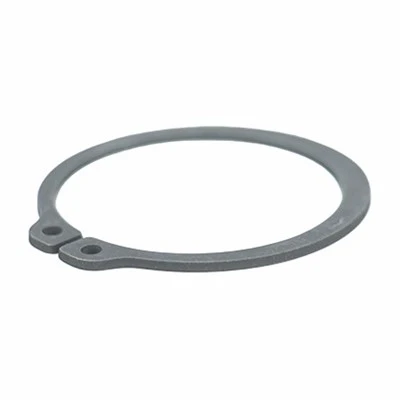
As a supplier of external circlips, I understand the importance of optimizing the use of these small yet crucial components in various designs. External circlips, also known as snap rings, are widely used in mechanical engineering to retain components on shafts. They provide a simple and effective way to secure parts in place, saving space and reducing the need for more complex fastening methods. In this blog, I will share some insights on how to optimize the use of external circlips in your design. External Circlips

Understanding the Basics of External Circlips
Before discussing optimization strategies, it is essential to understand the basic characteristics of external circlips. External circlips are typically made of spring steel, which allows them to be easily installed and removed. They come in various sizes, cross – sectional shapes (such as round, rectangular), and styles, including single – turn and multi – turn designs.
The function of an external circlip is to create a radial force when installed on a shaft. This force holds the circlip in place and prevents the components from moving axially along the shaft. The proper selection of the circlip depends on factors such as the shaft diameter, the load it needs to withstand, and the operating conditions.
Selecting the Right External Circlip
Shaft Diameter
The most fundamental consideration when selecting an external circlip is the shaft diameter. The circlip must fit snugly on the shaft to ensure proper functioning. A too – loose circlip may not provide sufficient retaining force, while a too – tight one can be difficult to install and may cause damage to the shaft or the circlip itself. It is recommended to refer to the manufacturer’s specifications to select a circlip with an appropriate internal diameter for your shaft.
Load Requirements
The load that the circlip needs to withstand is another critical factor. Different applications may require circlips with different load – bearing capacities. For example, in high – speed rotating machinery, the circlip must be able to withstand centrifugal forces and prevent the components from flying off. In such cases, a sturdier circlip with a higher radial force is required. On the other hand, in low – load applications, a lighter – duty circlip may be sufficient.
Operating Conditions
The operating conditions also play a significant role in circlip selection. Factors such as temperature, humidity, and exposure to chemicals can affect the performance and longevity of the circlip. For high – temperature applications, a circlip made of heat – resistant materials may be necessary. In corrosive environments, a stainless – steel or coated circlip can prevent rust and degradation.
Design Considerations for Optimal Use
Groove Design
The groove on the shaft where the external circlip is installed is crucial for its proper functioning. The groove should be machined to the correct dimensions with a smooth surface finish. A poorly machined groove can cause the circlip to wear prematurely or not seat properly, leading to a loss of the retaining force. The width and depth of the groove should be designed according to the circlip’s cross – sectional dimensions.
Assembly and Disassembly
Designing for easy assembly and disassembly is essential for cost – effective maintenance. Consider providing adequate clearance around the circlip for installation tools. Using a proper installation tool, such as a circlip plier, can ensure that the circlip is installed correctly and minimize the risk of damage. Similarly, during disassembly, having easy access to the circlip can save time and reduce the chance of component damage.
Space Constraints
In many designs, space is a valuable commodity. External circlips offer a compact solution for component retention. However, it is still important to optimize the space usage. When designing with circlips, make sure to account for the additional space required for the circlip and its installation tools. Choose the smallest circlip size that can meet the load requirements to save space.
Quality Control and Testing
As a supplier, we have strict quality control measures in place for our external circlips. This includes material testing, dimensional inspection, and performance testing. However, it is also important for designers to conduct their own checks.
Before mass – production, it is recommended to conduct prototyping and testing. This can help identify any potential issues with the circlip installation, performance, or compatibility with other components. Testing can include load – testing to ensure that the circlip can withstand the expected forces, and durability testing to assess its lifespan under normal operating conditions.
Integration with Other Components
External circlips rarely work in isolation. They are often part of a larger assembly. When designing, it is important to consider how the circlip will interact with other components. For example, the circlip should not interfere with the movement or function of adjacent parts. If the circlip is used to retain a bearing, make sure that it does not impose excessive loads on the bearing that could affect its performance.
Cost – Efficiency
Optimizing the use of external circlips also involves cost – efficiency. While high – quality circlips may be more expensive upfront, they can save costs in the long run by reducing the need for frequent replacements and maintenance. However, it is also important to balance quality with cost. By carefully selecting the right circlip for the application and avoiding over – specifying, you can achieve a cost – effective solution.
To conclude, optimizing the use of external circlips in your design requires a comprehensive understanding of their characteristics, proper selection based on various factors, careful design considerations, quality control, integration with other components, and cost – efficiency. As an experienced supplier of external circlips, we are committed to providing high – quality products and technical support to help you achieve the best design results.
If you are interested in purchasing external circlips for your projects, or if you have any questions regarding the design and use of these components, please do not hesitate to contact us. We are here to assist you in finding the most suitable solutions for your needs.
Coiled Spring Pins References
- Machinery’s Handbook, a well – known reference in mechanical engineering, provides detailed information on fasteners including external circlips.
- Standards organizations such as ASTM (American Society for Testing and Materials) and ISO (International Organization for Standardization) publish standards related to the manufacture and use of external circlips.
Anhui Pins Metal Products Co., Ltd.
With abundant experience, we are one of the most professional external circlips manufacturers and suppliers in China. Please rest assured to buy high quality external circlips made in China here from our factory. For custom service and OEM&ODM service, contact us now.
Address: No. 381 Yangqiao Road, Quanjiao County, Chuzhou City, Anhui Province. Postal Code:239500
E-mail: info@chn-pins.com
WebSite: https://www.chn-pins.com/
