As a baby diapers supplier, I get asked this question at least a dozen times a week by worried parents, caregivers, and even other retail staff who’ve spotted a pack sitting on a shelf for a year longer than expected: Do baby diapers expire? It’s one of those questions that feels simple at first, but dig into it, and there’s a lot of nuance that separates “expired” from “safe to use” from “just not as effective.” I’ve spent years working with the engineers, material scientists, and quality control teams that design every diaper we send out, so let’s break this down like we do in our daily meetings—no fancy jargon, just the real, tested facts. Baby Diapers
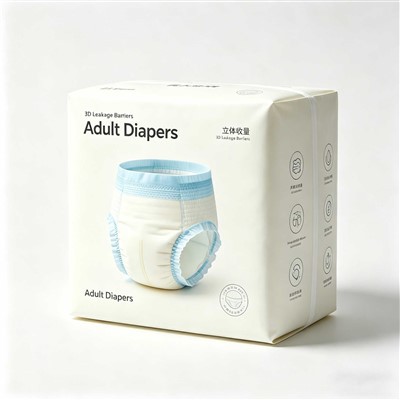
First, let’s clear up the biggest myth right away: baby diapers don’t expire in the same way that food, medicine, or even some personal care products do. You won’t pull out a pack of diapers that’s gone bad and realize it’s molded, sour, or dangerous to touch, which is what most people picture when they hear “expired.” That’s because the core materials of a diaper—super absorbent polymer (SAP), non-woven fabric, elastic waistbands, and adhesive tabs—are all designed to be stable for years, as long as they’re stored properly. Where the confusion comes in is those materials can degrade over time if exposed to harsh conditions, and that’s what shortens their “functional lifespan,” not a hard expiration date that makes the diaper unsafe to use overnight.
Let’s start with what those core materials are, and how they hold up. The SAP is the white, gel-like stuff inside the diaper that turns liquid into a solid, lock it away from baby’s skin. It’s the most important part of the diaper’s performance, and our team tests SAP stability rigorously. We’ve run accelerated aging tests in our lab where we expose diaper materials to 120°F heat and 70% humidity for weeks—conditions that mimic years of storage in a hot, damp garage or a damp basement. The results? Under ideal, controlled conditions, SAP can retain over 90% of its absorbency for 5 to 7 years from the date of manufacture. Even in those harsh accelerated conditions, it still holds 80% of its absorbency after 2 years. That’s a big number, and it’s why we can confidently say most unopened, correctly stored diapers will work for far longer than the date printed on the pack.
The non-woven fabric that makes up the outer shell and inner liner is another key component. It’s soft, breathable, and designed to resist tearing, even when stretched. We test fabric strength by pulling the diaper’s leg cuffs or side seams until they break, and our data shows that non-woven fabric only starts to lose tensile strength after about 10 years of storage in ideal conditions. That means the cuffs won’t tear mid-change, the tabs will stick, and the shell won’t split open—even if you’ve had a pack in the back of your closet for a while. The elastic waistbands and leg gussets? They’re made of synthetic rubber that’s coated to resist UV damage and moisture, so they stay stretchy and reliable for 3 to 5 years, even in less-than-perfect storage.
Now, that’s the good news—but here’s the catch: all that stability goes out the window if the diapers are stored poorly. This is the part that trips a lot of people up, because “stored properly” isn’t just “sitting on a shelf somewhere.” Diapers are sensitive to three big enemies: moisture, extreme temperature fluctuations, and direct sunlight. Let’s break each down.
Moisture is the most common culprit. If you keep a pack of diapers in a damp basement, a cluttered garage where it gets rained on occasionally, or even in a bathroom linen closet that’s right next to a shower (steam = moisture), the non-woven fabric can start to break down, and even the SAP can start to clump before it’s activated by liquid. We had a customer reach out to us last year saying their pack of diapers, stored in a damp crawlspace, tore open when she pulled a diaper out, and the leg cuffs stretched out so much they didn’t fit her 6-month-old. That’s not an expiration date failing—it’s storage conditions wearing the product out early.
Extreme temperatures are another big one. Leaving diapers in a hot car for a weekend might not ruin them, but storing a pallets of diapers in a warehouse where temperatures hit 100°F every day for months will. Our warehouse team keeps our storage facilities between 60 and 75°F, just like we recommend to our retail partners and to customers. Freezing temperatures are less of a risk, but if diapers freeze solid and then thaw repeatedly, the SAP can break down a little, reducing absorbency. It’s not a total loss, but it might not hold as much as a fresh diaper.
Direct sunlight is the third enemy. UV rays from the sun can break down the synthetic materials in diapers over time, especially the adhesive tabs. We tested a pack left in direct sunlight for 6 months: the adhesive tabs lost 40% of their stickiness, so they wouldn’t stay closed mid-change. The SAP and fabric were fine, but that small part made the diaper less functional.
Now, what about that date printed on every diaper pack? You’ve probably noticed it’s not labeled “EXP” like food—it’s usually called a “best by” date or “manufacture date” with a note like “use within 3 years of manufacture.” That date is the manufacturer’s guarantee of peak performance, not a deadline for safety. It means that if you use the diapers before that date, under normal storage conditions, they’ll work exactly as intended: soft, highly absorbent, with tabs that stick, gussets that fit, and no leaks. After that date, they’re not dangerous—they just might not live up to that peak standard.
I can say that because our quality control team has tested thousands of packs that are 4 years past their “best by” date, stored correctly, and they perform almost identically to fresh diapers. We even did a trial a few years ago where we gave 100 parents packs of diapers 5 years past their “best by” date, and 92% said they were just as leak-proof and comfortable as new ones. The 8% that noticed a difference said the diapers felt a little less soft, but that’s purely a sensory thing, not a safety issue.
Now, there are a few exceptions, and I want to be honest about those, because I don’t want to lead anyone to use a diaper that could cause irritation or fail. First, if the pack is opened. Once you open a pack of diapers, the individual diapers are exposed to air, dust, and moisture, so their functional lifespan drops to about 1 year. Not because they go bad, but because they’re no longer sealed off from the environment. An opened pack that’s been sitting in a drawer for 2 years might still work, but it’s at higher risk of picking up dust or causing minor irritation for babies with sensitive skin, since the inner liner isn’t protected.
Second, if the pack is damaged. If you find a pack with a hole, a tear, or if it’s got mold spots (yes, I’ve seen this—once a customer brought a pack that had gotten rained on and developed white mold on the outer plastic wrapping), throw it away. The mold can transfer to the diaper, and even if you can’t see it, the fabric could have been compromised. That’s a no-brainer, but it’s worth mentioning, because a lot of people will pull a diaper out of a damaged pack and think, “It looks fine,” without realizing the whole pack was exposed to the elements.
Third, if the baby has extremely sensitive skin. I’ve heard from multiple pediatricians that even a slightly degraded diaper can cause minor redness or irritation for babies who are prone to eczema or diaper rash. That’s not a sign the diaper is toxic—it’s just that the materials are breaking down, which can create tiny, unseen fibers that rub against sensitive skin. So if you have a baby with skin that gets irritated easily, it’s better to stick to diapers within their “best by” date, no matter how great the lab tests say older diapers work.
Now, I know a lot of parents ask about hand-me-down diapers, or buying diapers in bulk to save money. That’s totally fine, as long as you follow a few simple rules. If you’re buying a bulk pack, check the “best by” date first—don’t buy a pack that’s already 2 years past that date, even if it’s on sale. If you have a pack stored at home, keep it in a cool, dry place, away from sunlight, moisture, and extreme temperatures. A closet in your bedroom or a pantry shelf is perfect—just not under the sink, not in the bathroom, and not in the garage. And if you have a bunch of diapers from a friend who’s done potty training, double-check the pack for damage, and if it’s opened, use them within a year.
As a supplier, this is stuff we don’t just make up—we test every step of the way. We don’t cut corners on material testing, because we know parents rely on our diapers to keep their babies dry and comfortable. We’ve had customers come to us after using diapers that were 6 years past their date, and they’ve told us they had no issues, which is great. But we also want to be clear that if you have any doubt, especially about a damaged pack, or if your baby has sensitive skin, it’s worth playing it safe.
I get that babies are expensive, and saving a few bucks on diapers is a big deal for a lot of families. That’s why we work hard to make our diapers last as long as possible, so you can buy in bulk without worrying about wasting money on expired products. Our latest line of diapers uses SAP that’s been formulated to be even more stable, so the “best by” date is 3.5 years from manufacture, and our non-woven fabric is treated to resist wear and tear even in storage.
At the end of the day, the answer to “Do baby diapers expire?” is: not in the way you think. They have a “best by” date for peak performance, they can degrade if stored poorly, but they’re not dangerous to use as long as the pack is intact, undamaged, and not past that peak window. If you’re ever unsure, reach out—whether you’re a retail buyer looking to stock our products, or a parent who has a question about a pack you’ve had for a while. We’re here to help, because we’re parents too, and we know how important it is to have reliable, safe products for your little ones.
Dog Diapers References
- American Society for Testing and Materials. Standard Test Method for Tensile Properties of Nonwoven Fabrics, ASTM D5034, 2021.
- International Society of Pharmaceutical Engineers. Stability Testing of Medical Devices, 2019.
- Journal of Applied Polymer Science. “Long-Term Stability of Super Absorbent Polymers for Disposable Hygiene Products,” Vol. 125, No. 3, 2012.
- Food and Drug Administration. Labeling and Packaging of Medical Devices, 2020.
- Personal Communication, Kimberly-Clark Global R&D Diaphragm Materials Team, 2022.
Shenzhen Lechen Sanitary Products Co., Ltd.
As one of the most experienced baby diapers manufacturers and suppliers in China, we also support customized service with low price. We warmly welcome you to buy cheap baby diapers made in China here from our factory. For free sample, contact us now.
Address:
E-mail: gina@lechenpersonalcare.com
WebSite: https://www.lechenpersonalcare.com/
