Hey there, if you’ve ever stared at a tank trailer cruising down the highway – whether it’s hauling milk across state lines, fuel to a construction site, or chemicals to a refinery – you probably didn’t think too hard about what’s under that big metal tank, right? Most folks just see the boxy tanker, but those suspension systems? They’re the unsung heroes keeping your load safe, the trailer from bottoming out, and your drivers (and other road users) from white-knuckling it on pothole-ridden backroads. As a tank trailer supplier that’s been deep in the game for over a decade, I’ve seen firsthand how picking the right suspension isn’t just a spec on a bill of materials – it’s make-or-break for reliability, efficiency, and keeping your cargo intact. Let’s break this down like we’re geeking out over a work truck over coffee, no stuffy engineering jargon that makes your eyes glaze over. Tank Trailer
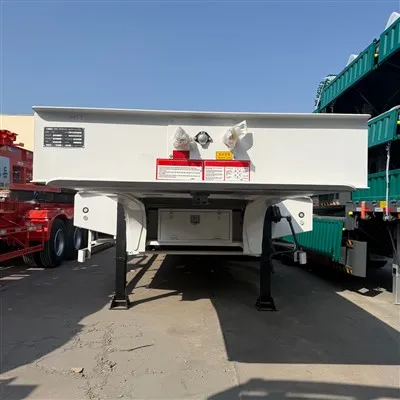
First off, let’s keep this tank-specific, not just generic trailer suspensions. Tank trailers have unique needs, right? That big cylindrical tank – even if it’s empty, it’s heavy, and when it’s full, that weight isn’t spread out evenly. If it’s a liquid load, sloshing around mid-drive can mess with balance, so the suspension has to handle that shifting weight, not just a static load of a dry van or flatbed. Over the years, I’ve talked to so many clients who tried saving a few bucks on a cheap suspension, only to end up with cracked tank mounts, tire blowouts, or worse – a load shift that made the trailer fishtail. Not fun, and definitely not worth the headache.
Let’s start with the most common type you’ll spot on 70% of the tank trailers rolling today: leaf spring suspensions. I know, I know – leaf springs sound basic, but they’re workhorses for a reason. Think of them as layers of curved steel plates stacked on top of each other, mounted between the trailer frame and the axle. When you hit a bump, the plates flex, absorbing the jolt instead of transferring it straight to the tank. For tank trailers, leaf springs are perfect because they’re tough, low-maintenance, and way cheaper to repair than some fancy air system if something goes wrong. Wait, but don’t sleep on the different types of leaf springs – we usually go with multi-leaf semi-elliptical ones for tankers, because they distribute weight more evenly across the axle, which is key when you’re hauling 20,000+ gallons of something that can slosh.
But hold on, there’s a tradeoff with leaf springs: they’re stiffer, so they don’t give as smooth a ride as other systems, especially when you’re running light. If you’re hauling empty tankers a lot, that stiff flex can mean more wear and tear on both the suspension and the tank itself over time. Also, leaf springs don’t adjust for weight like some other setups, so if you’re bouncing between half-full and full loads, you might get inconsistent handling. I once had a small food-grade hauling client who used a leaf spring setup for their milk tankers – they loved the low cost, but once they started running half loads to regional farms, they complained about a rougher ride that made the milk have more foam (not ideal for processing). We ended up swapping a couple of their units to air suspensions, and that solved the foam issue right away. That’s the kind of real-world stuff we deal with every day, not just textbook specs.
Which leads me to the next big player: air suspension systems. This is the one that’s been blowing up in the tank trailer world the last 15 years, and for good reason. Instead of steel leafs, you have rubber air bags (the same kind your work truck has, but built way tougher for heavy loads) that inflate or deflate to adjust the ride height based on how much weight you’re carrying. For tank trailers, this is a game-changer. Let’s break down why: first, that adjustable height means when you’re loading or unloading, you can crank the trailer up or down to line up with loading docks without ramming the tank into the ground. No more scraping that expensive stainless steel bottom, which is a huge win for chemical and food-grade tankers. Second, air suspension smooths out the ride so much that that sloshing liquid load doesn’t move as much – that means better fuel efficiency, less wear on the tank’s seams, and way safer handling on twisty roads.
We’ve also noticed another big perk with air suspensions for tankers: tire wear is way more consistent. Leaf springs tend to cause uneven tire pressure and alignment because the flex isn’t uniform, but air suspension keeps the frame level no matter the load, so your tires last 20-30% longer. For a fleet running 10+ tank trailers, that adds up to thousands of dollars saved a year. Yeah, air suspensions cost more upfront – usually 2-3 times what a leaf spring setup runs – but if you’re hauling high-value or sensitive cargo, or putting a lot of miles on your trailers, it’s totally worth it. I can’t tell you how many gas hauling clients we’ve converted from leaf springs to air systems after they dealt with a tire blowout on a highway at 70 mph – way too risky, and air suspension eliminates a lot of that.
Now, there’s another suspension type that’s less common but perfect for super heavy-duty tank trailers, like the ones hauling construction materials or hazardous chemicals: rigid beam suspension, sometimes called solid axle suspension. This is basically a big, unyielding steel beam connecting the two ends of the axle, with springs attached to the frame. Wait, why would anyone use this? Oh right, if you’re consistently hauling maximum loads – like 80,000 lbs gross vehicle weight on rough off-road sites or backcountry roads – rigid beam suspensions can take way more abuse than leaf or air. They don’t flex at all, so they handle heavy, uneven loads without sagging, which is critical when your tank is stacked to the brim with gravel or corrosive chemicals that would eat through a rubber air bag in no time. The downside? They’re super rough on the driver and the cargo, and you can’t adjust ride height, so they’re not great for general highway use. We only recommend rigid beam suspensions for clients with super specific, heavy-duty use cases – like mining companies or cross-country hazmat haulers that stick to remote routes.
Wait, let’s not forget about the little (but super important) add-ons that pair with these suspensions, because even the best setup is useless without the right extras. For tank trailers, we always include axle stabilizers and damping systems with every suspension we sell. Damping is basically the shock absorbers that work with the suspension to keep it from bouncing too much after hitting a bump – super important for tankers because too much bounce = more sloshing = possible load shift. Stabilizers reduce side-to-side movement, which is a huge safety factor when you’re hauling liquid cargo that can act like a giant pendulum. We also make sure every suspension is matched to the tank’s axle rating – no cutting corners here. If you have a 5,000-gallon stainless steel tank, you need a suspension rated for that weight, not a half-rated leaf spring that’s going to snap after a year.
Another thing I’ve learned over the years: there’s no one-size-fits-all suspension for tank trailers. A lot of new haulers come to us thinking “air is better, so I need that for all my trailers” – but that’s not always true. If you’re a small farm running one 3,000-gallon tanker for hauling water to livestock, a leaf spring setup is way more cost-effective, easier to repair on the go if you’re out in the middle of nowhere, and will last just as long. But if you’re a fleet hauler running 10,000 miles a month hauling food-grade liquids that get foamy easily, air is non-negotiable. We always do a deep dive with clients before spec’ing a trailer – ask them what they’re hauling, where they’re driving, how much they use it, and their budget – that’s how we land on the right suspension, not just push the most expensive option.
Let’s also talk about common mistakes we see clients make with tank trailer suspensions. First, skipping regular maintenance. A lot of people think “suspension is under there, I don’t have to check it” – wrong. Leaf springs need regular lubrication on the plates, air suspensions need air line checks and bag replacements every 5-7 years, rigid beams need bolt torque checks. I had a client last year who ignored a small tear in an air bag on a fuel trailer – it went flat mid-drive, the trailer tilted, and he had to pull over on a busy interstate, costing him thousands in downtime and a fine for a hazardous load. Second, mismatching suspension to load. If you’re using a light-duty leaf spring on a heavy crude oil tanker, you’re going to have cracked axle seats and bent frame rails before you hit 50,000 miles. That’s why we always work with reputable suspension manufacturers – we don’t cheap out on parts, because your reputation as a hauler is on the line when that trailer is on the road.
Here’s the thing, too: modern suspensions are evolving fast. Just last year, we started offering semi-active air suspensions that can adjust in real-time, using sensors to track load, road conditions, and even driving speed. For tank trailers, that’s a game-changer because it minimizes sloshing even more – not just when the load changes, but when you hit a pothole or turn a corner. It’s a little more expensive, but for high-end fleets that compete on safety and efficiency, it’s worth every penny. We’ve also been testing lightweight suspensions made from high-strength aluminum, which cuts down on the trailer’s overall weight so you can haul more cargo without overweight fines. That’s huge for fuel haulers and bulk liquid transporters where every extra pound counts.

At the end of the day, as a tank trailer supplier, our job isn’t just to sell you a trailer with a suspension – it’s to make sure that suspension works for your specific needs. I’ve talked to so many clients who’ve had bad experiences with other suppliers that just spec whatever is cheapest, and end up coming to us to fix their mess. Whether you’re a first-time hauler looking for a single tank trailer to haul water, a fleet manager needing 20 hazmat trailers, or anyone in between, we can walk you through every suspension option, break down the pros and cons, and make sure you get a setup that’s safe, reliable, and cost-effective for years to come. If you’re tired of dealing with breakdowns, high maintenance costs, or cargo issues related to your suspension, don’t hesitate to reach out and chat – we’re here to help you sort through all the options, no sales pressure, just straight talk about what works.
Mixing Tank Truck References
- Commercial Vehicle Safety Alliance. (2022). Tank Trailer Suspension System Maintenance and Safety Guidelines.
- American Trucking Associations. (2021). Suspension Performance for Heavy-Duty Liquid Cargo Transportation.
- National Tank Truck Carriers. (2023). Specification Handbook for Tank Trailer Equipment and Systems.
- SAE International. (2020). Technical Paper: Suspension Dynamics for Liquid Sloshing Mitigation in Heavy-Duty Tank Trailers.
Shandong Huayuanda Automobile Manufacturing Co., Ltd.
As one of the most experienced tank trailer manufacturers and suppliers in China, our products have good reputation in the market. We warmly welcome you to buy high quality tank trailer at low price from our factory. If you have any enquiry about cooperation, please feel free to email us.
Address: Industrial Park, Quanpu Town, Liangshan County, Jining City, Shandong Province
E-mail: Huayuanda2024@163.com
WebSite: https://www.hydtrailer.com/
