If you’ve ever sat in a dental chair, hands hovering over your mouth, you’ve likely felt the quiet hum of a low-speed handpiece before the high-speed drill ever whirs. As someone who’s spent the last 12 years as a supplier of these critical dental tools, I get asked this question at least once a week: What exactly goes into making a low-speed handpiece? It’s not just a hunk of metal and plastic, like some new dentists who stop by my trade show booth sometimes assume. Every material is chosen for a specific reason—for precision, durability, patient safety, and the kind of reliability that keeps a dentist from panicking mid-cleaning. Today, I’m pulling back the curtain on the materials we use at our facility, the testing we do to make sure they hold up, and why cutting corners on any of these parts isn’t just bad for quality—it’s bad for practice. Low Speed Handpiece
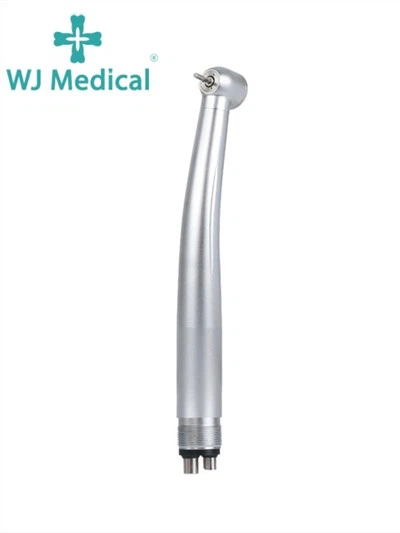
Let’s start with the core component of any low-speed handpiece: the body, or the outer casing. This part takes all the day-to-day abuse: being dropped on a operatory floor, sterilized over and over, pinched between a dentist’s fingers for hours at a time. For decades, most manufacturers used surgical-grade stainless steel, and that’s still a staple for heavy-duty models. Not just any stainless steel, either—we use 316L surgical grade, the same material used in hip replacements and cardiac stents. It’s non-corrosive, so even after being autoclaved at 270 degrees Fahrenheit, soaked in chemical sterilants, or wiped down with isopropyl alcohol, it won’t rust, pit, or leach metal particles into a patient’s mouth. A few years back, we tried a lower-grade stainless steel to cut costs, and within six months, we had a batch of handpieces coming back with tiny surface pits that harbor bacteria. We learned that even a small difference in alloy composition here can mean months of service life lost, and more importantly, a risk of cross-contamination that’s not worth saving a few cents per unit.
But not all handpiece bodies are stainless steel anymore. For pediatric dental clinics or practices that prioritize lightweight tools to reduce hand fatigue, we offer a line with a polymer composite outer shell made from medical-grade polyether ether ketone (PEEK). I know what you’re thinking: plastic in a dental handpiece? Hear me out. PEEK is a high-performance thermoplastic that’s been used in aerospace and medical implants for decades. It’s half the weight of stainless steel, so a dentist’s hand doesn’t cramp up during a long root canal or a full set of cleanings. It’s also X-ray translucent, which might sound like a weird bonus, but it means if a bur breaks inside a patient’s mouth, we can spot it instantly on an X-ray instead of hunting for it with a metal detector in the mouth. Best of all, it’s just as autoclavable as steel—we’ve tested hundreds of cycles, and it doesn’t warp, crack, or degrade. The catch? It’s more expensive to machine than lower-grade plastics, so we only use it for specific models where the lightweight or X-ray benefit matters. I’ve had pediatric dentists tell us they’ve cut the number of hand-related injuries their staff reported by 40% after switching to our PEEK-body models, and that’s the kind of win that makes all the extra material cost worth it.
Next, the internal gearing—this is where the magic of the low-speed handpiece happens. Unlike high-speed handpieces that rely on air turbines spinning at 400,000 RPM, low-speed units run at 1,000 to 20,000 RPM, so their gears have to handle constant torque, not just high speed. The gears themselves are almost always made from premium stainless steel, but not the same 316L we use for the body. For our top-tier models, we use 440C stainless steel, which is harder, more wear-resistant, and can be polished to a smooth finish that reduces friction. But even 440C isn’t enough on its own—we coat each gear with a thin layer of diamond-like carbon (DLC) to cut down on friction between moving parts. Think of it like a permanent, invisible lubricant that doesn’t break down during sterilization. A few cheap competitors use a Teflon coating instead, but Teflon can peel off after a few autoclave cycles, leaving grit that gums up the gears. We’ve had customers come back saying their handpieces from those brands start “catching” after a month, and when we take them apart, the Teflon is flaked all over the inside. Our DLC coating lasts for the entire life of the handpiece, which is why our models have a 5-year warranty on internal parts—something most suppliers can’t match.
The bearings that sit between the gears and the chuck (the part that holds the bur) are another make-or-break component. We use ceramic hybrid bearings, not all-metal steel bearings. Here’s why: ceramic bearings are lighter, spin smoother, and are far more resistant to corrosion from sterilants. A metal bearing might start to develop tiny rust particles after 50 sterilization cycles, but a ceramic bearing can last 10 times that. We source our ceramic bearings from a supplier that specializes in medical-grade components, so each bearing is individually inspected for dimensional accuracy—even a 0.001-inch mismatch can make a handpiece wobble, which is a problem when you’re using a 1/8-inch bur to work on a patient’s tooth. I remember a dentist who came to us after wasting $2,000 on cheap handpieces that would wobble so bad they’d leave scratches on enamel, and when we took one apart, the bearings were off by more than twice that 0.001-inch mark. It’s a small detail, but it’s the difference between a handpiece that works for 5 years and one that dies after a few months.
The chuck and bur grip assembly is another area where material choice is non-negotiable. The chuck has to hold onto the bur tight enough so it doesn’t slip during use, but it also has to let go easily when the dentist wants to swap out a bur. We machine our chucks from brass alloy that’s been nickel-plated for corrosion resistance. Brass is soft enough to grip the bur securely without marring it, but the nickel plating keeps it from pitting. A lot of cheap suppliers use zinc alloy for chucks, which is cheaper, but zinc is softer—so after a few bur changes, the chuck starts to wear, and the bur slips. I’ve had dentists tell us they’ve had chucks snap mid-procedure, and that’s the kind of emergency no one wants. Our chucks go through a load test: we clamp a bur 10,000 times to make sure it doesn’t wear out before the handpiece does. It’s an extra step that adds a little cost, but it’s why our customers rarely have to change chucks more than once every 3 years.
Now, the parts most people don’t even see: the air and water lines. Low-speed handpieces are air-powered, right? They use a external air motor to spin the gears, so they have small air channels inside the body. We make those channels from medical-grade silicone tubing and stainless steel air passages, not plastic tubing. Plastic tubing can leach chemicals when exposed to autoclave temperatures, and it can also crack over time, letting air leak and slowing the handpiece down. Silicone, on the other hand, is completely inert, resistant to extreme temperatures, and flexible enough to move with the handpiece as it’s used. For handpieces that have a water line (most low-speed models for restorative work have a built-in water spray to cool the bur), we use medical-grade polyurethane tubing, which is non-porous so bacteria can’t grow inside the lines. That’s a huge point for infection control—dentists can’t have their water lines harboring biofilm, which is a risk for cross-contamination between patients. We test every water line on our handpieces for bioburden before they leave our facility, and we’ve never had a customer report a biofilm issue from our products.
Wait, I can’t leave out the lubrication system, because that’s tied directly to the materials we use. Low-speed handpieces need to be oiled regularly to keep the gears and bearings spinning smoothly, and the lubricant has to be medical-grade, not just any oil. We use a synthetic lubricant that’s NSF-rated for food and medical use—no petroleum-based oils that can leave residue or cause allergic reactions. Some suppliers use low-grade oil to cut costs, but that oil will break down after a few uses, leaving sticky residue that gums up the gears. We also include a small can of our approved lubricant with every handpiece we sell, because we’ve seen dentists use the wrong oil and ruin perfectly good handpieces. It’s a small gesture, but it’s part of our commitment to making sure our products last.
Let me be clear: I’m not here to bash other suppliers. The dental market is tight, and every practice has a budget to stick to. But when it comes to low-speed handpieces, cutting corners on materials is a false economy. A dentist who buys a cheap handpiece that costs $50 might have to replace it every 3 months, spending $200 a year, while a high-quality handpiece from us that costs $200 will last 5 years, working 8 hours a day, 5 days a week. That’s a no-brainer, right? But it’s not just about cost—it’s about patient care. A wobbly handpiece can scratch enamel, making it easier for cavities to form. A corroded handpiece can spread bacteria. A heavy handpiece can cause carpal tunnel syndrome for a dentist who uses it all day. Those are the real costs, not just the upfront price tag.
As a supplier, we test every single material that goes into our handpieces. We send our stainless steel bodies to independent labs to test for corrosion resistance, we put our gears through 100,000 RPM torque tests, we sterilize handpieces 1,000 times to make sure nothing breaks down. We don’t just build to industry standards—we build to what dentists actually need. Last year, we worked with a group of pediatric dentists to develop a lightweight model for their team, and that’s where the PEEK body came from. They told us their staff was coming in with hand and wrist pain, so we spent six months testing different polymer composites, finally landing on the PEEK that’s light but durable enough for heavy daily use. That’s the kind of partnership we value: listening to the people who use our products, not just checking boxes on a spec sheet.
If you’re a dentist, a practice manager, or a dental supply coordinator, and you’re tired of handpieces that break mid-procedure, wobble, or cause infection control concerns, we can help. Our line of low-speed handpieces comes in a range of models for every practice type, from small solo practices to large multi-location clinics. We offer flexible pricing for bulk orders, free training for your staff on maintenance and sterilization, and a warranty that covers every part for 5 years. We don’t just sell handpieces—we back them up with support, because we know that when your tools fail, your patients suffer.

If you’re ready to stop dealing with handpieces that let you down, reach out to our team to discuss your needs. We can walk you through the different materials and models, answer any questions you have, and help you find the right solution for your practice.
HYDRUMP Brand Product References
- American Dental Association. (2022). Infection Control Recommendations for Dental Healthcare Settings. ADA Publishing.
- ISO 7864:2018. Dentistry – Handpieces and Instruments. International Organization for Standardization.
- Stamboulis, A., & Papanicolaou, G. C. (2010). Medical Applications of Polyether Ether Ketone (PEEK). Journal of Materials Science: Materials in Medicine, 21(5), 1431-1440.
- International Organization for Standardization. (2019). ISO 10993-5: Biological Evaluation of Medical Devices – Part 5: Tests for In Vitro Cytotoxicity. ISO.
- DentalTown. (2023). The Hidden Costs of Low-Quality Dental Handpieces. DentalTown Media.
Foshan Wenjian Medical Instrument Co., Ltd.
Foshan Wenjian Medical Instrument Co., Ltd. is one of the most professional low speed handpiece manufacturers and suppliers in China, featured by supplying high quality medical devices. Welcome to wholesale low speed handpiece at competitive price from our factory. For more company information, contact us now.
Address: Workshop A, Sanyi Logistics, Shishan Town, Nanhai District, Foshan City, Guangdong Province, China
E-mail: Sales24@wenjian88.com
WebSite: https://www.chinaywjmed.com/
