If you’ve ever stood by a dead car, truck, or even a recreational vehicle staring at a charger that’s taking far too long to bring your battery back to life, you know how frustrating optimization of the charging process isn’t just a technical detail—it’s the difference between getting where you need to go on time and wasting hours waiting for power to return. As a supplier of vehicle battery chargers, I’ve spent years working with fleets, weekend mechanics, and everyday drivers to cut charging time, extend battery life, and get consistent, reliable results no matter what kind of lead-acid, lithium-ion, or AGM battery they’re working with. Too many people treat charging like a one-size-fits-all task, plugging in a charger and walking away, but small, intentional choices around preparation, charger selection, and monitoring can make a world of difference. Vehicle Battery Charger
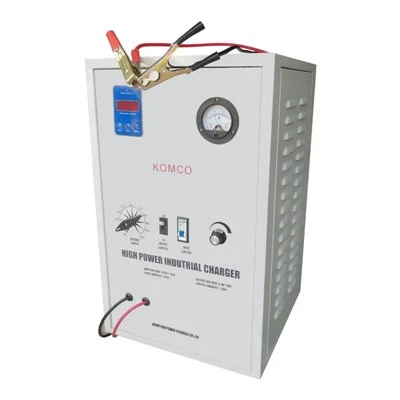
The first step to optimizing charging starts long before you plug in the charger, and it’s all about what you do with the battery itself. Most people skip pre-charging checks, but this is where most of the inefficiency sneaks in. Take a 12-volt car battery, for example—over time, corrosion builds up on the terminals, creating a layer that blocks electrical flow between the charger and the battery. Even a thin layer of white or green corrosion can increase resistance by 20% or more, which means the charger has to work harder to push current into the battery, stretching out charging time and even leading to under-charging. I always recommend giving terminals a quick wipe with a wire brush or a commercial terminal cleaner before every charge, then applying a thin coat of petroleum jelly or a terminal protector once they’re dry. This takes five minutes but cuts down on wasted energy and speeds up the entire process.
Next, check the battery’s state of charge (SOC) before you connect the charger. A lot of drivers assume a battery that’s too dead to start the engine is completely drained, but that’s rarely the case. A typical 12-volt lead-acid battery will show around 12.6 volts when fully charged, and 12.2 volts at a 50% charge. If your battery is at 11.8 volts or lower, it’s deeply discharged, and charging it too fast at that point can cause damage—something as simple as gassing (where hydrogen and oxygen are released from the electrolyte) or even warping the battery plates. That’s where a good charger with a built-in SOC reader comes in handy. When I worked with a local delivery fleet last year, they were using basic chargers that didn’t track SOC, so they were over-charging 10% of their batteries every month, shortening their lifespan by an average of three months. Switching to chargers that automatically adjust charging speed based on SOC cut their charging time per battery by 15% and reduced premature battery replacements by nearly 20%. That’s not just a win for them—it’s exactly the kind of optimization we design our chargers to deliver.
Choosing the right charger for your battery is the single most important decision in the whole process, and it’s where a lot of people go wrong. I see drivers grab the first charger that fits the voltage of their battery, but amperage matters just as much. For example, a small motorcycle battery only needs a 1- to 2-amp charger, because a higher amp charger would push too much current too quickly, damaging the delicate cells inside. A standard 12-volt car battery can handle a 10- to 15-amp charger, but a deep-cycle battery for an RV or golf cart, which is designed to discharge slowly over time, should use a charger with a maintenance mode, not a high-speed rapid charge setting. Our team tests every charger we sell with different battery chemistries and types, and we always recommend checking the battery’s manufacturer guidelines for maximum charging amperage before selecting a charger. That’s why we make chargers that are labeled clearly for specific applications—whether you’re charging a lawn mower battery, a heavy-duty truck battery, or a lithium-ion battery for an electric scooter—so you don’t have to guess.
Then there’s the charging environment, a detail many people overlook but that has a huge impact on how fast a battery charges. Batteries are temperature-sensitive: their chemical reactions slow down in cold weather, and speed up in heat. If you charge a battery in a garage that’s 32 degrees Fahrenheit (0 degrees Celsius), you’ll take up to twice as long to get a full charge as you would in a 70-degree Fahrenheit (21 degrees Celsius) space. That’s because cold thickens the electrolyte inside the battery, making it harder for charge to flow. On the flip side, charging a battery in direct sunlight or a hot engine bay (above 120 degrees Fahrenheit or 49 degrees Celsius) can cause overheating, which damages the cells and shortens the battery’s life. My tip is to charge batteries in a well-ventilated, temperature-controlled space if possible, and never charge a frozen battery—let it thaw completely for 24 hours before connecting the charger, because charging frozen electrolyte can crack the battery casing. For fleet managers who charge dozens of batteries daily, we even sell chargers designed to work in slightly colder conditions, with built-in temperature sensors that adjust charging speed automatically to account for ambient temperature. That’s a game-changer for teams operating in northern climates, where winter slowdowns used to be a major headache.
Once you’ve got the right charger, the right setup, and the right environment, how you connect the charger matters too. Always make sure the charger is unplugged from the power outlet before connecting the clamps to the battery terminals—this prevents sparking, which is not only dangerous but can also damage the charger and the battery. Then, connect the positive (red) clamp to the positive terminal, and the negative (black) clamp to the negative terminal, and make sure they’re tight. If you’re charging a battery that’s still in a vehicle, connect the negative clamp to a bare metal part of the chassis, not the negative terminal itself. This avoids any electrical draw from the vehicle’s electronics while charging, which can slow down the process. I once had a customer who was charging his truck battery while the radio was still on, and it took three times as long as it should have. Once he disconnected the radio and other accessories, the charging time dropped by more than half. Small moves, but they add up.
Modern chargers have a big advantage over older, basic models: smart charging technology. Most people don’t realize that trickle charging is actually bad for batteries long-term, because it keeps them in a constant state of overcharge. That’s why we built our chargers with multi-stage charging: bulk, absorption, and float stages. The bulk stage is when the charger pushes as much current as the battery can safely handle to get it up to around 80% charge quickly. The absorption stage then slows the current down to top off the remaining 20% without overheating, and the float stage keeps the battery at a full charge without wasting energy once it’s complete. This not only cuts down on charging time by up to 30% compared to manual chargers, but it also extends the battery’s lifespan by reducing stress on the cells. A couple of years ago, we worked with a RV club that was using old trickle chargers, and their batteries were dying every two years. After switching to our multi-stage chargers, their batteries lasted an average of four and a half years—more than double the life, just from optimizing the charging process.
I also tell customers to avoid interrupting the charging cycle early. It can be tempting to unplug the charger once the battery feels full, especially if you’re in a hurry, but stopping mid-cycle means you’re almost always leaving the battery at a partial charge. For example, if you stop a bulk charge at 70%, the battery won’t be able to deliver the full power it’s designed to, leading to more dead battery incidents down the line. Most smart chargers have LED lights that show when each stage is complete, or even automatic shut-off, so you don’t have to guess. If you’re using a manual charger without these features, invest in a battery monitor—these small devices plug into the battery and track voltage, current, and SOC, so you’ll know exactly when the charge is done. It’s a small addition that pays for itself quickly in saved charging time and longer battery life.
One final tip that’s often overlooked: regular maintenance of both the battery and the charger. Even the best charger won’t work well if its clamps are rusty or its internal connections are loose. Every couple of months, take a minute to check your charger’s cords and clamps for wear, fraying, or corrosion. Wipe down the cords with a damp cloth, and make sure the clamps open and close fully so they make a solid connection. For the battery, check the water level (for flooded lead-acid batteries) every few months—low water levels can expose the plates, leading to reduced charging capacity. Top off with distilled water, not tap water, because tap water has minerals that build up and damage the battery. This kind of regular care keeps the entire charging process efficient, and it’s a habit that’s easy to get into once you do it a few times.
At the end of the day, optimizing the charging process isn’t about complicated technology or expensive tools. It’s about paying attention to the small details that make a big difference: checking terminals, choosing the right charger for your battery, charging in the right environment, and using smart, stage-based charging. If you’re struggling with long charging times or frequent battery failures, these small adjustments will save you time, money, and hassle. If you’d like to talk more about which charger is right for your specific needs, or learn about solutions tailored for fleets, workshops, or personal use, our team is here to help. We’ve worked with thousands of customers to refine their charging processes, and we can support you too.
Battery Charger References
- Linden, D., & Reddy, T. B. (2002). Handbook of Batteries (3rd ed.). McGraw-Hill.
- Event, S., & Stelwagen, U. (2015). “Temperature Effects on Battery Charging Efficiency.” Journal of Power Sources, vol. 285, pp. 212-218.
- US Department of Energy. (2021). “Battery Charging Best Practices for Automotive Applications.” DOE Vehicle Technologies Office.
- ASTM International. (2018). “Standard Practice for In-Vehicle Battery Charging Optimization.” ASTM E2458-18.
Huizhou Qiangfeng Power Technology Co., Ltd.
Huizhou Qiangfeng Power Technology Co., Ltd. is one of the most professional vehicle battery charger manufacturers and suppliers in China, featured by quality products and good service. We warmly welcome you to buy customized vehicle battery charger made in China here from our factory. If you have any enquiry about quotation and free sample, please feel free to email us.
Address: No. 28, Hu’ao Avenue, Shiwan Town, Boluo County, Huizhou City, Guangdong Province
E-mail: Komco@Jinlidianqi.cn
WebSite: https://www.autobatterychargers.com/
