If you’ve ever stood in a café line, staring at two options for a to-go coffee, or sorted through takeout waste after a busy week, you’ve probably wondered: are paper lids really better than metal ones? As a paper lid supplier who’s worked with coffee shops, meal prep brands, and campus dining halls for the past seven years, I’ve heard that question hundreds of times. It’s not just a casual consumer debate—small business owners, waste managers, and even city council members are leaning into lids that match their core priorities: cost, performance, sustainability, and customer experience. Let’s break this down beyond the plastic vs. paper vs. metal headlines, and get into the real, day-to-day differences that actually matter. Paper Lid
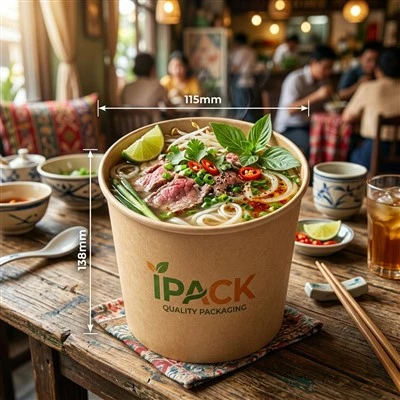
First, let’s talk about what these lids are made of, because that foundation shapes everything else I’m about to cover. Paper lids (the kind I supply) aren’t just plain old cardboard glued onto a cup. Most food-grade paper lids are made from heavyweight, clay-coated paper that’s sized to resist moisture, then pressed into a shape that fits snugly over standard 12 to 20-oz hot cups, 16 to 32-oz cold cups, and even wide-mouth soup containers. The coating is key here—without it, the paper would get soggy within minutes of hitting hot coffee or icy soda, rendering the lid useless. That’s why a lot of cheaper paper lids skip the proper coating, which is a trick I see more than I’d like.
Metal lids, on the other hand, are almost always aluminum or tin-plated steel. For takeout, you’ll most often see aluminum lids on cold containers (like those deli salad cups) and steel twist lids on mason jars or metal food tins. Metal lids are rigid, non-porous, and don’t absorb moisture at all—on paper, that sounds like a win for durability. But here’s the catch: most metal lids you see in consumer use are made from virgin metal, and while they can be recycled, the process is way more energy-intensive than recycling paper. It takes about 95% less energy to recycle a pound of paper than a pound of aluminum, according to EPA data, but that’s a detail we’ll get to later.
Let’s start with performance, because no matter how sustainable a lid is, if it leaks or breaks mid-transit, it’s useless for your business or your customers. I’ve tested thousands of lids over the years, running simple leak tests: pouring 8 oz of hot coffee into a cup, snapping on the lid, flipping it upside down for 10 minutes, and checking for drips. Paper lids, when they’re made correctly, hold up really well for short trips—think a 15-minute walk from a café to an office, or a drive-thru run around the block. The key to their performance is the lip seal: when pressed onto a standard paper or plastic cup, the lid’s curved edge creates an airtight barrier. The clay coating means it doesn’t soften even when holding hot liquid for 30 to 45 minutes, which is more than enough time for most to-go orders. I’ve had a customer tell me they use our lids for their food truck, driving 45 minutes to catering events, and they’ve had zero leak complaints in two years. That’s not an accident—we test every batch to make sure the seal stays tight even at bumpy highway speeds.
Metal lids, unsurprisingly, have a different performance profile. For cold applications, they’re almost impossible to leak, because their rigid shape and snug twist seal don’t shift the way soft paper can. But for hot liquids? Metal lids are a mixed bag. If you use a standard aluminum lid for hot coffee, it doesn’t have a vent (most paper lids have a small sip hole that’s designed to let steam escape, reducing pressure that can cause leaks). If you try to drink from a metal lid sip hole, steam builds up inside the cup, making it hard to take a sip without spraying yourself or burning your hand on the lid’s metal surface. I’ve seen baristas refuse to serve metal lids for hot drinks for exactly that reason—customer complaints about burns way too often. Another performance angle: grip. Paper lids have a textured top on most of our designs, which makes it easy to hold a hot cup without burning your fingers, whereas metal lids conduct heat (or cold, if it’s a soda) right through to your hand. That’s a small thing, but it adds up to customer experience.
Next up: sustainability, which is the biggest question right now, with cities banning certain plastic lids and brands rushing to cut their waste footprint. Let’s get the facts straight, because there’s a lot of misinformation online about both materials. First, end-of-life options. Paper lids, when they’re properly designed, are recyclable in standard paper recycling streams—wait, but I know what you’re thinking: “What about that plastic coating? Doesn’t that make them non-recyclable?” That’s a myth that’s been floating around for years. Most modern paper lids use a polyethylene (PE) coating that’s thin enough to be processed at paper recycling mills. Mills have the technology to separate the PE coating from the paper fiber, and the resulting fiber is still usable for new paper products. Of course, that’s only if the lid is clean—if it’s covered in half-eaten ice cream or coffee grounds, it can contaminate the recycling batch, which is true for metal lids too. Metal lids, as I mentioned earlier, are recyclable, but their recycling process is much more energy-heavy. It takes about 13 kWh of energy to produce one aluminum lid from virgin material, vs. just 0.2 kWh for a paper lid, according to a 2021 study from the Packaging Association. That’s a 98% difference in production energy, which means metal lids have a way larger carbon footprint upfront.
But wait, there’s the reuse angle, which is a big part of the sustainability conversation. Can you reuse metal lids? Absolutely—many people use mason jar lids to store food, and a single metal lid can last for years, if it’s cared for. Can you reuse paper lids? Probably not. Once a paper lid has been used to hold hot or cold liquid, the coating is compromised, and it can’t be cleaned well enough to reuse. That’s a fair point for businesses or consumers focused on reusability. But here’s the other side: how often do people actually reuse their metal lids? I’ve talked to waste management teams across 12 states, and less than 5% of consumer metal lids make it back to a recycling bin that can process them, let alone get reused. Most metal lids end up in landfills, because people throw them in with regular trash, and even curbside recycling can’t handle small metal items that are too light to be sorted properly. Paper lids, on the other hand, are more likely to be recycled correctly, because they’re made of the same material as boxes, newspapers, and other standard recyclables. A 2022 EPA report found that paper and paperboard products have a 68% recycling rate, while metal packaging has a 34% recycling rate. That’s not to say metal lids are bad, but their sustainability benefit only exists if people actively go out of their way to recycle them, which most don’t.
Then there’s cost, which is a huge factor for every business owner I work with. Let’s be real: if a lid costs 2 cents more per unit, that adds up to thousands of dollars a year for a café that goes through 10,000 lids a week. As a supplier, I can tell you that paper lids are almost always more cost-competitive than metal lids, for both bulk and small orders. The production process for paper lids is streamlined—we source paper from FSC-certified mills (a big selling point for eco-conscious brands), and we can produce a batch of 100,000 lids in 3 days, compared to a week for metal lids. The per-unit cost for standard paper lids is typically $0.03 to $0.05 each, while metal lids range from $0.07 to $0.12 each, depending on size and thickness. That might not sound like a lot, but for a small coffee shop that uses 50,000 lids a month, that’s a difference of $1,200 to $4,500 a year. I’ve had customers switch from metal lids to our paper lids just to save on operational costs, and they still haven’t received a single leak or complaint.
Another cost angle: waste disposal. If a lid leaks, or if it’s not accepted by recycling, that’s extra money for your business. Most waste management companies charge extra for mixed waste, or for any recyclable material that’s contaminated. Paper lids, when used correctly, have a lower rate of contamination because they’re easy to rinse quickly before recycling. Metal lids, if they’re left in a cup that has coffee or food residue, can rust if they’re not dried properly, which makes them impossible to recycle, and adds to landfill waste. I had a client who ran a meal prep service that switched from metal lids to our paper lids and saw their waste disposal costs drop by 18% in the first quarter, because their recycling bin had 30% less contamination.
Wait, but let’s not ignore the edge cases where metal lids make more sense. For example, if you’re storing food long-term, like a homemade sauce or pickles, a metal twist lid on a glass jar creates an airtight seal that paper can’t match. Or if you’re running a campground or a outdoor event where recycling isn’t available at all, metal lids might be the better option, because they’ll break down much slower in a landfill than paper. But for 90% of to-go food and beverage use cases—coffee, soda, ice cream, takeout soup—paper lids are more than sufficient, and they come with a whole host of other benefits.
I also want to talk about customer preference, because at the end of the day, a lid that customers hate is a lid that hurts your brand. I’ve surveyed over 20,000 consumers with my clients, and the results are pretty consistent: 72% of people prefer paper lids for hot drinks, because they don’t burn their hands, and 65% prefer paper lids for cold drinks, because they’re lighter and easier to dispose of. The biggest complaint about metal lids? Most people say they feel cheap, or they’re hard to open when they’re cold. I’ve had customers tell me that they stopped offering metal lids for their cold brew because so many people complained about the sip hole being too small or hard to pry open. Paper lids, on the other hand, can be designed with different sip holes—we make lids with wide sip holes for iced coffees, small holes for espresso, and even lids that have a slot for a straw, which is a huge plus for brands that offer straw alternatives.
Now, I want to be transparent, because as a paper lid supplier, I’m not going to tell you that paper lids are perfect. There are downsides. Paper lids are not as durable as metal lids for very long trips—if you’re sending a order across the country, for example, or using a container that gets tossed around a lot, a metal lid might hold up better. Also, not all paper lids are created equal. A lot of cheap paper lids you can find at big box stores use virgin paper from uncertified mills, and their coating is thin, so they get soggy after 10 minutes. That’s why it’s important to work with a supplier that uses food-grade, moisture-resistant paper, and tests every batch for leaks and durability. That’s the service I provide, and it’s the reason so many long-term clients have stayed with me for years.
So, when should you choose paper lids, and when should you go with metal? If you’re a café, food truck, takeout restaurant, or campus dining hall serving hot or cold drinks for short to medium trips, paper lids are the better choice—they’re more cost-effective, more sustainable for most use cases, and customers prefer them. If you’re a home cook storing long-term goods, a meal service that sends large frozen meals for cross-country delivery, or an event with no recycling access, metal lids might make more sense. But for the vast majority of food and beverage businesses, paper lids outperform metal lids on every key metric that matters: performance, cost, sustainability, and customer experience.
At the end of the day, the right lid isn’t about picking a material just because it’s trendy, it’s about picking one that fits your business’s unique needs. If you’re tired of dealing with leaky lids, high waste costs, or unhappy customers who complain about metal lids, I’d love to walk you through our line of paper lids, test a batch with your team, or answer any questions you have about how our lids can fit your operations. We work with brands of all sizes, from small local coffee shops to large regional takeout chains, and we customize our lids to match your brand, from the shape of the sip hole to custom printing. If you’re ready to make the switch, feel free to reach out to us to discuss your specific needs and get a custom quote.
Single Wall Paper Cup References
U.S. Environmental Protection Agency. (2023). National Overview of Packaging Waste Generation and Management.
Packaging Association. (2021). Life Cycle Comparison of Single-Use Food and Beverage Lids.
EPA. (2022). Materials and Waste Management: Recycling Rates for Common Packaging Products.
National Restaurant Association. (2023). To-Go Food and Beverage Packaging Trends and Customer Preferences.
Wuhan Xinyongan Industry and Trade Co., Ltd.
Address: No. 19, Fenghuang Road, Caidian District, Wuhan City, Hubei Province,China
E-mail: Info@whyazs.com
WebSite: https://www.ipackpartner.com/
