If you’ve ever walked through a grain processing plant, a recycling yard, or a pharmaceutical manufacturing floor, you’ve likely seen a screener machine at work. These rugged, reliable workhorses separate materials by size, density, or consistency—sorting everything from wheat kernels to plastic scrap to powdered active pharmaceutical ingredients. For years, my team and I have supplied the Screener Machine Series to facilities across industries, and one question comes up again and again: Can this line of equipment be integrated with other production systems? Screener Machine Series

I get it. When you’re investing in new machinery, you don’t want it to be a standalone island. Production lines are built to flow—raw materials come in, they’re processed through multiple stages, and finished goods ship out. If a screener can’t talk to, sync with, or feed into your other equipment, it creates bottlenecks, adds manual labor, and negates the efficiency gains you’re chasing. Over the past decade, we’ve worked to address that exact concern, and today, the short answer is a resounding yes. The Screener Machine Series is designed for seamless integration, and I want to break down how that works, the real-world applications we’ve seen, and why this flexibility is non-negotiable for modern manufacturing.
Let’s start with the core design of our Screener Machine Series. When we engineered these units, we didn’t build them to operate in a vacuum. We started by standardizing their communication protocols, which is the backbone of any successful integration. Whether you’re using a Allen-Bradley control system, Siemens PLCs, or even older legacy systems that have powered your facility for 20 years, our screeners can sync up. The Series includes both analog and digital I/O ports, plus built-in support for Modbus RTU, TCP/IP, and Ethernet/IP—some of the most widely used industrial communication standards in the world. That means you don’t have to overhaul your entire control infrastructure just to add a new screener; we can adapt to your setup, not the other way around.
Take our flagship vibrating screener, the SM-700, as an example. A few years back, we worked with a mid-sized flour mill in the Midwest that was struggling with inconsistent sorting. They had a new mixing system that was syncing with their bagging line, but their old screener was kicking materials out at random times, causing backups and overflows. We installed an SM-700 and programmed it to send real-time data to their existing PLC: when it detected a batch of under-sized wheat, it triggered a signal to the mixing line to slow down until the screener cleared the backlog. When it was full of properly sized flour, it sent a “ready” signal to the bagger to ramp up production. Within three months, their downtime related to sorting dropped by 40%, and they eliminated two part-time labor positions that had been manually tracking screener output. That’s the kind of ROI that integration delivers.
Another key part of our Series’ integration capability is adaptability in material handling. A screener is only as useful as the equipment that feeds it and takes output from it. Our screeners have standard flange mounts, adjustable discharge chutes, and built-in interface points for conveyors—bucket conveyors, belt conveyors, screw conveyors, you name it. We don’t sell generic flimsy chutes that require custom welding or cutting to fit your existing lines. Instead, we engineer the discharge points to align with industry-standard conveyor widths and heights, so our teams or your maintenance crew can install the connection in a matter of hours, not days.
Last year, we collaborated with a plastic recycling facility that was expanding its operation to handle post-consumer water bottles. They had a shredder that processed the bottles into flake, then a washer, and finally a sorting system. Their old screener couldn’t keep up with the shredder’s output, and it was feeding into a conveyor that was too narrow, leading to constant jams. We retrofitted their production line with two SM-1000 large-capacity screeners from our Series, mounted directly to their existing belt conveyor. We modified the discharge chute to match the conveyor’s 36-inch width, calibrated the screener’s vibration frequency to sync with the shredder’s output rate, and added a small control panel that tied into their overall facility management software. The result? They doubled their sorting capacity, eliminated conveyor jams, and were able to add a second shift without investing in more equipment. That’s the value of a screener that works with your existing gear, not against it.
Of course, integration isn’t just about connecting hardware. It’s about data too, and the Screener Machine Series is built for Industry 4.0 compatibility. Every unit in our line comes with a built-in HMI (Human-Machine Interface) that’s customizable, so you can display real-time data on screen quality, throughput, and maintenance needs. That HMI can also send data to your facility’s central dashboard, or to cloud-based software if you use that for production tracking. For example, a pharmaceutical client we work with uses our SM-500 precision screeners to separate powdered drug compounds. They need to track every batch’s size distribution for regulatory compliance, and they integrate our screener’s data with their LIMS (Laboratory Information Management System). That means they don’t have to manually log every batch— the screener does it automatically, saving hours of administrative work and reducing the risk of human error.
But here’s the thing: we know not every facility runs a state-of-the-art, fully automated plant. Some of our clients have older equipment, smaller budgets, or space constraints that make full integration with a central system tricky. That’s why our Screener Machine Series is flexible enough to work in semi-automated setups too. We offer optional add-ons like manual control panels that sync with your existing conveyor controls, or portable feed hoppers that can be moved between different lines without permanent installation. For a small-scale food producer in the Pacific Northwest, that was a game-changer. They process artisanal grains, and they only need a screener for 2-3 weeks a year during harvest season. We supplied them with our compact SM-300 model, which connects to their existing portable conveyor with a quick-release clamp, no welding or drilling required. It works with their basic on/off controls, so they don’t need a full PLC setup, and it can be moved to their storage area when not in use. That’s integration tailored to your needs, not a one-size-fits-all approach.
I want to be clear, though—integrating any new equipment comes with challenges, and we’re not the kind of supplier that will promise a perfect, hassle-free install without doing our homework. When a client reaches out asking about integrating our Screener Machine Series, our first step isn’t to push a sale. It’s to send our technical team to their facility, or walk them through a free assessment process, to map out their existing line, their production goals, and their pain points. We’ve seen clients make the mistake of buying a screener that fits a generic standard, only to realize it doesn’t align with their conveyor height, control system, or throughput needs. We avoid that by working with them from day one, asking questions like: Are you feeding the screener from a bin or a conveyor? What’s the output going to—packaging, a secondary process, or storage? Do you need it to sync with a quality control system, or is it a standalone process? Do you have space for a control panel, or do you need a compact setup?
For example, a metal parts manufacturer contacted us last year because they were having issues with their old screener not separating metal shavings from finished parts, leading to quality rejects. They had a robotic part handling system that placed parts on a conveyor, then sent them to a deburring station, and finally to packaging. The old screener was placed in the middle of the line, but it was manually controlled, so operators often forgot to adjust its vibration settings when the line speed changed. We worked with their engineers to integrate our SM-800 screener with their robotic control system: we programmed the screener to receive a real-time signal from the robot telling it when parts were being fed, adjust its vibration frequency based on line speed, and send a signal to the packaging line if it detected oversized or undersized parts. The result? Their reject rate dropped by 25%, and they were able to run their line 10% faster without sacrificing quality. That’s the kind of tailored integration that only comes from a supplier that takes the time to understand your operation.
I also want to address a common misconception: some people think that integrating equipment will lead to more downtime, more complicated maintenance, or less control over the screener. But that’s not how we design our Series. Our control systems are user-friendly, with intuitive HMIs that don’t require a team of engineers to operate. We provide full training for every client, whether they’re a small team or a large facility, and we offer 24/7 technical support for any integration issues that come up. We also design our screeners with modular parts, so if an integration connection fails, you can swap out a port or a component in minutes, without having to shut down your entire line for hours.
Last year, a client in the recycling industry had an issue with a communication cable between their screener and conveyor. It was a minor wiring problem, but instead of waiting three days for a repair technician, their maintenance team was able to swap the cable in 45 minutes because we used standard, off-the-shelf connectors. That’s the kind of practical design that makes integration work long-term, not just during the install.
So, back to the original question: Can the Screener Machine Series be integrated with other equipment? The answer is yes, but only if the integration is tailored to your specific operation, not a generic template. Over the past 12 years, my team and I have supplied hundreds of screeners to facilities across food processing, pharmaceuticals, recycling, and manufacturing, and we’ve never had a client that couldn’t integrate our Series into their existing line. The key is that we don’t build our screeners to be standalone products—we build them to be part of a larger system, whether that system is fully automated, semi-automated, or manual.
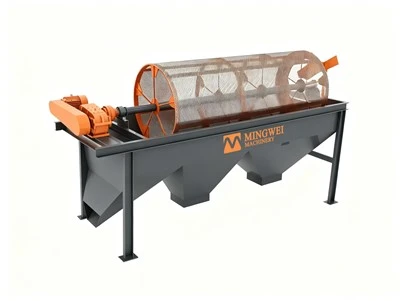
If you’re in the market for a screener and you’re worried about how it will fit into your existing production line, I encourage you to reach out. We don’t do pushy sales pitches; we’ll take the time to understand your needs, walk you through our integration options, and even set up a test if you’d like to see how our Screener Machine Series works with your equipment. We’ve helped facilities of all sizes improve their efficiency, reduce downtime, and cut labor costs by integrating our screeners, and we’d be happy to help you too.
Mixing and Blending Equipment References
- Industrial Equipment Integration Standards: Communication Protocols for Manufacturing, National Institute of Standards and Technology, 2021.
- Vibratory Screener Design for Cross-Industry Application, Journal of Industrial Processing Equipment, Vol. 18, No. 2, 2022.
- Industry 4.0 Adaptation in Food Processing, Food and Agriculture Organization of the United Nations, 2023.
- Maintenance Best Practices for Integrated Manufacturing Systems, Plant Engineering Magazine, Vol. 77, No. 5, 2022.
Henan Mingwei Machinery Equipment Co., Ltd.
As one of the most experienced screener machine manufacturers in China, we have world-leading production equipment and strong manufacturing capabilities. Please rest assured to buy durable screener machine for sale here from our factory. For price consultation, contact us.
Address: No.461 Qudong Jinsui Avenue, Hongqi District, Xinxiang City, Henan Province, China
E-mail: info@hnmwm.com
WebSite: https://www.hnmwmequip.com/
