If you’ve ever walked past a construction site, browsed through a metal supply warehouse, or shopped for materials to build a small outdoor structure, chances are you’ve seen square steel pipes. They’re the quiet workhorses of modern industry, popping up in everything from bridge supports and truck frames to backyard pergolas and playground equipment. But if you’ve ever stopped to wonder why they’re so reliable for these jobs, the answer boils down to one key property: hardness. As a square steel pipe supplier, I get asked about hardness all the time—from small-business owners building custom gates to structural engineers designing high-rise buildings. Most people hear “hardness” and think of something simple, like how hard a diamond is, but with square steel pipes, it’s a nuanced, critical metric that makes all the difference between a project that stands the test of time and one that needs constant repairs or replacement. Square Steel Pipe
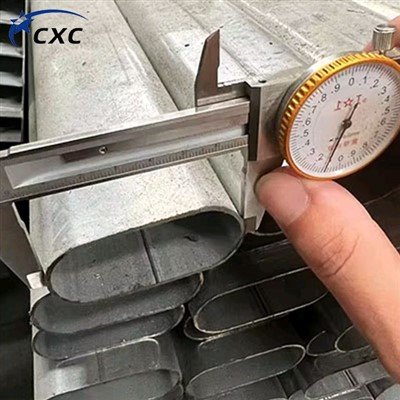
First, let’s break down what hardness actually means in the context of metals, because it’s not as straightforward as you might think. When I explain this to a customer, I avoid the textbook jargon at first, but the basics matter: hardness is a material’s ability to resist permanent indentation, scratching, deformation, or wear. For square steel pipes, that deformation can come from dozens of things—heavy loads pressing down on the pipe, being dragged across rough job site concrete, rubbing against other metal parts, or even minor impacts from falling tools or debris. The harder the pipe, the better it can fight off all that wear and tear, so it doesn’t bend out of shape, develop dents, or lose its structural integrity before it’s supposed to.
But here’s what most casual builders don’t realize: hardness isn’t a single, one-size-fits-all number for square steel pipes. There are different types of hardness tests, each designed to measure something specific, and the steel’s composition and manufacturing process shape that number more than anything else. Let’s start with the two most common tests we reference as a supplier: Brinell Hardness Test and Rockwell Hardness Test. The Brinell test is the one we use most often for square steel pipes because it’s great for measuring the hardness of solid, moderately thick materials like the walls of a steel pipe. It uses a hard steel or carbide ball pressed into the pipe’s surface with a set amount of force for a specific time, then we measure the size of the indentation left behind. The smaller the indent, the harder the steel, and the higher the Brinell Hardness Number (BHN). For standard structural square steel pipes, that number usually lands between 120 BHN and 200 BHN, but we can source or manufacture pipes with higher BHN for specialized jobs too. The Rockwell test is more common for thinner materials, and it measures the depth of the indentation instead of its area, giving us a Rockwell B (for softer steels) or Rockwell C (for harder steels) rating. For example, a pipe used for a garden fence might hover around 80 Rockwell B, while a pipe used for a trailer frame could be 25 Rockwell C, which is much harder and more resistant to heavy hauling and road vibration.
Now, why does this matter for your project specifically? As a supplier, I’ve seen customers make the mistake of buying the cheapest square steel pipe they can find, only to run into problems a few months later. Last year, I had a customer who built a small storage shed using square steel pipes he picked up from a big box store for a low price. Within a year, the roof frame started bending because the pipe was too soft—its BHN was only 95, which is below the standard for structural applications. The soft steel couldn’t resist the weight of the roof plus a few feet of snow that winter, and he ended up having to replace the whole frame, costing him more than he would have spent on a higher-grade pipe upfront. That’s the biggest takeaway about square steel pipe hardness: it’s directly tied to its grade, which you have to match to what you’re using it for.
Let’s talk about common square steel pipe grades and their typical hardness levels, because this is where things get practical. The most popular grade we carry is A500, which is the standard for general structural use in the U.S. A500 is split into three subgroups: Grade A, Grade B, and Grade C. Grade A is the softest, with a BHN range of 120 to 140, perfect for light applications like railings, small sign posts, or lightweight frame work. Grade B is the most versatile and our bestseller, with a BHN of 130 to 150—it’s durable enough for deck frames, trailer hitches, and general construction, and it strikes the right balance between strength and cost. Grade C is the hardest of the A500 line, with a BHN of 140 to 170, used for heavy structural work like bridge beams, large industrial equipment supports, or multi-level building frames that need to handle high loads. Then there’s Grade A36, another common structural steel, though it’s less often made into square pipes—its BHN is around 120 to 130, so it’s only for very light, non-load-bearing uses. For even tougher jobs, we also carry high-strength low-alloy (HSLA) square steel pipes, which can have BHN levels up to 250. These are used in harsh environments, like off-road equipment, marine applications where saltwater causes corrosion that can weaken softer steel, or structures in areas with extreme weather that puts extra stress on materials.
It’s not just the grade of steel that determines hardness—how the pipe is manufactured plays a huge role too. Most square steel pipes are made either welded or seamless, and that process changes their hardness in small but important ways. Welded pipe is made by rolling a flat steel sheet into a square shape and welding the seam together. The weld area of a pipe is usually slightly harder than the base steel, because the heat from welding changes the molecular structure of the metal. When we test welded pipes, we check both the base material hardness and the weld hardness to make sure the weld isn’t so hard that it’s brittle, which would make it prone to cracking under stress. Seamless square steel pipes are made by piercing a solid steel billet and shaping it into a square without a weld, so their hardness is more uniform across the entire pipe, with no weak or extra-hard weld spots. That makes seamless pipes ideal for high-pressure applications, like hydraulic cylinders or gas lines, where uniform hardness is critical to prevent leaks or failure.
Another factor that affects square steel pipe hardness is the heat treatment process, which is something we can adjust based on customer needs. Annealing is a common heat treatment where we heat the steel pipe to a high temperature and let it cool slowly, which makes it softer and more ductile (meaning it can bend or deform without breaking). This is useful if a customer needs to cut or shape the pipe after installation, because softer steel is easier to weld and work with. On the other end, quenching and tempering is a process where we heat the pipe then cool it quickly, making it much harder, then temper it at a lower temperature to reduce brittleness. Quenched and tempered pipes have higher BHN levels, so they’re perfect for jobs where wear resistance is top priority—like conveyor systems, where pipes rub against moving parts all day, or agricultural equipment that drags through dirt and rock.
Now, let’s address a common misconception I hear all the time: “Hardness means strength, right?” It’s a close cousin, but they’re not the same thing. Strength is a material’s ability to resist breaking or bending under a load, while hardness is its ability to resist indentation and wear. For example, a very hard steel pipe might be great for resisting scratches, but if it’s too brittle, it could crack if it takes a sudden heavy impact. That’s why we always work with customers to balance hardness with their specific needs—we don’t just sell the hardest pipe we have, we sell the right hardness for their project. A customer building a decorative metal fence doesn’t need a super-hard pipe that’s impossible to cut and weld; they need a pipe with enough hardness to stand up to occasional bumps, but that’s easy to work with to get the custom look they want. A construction company building a bridge abutment needs a pipe with high hardness and high strength to handle years of heavy traffic and weather exposure.
What about hardness in different environments? It’s not just about the job the pipe is doing, but where it’s doing it. If a square steel pipe is going to be used in a coastal area where salt air and water are present, salt corrosion can eat away at the pipe’s surface, and over time, that corrosion weakens the metal. Harder steels are more resistant to corrosion-related wear, because their tight molecular structure keeps moisture and salt from seeping into the steel as easily. That’s why we recommend HSLA or galvanized square steel pipes for marine or outdoor coastal applications—galvanized pipes have a zinc coating that adds extra corrosion resistance, and the base steel has a hardness that can hold up under harsh outdoor conditions. In cold climates, another factor comes into play: lower temperatures can make steel more brittle, so a pipe that’s at the higher end of its hardness range might be less likely to crack in freezing weather than a softer pipe, which can become more brittle as temperatures drop.
As a square steel pipe supplier, part of my job is not just selling pipes, but educating customers on how hardness impacts their project’s success. I recently worked with a small construction company that was bidding on a job to build a set of guardrails for a highway interchange. They initially wanted the lowest-grade A500 pipe we had, because it was the cheapest. I explained that highway guardrails take constant impact from cars that veer off the road, so they need a pipe with enough hardness to dent slightly on impact without breaking, while still being strong enough to stop a vehicle. The A500 Grade A pipe they wanted was too soft—its low hardness would mean it would bend too much on impact, or even break entirely. Instead, I recommended A500 Grade B, which has a hardness that balances impact resistance with the ability to stop a vehicle without failing. They took my advice, and a few months later, the project manager emailed me to say the guardrails had already withstood a minor car accident and hadn’t needed any repairs. That’s the difference knowing about hardness makes—it’s not just a number on a spec sheet, it’s what keeps people safe.
If you’re currently planning a project that uses square steel pipes, take the time to think about what the pipe will be exposed to. Will it support heavy loads? Will it be outside, exposed to weather or dirt? Will it need to be cut or welded on-site? Answering those questions will help you figure out the right hardness level for your pipe, and if you’re not sure, don’t hesitate to reach out to a trusted supplier. As someone who’s worked with square steel pipes for years, I can tell you that cutting corners on hardness almost always leads to more work and higher costs down the line. A little extra research upfront, or a quick conversation with someone who knows their way around steel hardness, can save you a lot of headaches later.

At the end of the day, square steel pipes’ hardness is what makes them one of the most versatile and reliable building materials in the world. It’s the result of careful manufacturing, grade selection, and heat treatment, and it’s tailored to fit whatever job you need it for. Whether you’re building a small backyard deck or a large industrial structure, choosing the right hardness for your square steel pipe is the foundation of a project that will stand strong for years to come. If you’re ready to source square steel pipes for your next project, or you have questions about which hardness level is right for your specific needs, don’t hesitate to get in touch to discuss your requirements and find the perfect solution for your build.
Black Steel Pipe References
ASTM International. (2022). Standard Specification for Cold-Formed Welded and Seamless Carbon Steel Structural Tubing in Rounds and Shapes. ASTM A500/A500M-22.
Metals Handbook. (2019). Hardness Testing of Steel. 10th Edition, Vol. 8: Mechanical Testing and Evaluation.
National Association of Steel Pipe Distributors. (2021). Structural Steel Pipe: A Guide for Specification, Selection, and Installation.
Wuxi Chengxingchuang Metal Products Co., Ltd.
As one of the most professional square steel pipe manufacturers and suppliers in China, we’re featured by quality products and good price. Please rest assured to buy cheap square steel pipe for sale here from our factory. Welcome to contact us for customized service.
Address: No.8-2, Zhoujia Lane, Liangxi District, Wuxi City, Jiangsu Province, China
E-mail: 13961862735@163.com
WebSite: https://www.cxcsteeltubes.com/
