Hey everyone, Home Appliance Stamping Parts
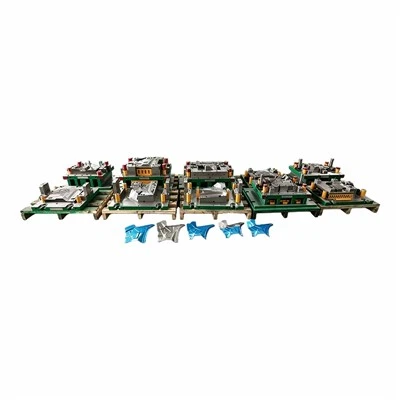
I’m Sam, and for the last 8 years, I’ve been running the daily grind at our home appliance stamping parts factory—so when people hit me up with that question, “Do your stamped parts fit all models of the same appliance?” I get it. It’s not a random ask, especially if you’re a small appliance repair tech or a DIYer trying to save a buck instead of dropping $200 on a whole new fridge door panel. Let me break this down like I do for our regular clients, no stuffy jargon, just straight talk.
First, let’s get on the same page: what even are home appliance stamping parts? These are the metal bits we punch, bend, and form with high-powered machines—think fridge door hinges, washer tub brackets, oven control panel frames, even the little brackets that hold a microwave’s magnetron in place. We’re not talking plastic clips here; stamping parts are the backbone that keeps appliances holding up and working right.
Now, to the big question: no, they don’t fit every model of the same appliance. And it’s not because we’re trying to make extra money—promise. Back in the day, like 30 years ago, appliance brands used way more universal parts. My dad, who used to fix fridges back in the 90s, would swap a hinge from a 1995 fridge to a 1997 one no problem. But here’s the thing: over the last 20 years, appliance makers switched to modular designs to cut costs. Modular design means they build a base model, but tweak tiny dimensions, material thickness, or mounting points for different markets, energy ratings, or even color finishes. Let’s use a common example: two side-by-side refrigerators from the same brand, released in 2022. One is for North America, one is for Europe. The fridge door hinge stamping for the North American model might have a 0.5mm wider mounting tab to handle the heavier door (since North American fridges often hold more ice and water), while the European one has a narrower tab to fit their smaller, energy-efficient door. Same appliance line, same brand, same general shape—different stamping parts.
Wait, but what if you have the same exact model number? Even then, sometimes no. Let’s talk washers. A lot of people don’t know this: when a brand does a “refresh” on a model halfway through its production run, they might switch stamping suppliers or tweak the part to use less metal (to hit new EPA energy standards, for example). So a washer bracket stamped in 2021 vs. 2022 might look identical at first glance, but if you hold them next to each other, the 2022 one is 0.3mm thinner. That might not sound like a big deal, but put it on the wrong washer? It could bend under the load of a full tub of clothes, leading to leaks or even damage to the motor. I’ve seen guys who grabbed a “compatible” hinge off Amazon and break a $1,000 fridge because they didn’t check that tiny dimension.
But hold on—there are exceptions. Some brands do use universal stamping parts for their entry-level lines. Like, if you have a basic top-loading washer that’s been in production for 5+ years, the main tub bracket might be the same for all variants, as long as they didn’t change the drum size. We make a lot of those for small appliance repair shops that do high-volume fixes on older models. How can you tell? Pull up the part number stamped on the old part itself. If you’re replacing a fridge hinge, that part number is usually etched right on the metal—compare it to the part number of the one you’re looking at (from us, or any other supplier). If the numbers match, it’s a fit. If not? Don’t even bother.
Now, let’s talk about what goes into making a stamping part for a specific appliance, because that’s why they’re not one-size-fits-all. When a brand comes to us with a new appliance design, their engineers give us 3 main things: a 3D CAD model of the part, the exact metal grade they want (like 18-gauge steel for fridge hinges, or galvanized steel for dishwasher brackets to resist rust), and the mounting dimensions that have to line up with their appliance’s frame. We don’t just punch out a part—we test it too: we bend it 1,000 times to make sure it doesn’t snap, we put it through temperature tests (appliances get hot near ovens, cold near freezers), we check it for rust. If we make a part for Model X, it’s built to fit exactly Model X’s specs, not Model Y that has a different frame.
I get why people ask, though. Stamping parts look so similar! A hinge is a hinge, right? But here’s a fun fact: even two different models of the same brand’s microwave might have different door latch stampings. The 0.1mm difference in the latch’s contact point can mean the door doesn’t seal right, which makes the microwave run less efficiently and use more energy. Our quality team checks every single part we ship, and that’s one of the first things we verify—does it match the exact model’s CAD specs? No cutting corners here.
Wait, but what if you’re a DIYer and you can’t find the exact part? Can you modify a part to fit? I’ve had a few customers try that, and more often than not, it ends badly. Let’s say you need a washer tub bracket, and you find a stamping part that’s almost right, but the holes are off by 2mm. Drilling new holes might seem easy, but you’ll weaken the bracket, and over time, that stress will cause it to crack. We’ve had repair shops come to us after they tried modifying a part and broke another component. It’s way cheaper in the long run to get the exact part than to mess around with modifications.
Now, let’s clear up a common misconception: some suppliers will tell you their parts fit “most models” to get your business. Don’t fall for that. If a supplier can’t give you the exact part number compatibility or tell you the specific model range their part works for, they’re probably cutting corners on the engineering or using generic metal that’s not matched to the appliance’s needs. Our team will always ask you for your exact model number, and cross-check it with our database before we even quote a part. That’s how we make sure we’re not selling you something that’s going to break in 6 months.
Let me give you a real example from last month: a small repair shop in Chicago hit us up, saying they needed 10 oven control panel frames for a popular brand’s 2021 wall oven. They told us they thought the frames would fit 2020, 2021, and 2022 models. But when we ran the model numbers, we saw that the 2022 model had a slightly different mounting tab to fit a bigger touchscreen display. The 2021 frame would have been too short, and when we told them that, they said they had wasted $800 on parts from another supplier that didn’t check. That’s exactly why we do that cross-check—we don’t want our customers to throw their money away.
So, what should you do if you’re sourcing stamped parts for your appliance repair business, or if you’re a DIYer fixing your own fridge? First, grab the exact model number of your appliance. It’s usually on a sticker inside the fridge, on the back of the washer, or on the oven’s door frame. Then, pull the old part, find its stamped part number. If you can’t find the part number, give our team a call—we’ve got a database that matches model numbers to the exact stamping parts they need. We’ll never try to upsell you on a “universal” part if there’s an exact one that fits.
At the end of the day, home appliance stamping parts are precision-made components. They’re not generic toys or plastic knobs—they’re the parts that hold your $1,500 fridge or washer together. Making sure they fit the exact model they’re meant for isn’t just a nice-to-have, it’s how you avoid bigger repairs down the line.

If you’re a repair tech, a business owner needing consistent stamping parts, or just someone who needs a replacement part for your appliance, hit us up to chat. We don’t do robotic sales pitches—we’ll walk you through what part you need, why, and make sure it’s the right fit for your model. No guesswork, no wasted money.
Automotive & EV Stamping Parts References:
- U.S. Energy Information Administration. (2023). Appliance Modular Design and Energy Efficiency Trends.
- Society of Automotive Engineers. (2021). Precision Stamping Standards for Home Appliance Components.
- Appliance Repair Industry Association. (2022). Common Mistakes in Using Generic Stamping Parts for Household Appliances.
- International Organization for Standardization. (2020). Standard for Metal Stamping Part Compatibility in Residential Appliances.
Dongguan Changdong Tool & Die Co., Ltd.
With abundant experience, we are one of the most reliable home appliance stamping parts manufacturers and suppliers in China. Please feel free to buy advanced home appliance stamping parts made in China here from our factory. Good service and quality products are available.
Address: No.56-B, Fumin South Road, Dalang Town, Dongguan City, Guangdong Province, China
E-mail: sales@cdstamping.com
WebSite: https://www.metalstampingdie.com/
