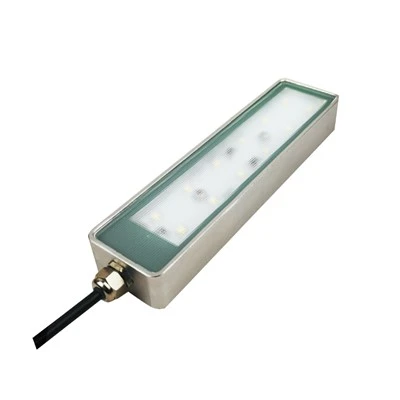
In the realm of industrial automation and control systems, stack lights are indispensable devices used for visual indication and signaling. Among the various communication protocols available for stack lights, RS485 has gained significant popularity due to its robustness and long – distance communication capabilities. As a supplier of RS485 stack lights, I often encounter questions from customers about the communication distance limit of these stack lights, especially in noisy environments. In this blog post, I aim to delve into this topic in detail, exploring the factors that influence the communication distance and offering practical advice to maximize the performance of RS485 stack lights. RS485 Stack Light
Understanding RS485 and Stack Lights
Before we discuss the communication distance limit, let’s briefly understand what RS485 and stack lights are. RS485 is a standard for serial communication that allows multiple devices to communicate over a single pair of wires. It is a differential signaling system, which means it uses two wires to transmit signals, and the difference in voltage between these two wires represents the data. This differential signaling makes RS485 highly resistant to noise, interference, and electromagnetic radiation, making it suitable for industrial environments.
Stack lights, on the other hand, are vertical assemblies of colored lights that are used to provide visual indication of the status of a machine or a process. They can display different colors such as red, yellow, green, blue, and white to indicate various conditions like normal operation, warning, alarm, or maintenance required. When integrated with an RS485 communication interface, stack lights can receive commands and status updates from a control system, enabling remote monitoring and control.
Factors Affecting Communication Distance in a Noisy Environment
Several factors can influence the communication distance of an RS485 stack light in a noisy environment. Understanding these factors is crucial for determining the optimal installation and configuration of the stack lights.
Cable Quality and Type
The quality and type of the communication cable used play a significant role in determining the communication distance. In a noisy environment, shielded twisted – pair (STP) cables are recommended over unshielded twisted – pair (UTP) cables. The shield in the STP cable helps to reduce electromagnetic interference (EMI) and radio – frequency interference (RFI) by providing a barrier between the signal – carrying wires and the external environment.
The gauge of the cable also affects the communication distance. Thicker cables (lower gauge numbers) have lower resistance, which allows the signal to travel further without significant attenuation. For long – distance communication, a cable with a gauge of 22 AWG or lower is often recommended.
Signal Attenuation
Signal attenuation is the reduction in the strength of the signal as it travels along the cable. In a noisy environment, the signal can be further degraded by interference, which can limit the communication distance. The attenuation of an RS485 signal is affected by the cable length, cable type, and the frequency of the signal.
Higher – frequency signals tend to attenuate more quickly than lower – frequency signals. Therefore, reducing the data rate of the communication can help to increase the communication distance. Most RS485 transceivers support a range of data rates, and selecting a lower data rate can be a simple yet effective way to extend the communication range in a noisy environment.
Noise and Interference
Noise and interference are major challenges in industrial environments. Electrical equipment, motors, and other sources of electromagnetic radiation can generate noise that can corrupt the RS485 signal. Common types of noise include impulse noise, which is caused by sudden electrical events such as lightning strikes or switch – on transients, and continuous noise, which can be generated by power lines or other electrical devices.
To minimize the impact of noise and interference, proper grounding and shielding techniques should be employed. The RS485 transceiver and the stack light should be properly grounded to provide a low – impedance path for the noise currents. Additionally, the use of ferrite beads on the communication cables can help to suppress high – frequency noise.
Transceiver Performance
The performance of the RS485 transceiver used in the stack light is another important factor. Different transceivers have different specifications in terms of their output voltage, input sensitivity, and noise immunity. A high – quality transceiver with a high output voltage and low input sensitivity can transmit the signal over a longer distance and is more resistant to noise.
When selecting an RS485 stack light, it is important to choose a product that uses a high – performance transceiver. Some transceivers also offer features such as automatic gain control (AGC) and equalization, which can further improve the communication performance in noisy environments.
Determining the Communication Distance Limit
The communication distance limit of an RS485 stack light in a noisy environment is not a fixed value and can vary depending on the factors mentioned above. However, as a general rule of thumb, in a relatively quiet environment, an RS485 communication system can support a distance of up to 1200 meters (4000 feet) at a data rate of 9600 baud.
In a noisy industrial environment, the communication distance can be significantly reduced. For example, if the noise level is high and the cable quality is poor, the communication distance may be limited to a few hundred meters or even less. To determine the actual communication distance limit for a specific application, it is recommended to conduct field tests.
During the field tests, the stack light should be installed at different distances from the control system, and the communication performance should be monitored. The data rate can also be adjusted to find the optimal balance between the communication distance and the data transfer speed. If necessary, additional measures such as using repeaters or signal boosters can be taken to extend the communication distance.
Maximizing the Communication Distance in a Noisy Environment
To maximize the communication distance of an RS485 stack light in a noisy environment, the following tips can be followed:
Use High – Quality Cables
As mentioned earlier, using shielded twisted – pair cables with a low gauge number can help to reduce signal attenuation and interference. Make sure to use cables that meet the relevant standards and are suitable for industrial applications.
Optimize the Data Rate
Reducing the data rate can help to increase the communication distance. However, it is important to ensure that the data rate is still sufficient to meet the requirements of the application. A lower data rate may result in slower response times, but it can significantly improve the reliability of the communication in a noisy environment.
Implement Proper Grounding and Shielding
Proper grounding and shielding are essential for reducing noise and interference. Make sure that all components of the RS485 system, including the stack light, the transceiver, and the cables, are properly grounded. Use shielded cables and connect the shields to the ground at both ends.
Select a High – Performance Transceiver
Choose an RS485 stack light that uses a high – performance transceiver with good noise immunity and signal strength. Consider transceivers that offer features such as automatic gain control and equalization to improve the communication performance.
Conclusion
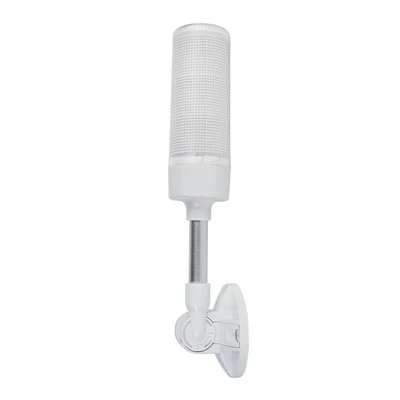
In conclusion, the communication distance limit of an RS485 stack light in a noisy environment is influenced by several factors, including cable quality, signal attenuation, noise and interference, and transceiver performance. By understanding these factors and taking appropriate measures such as using high – quality cables, optimizing the data rate, implementing proper grounding and shielding, and selecting a high – performance transceiver, the communication distance can be maximized.
Machine Work Light If you are in the market for reliable and high – performing RS485 stack lights, I encourage you to reach out to us. Our team of experts can provide you with detailed information, offer customized solutions based on your specific requirements, and help you ensure seamless integration of our stack lights into your industrial automation system. Whether you have questions about the communication distance, installation, or configuration, we are here to assist you. Contact us today to start a discussion about your RS485 stack light needs.
References
- International Electrotechnical Commission (IEC) standards related to RS485 communication.
- Data sheets of various RS485 transceivers and stack lights.
- Technical papers on industrial communication systems and electromagnetic compatibility.
Suzhou Pouge Lighting Electrical Appliance Co., Ltd.
As one of the most professional rs485 stack light manufacturers and suppliers in China, we also support customized service. Please feel free to wholesale advanced rs485 stack light made in China here and get quotation from our factory. For price consultation, contact us.
Address: Building 6-501, No.1330, Jinfeng South Road, Mudu Town, Wuzhong District, Suzhou City, China
E-mail: xduanlyy@126.com
WebSite: https://www.pouge-light.com/
