Hey there, if you’ve ever wondered where heat exchangers actually show up in daily life (not just some dusty factory that you forget exists), you’re in the right spot. I’ve been selling heat exchangers for 8 years now, and let me tell you—they’re not just metal boxes sitting somewhere and looking pretty. They’re hiding in almost every part of our routine, and if you’re working in a field where you need to move heat from one fluid to another without mixing them, that’s our lane. Let’s break this down, no stuffy jargon, I promise. Heat Exchanger
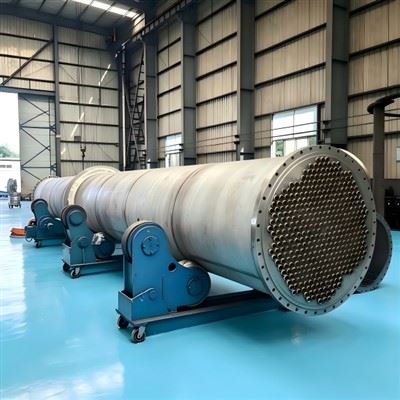
First up, the big one people actually notice but don’t name: HVAC systems in residential and commercial spaces. You know when your apartment’s AC kicks on and blows cool air that’s not like, ice cold? Or when you’re cranking the heat in winter and it’s not burning your hand? That’s a heat exchanger doing its job. Let me explain it quick, like I would to a plumber buddy—hot air from your furnace’s combustion process gets passed through a metal (usually aluminum or steel) heat exchanger, and the blower pushes that heat into your home, while the exhaust gases get vented outside. No cross-contamination, so you don’t end up breathing fumes, which is a huge safety thing. For our commercial clients—think office buildings, grocery stores, even big-box retail—they use shell-and-tube heat exchangers here. Why? Because they move way more heat than tiny residential ones, and they can handle the constant, 24/7 operation that a Walmart needs in the middle of summer when it’s 95 degrees out. Last year I hooked up 4 shell-and-tube units to a 12-story office building in downtown Chicago—they’d been having trouble with uneven heating, and the exchangers fixed that right up, plus cut their energy bill by like 18%. Small win, big difference for them.
Next, and this one’s close to my heart because I’ve dealt with a lot of these: food and beverage processing. You’d be shocked how much heat moving goes into making that soda you chug after a long day, or the craft beer your buddy brews. Let’s start with beer, since that’s super relatable. When you’re mashing the grains, you need to heat water to like 150-170°F, then cool the wort (the sugary liquid before fermentation) down to yeast-friendly temps, like 60°F. You can’t just blast it with cold water—wasteful, and you’ll use way too much energy. That’s a plate heat exchanger, baby. It’s all these thin, stacked metal plates with tiny gaps, so the hot wort and cold water (or sometimes cold fermented beer?) flow on opposite sides, swapping heat in seconds. A craft brewery I supply out of Denver went from using 3x more water than they needed for cooling to almost nothing once they swapped in our compact plate units. Same goes for dairy—pasteurization, right? You have to heat milk to 161°F for 15 seconds to kill bacteria, then cool it back down fast so it doesn’t spoil. Again, plate exchangers are perfect here because they’re easy to clean (super important for food safety) and maintain precise temps. I once got a call at 7 PM on a Friday from a cheese producer in Wisconsin—their exchanger died mid-shift, and they had 500 gallons of curd on the line at risk of going bad. We rushed a temporary unit out, fixed their problem, and they’re still a regular client. No lie, that’s the stuff that makes this job worth it.
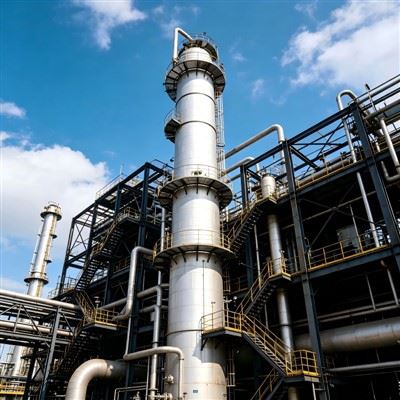
Then there’s industrial manufacturing, which is the bread and butter of my business (no food pun intended, though I guess it kinda is). Think steel mills, chemical plants, pharmaceutical factories—these places run super hot, and if you don’t handle that heat, bad things happen. For example, in a steel mill, when they’re melting iron into molten steel, there’s all this excess heat from the furnaces. We install shell-and-tube exchangers that capture that heat and use it to preheat water for the mill’s boilers, instead of wasting it up the stack. It cuts their fuel costs by a ton, and reduces their carbon footprint—something a lot of these big companies care about now for regulatory reasons. Chemical plants are another big one: when they’re making things like fertilizer or plastic, reactions happen at specific temps. If it gets too hot, the product gets ruined, or even worse, there could be an explosion. Heat exchangers keep that in check—they pull excess heat out of reaction vessels so the process stays steady. I work with a fertilizer plant in Iowa that had a issue with one exchanger corroding from the ammonia they use in processing. We switched them to a corrosion-resistant alloy unit, and it’s lasted 3 years so far—way longer than their old cheap one. Turns out, skimping on exchanger quality costs way more in the long run.
Wait, let’s not forget automotive and transportation—you guys thought cars only have radiators, right? Technically a radiator is a type of heat exchanger, but there are more. Hybrid and electric vehicles (EVs) are a huge growth area for us right now. EV batteries get really hot when they charge fast or when you’re driving hard, and if they overheat, they lose range or even become a fire risk. We supply liquid-cooling heat exchangers for EV battery packs that keep the temp within a 20-90°F range—super narrow, so the battery lasts longer and performs better. A lot of new EV startups don’t realize that off-the-shelf exchangers often can’t handle the high charge rates their cars use, so they reach out to us for custom units. Even trucking: long-haul semi-trucks have exhaust gas recirculation (EGR) systems that use heat exchangers to lower nitrogen oxide emissions, which is required by EPA rules. I’ve hooked up EGR exchangers to fleets in Texas and California, and they save those truckers thousands a year in fines and fuel. Fun fact—airplanes use heat exchangers too, in their air conditioning systems. High-altitude air is super cold, but it’s low pressure, so they mix it with cabin air and use exchangers to adjust the temp before it gets to passengers. That’s why your in-flight air isn’t freezing or too thin—thank a heat exchanger.
Oh, and renewable energy—this is the future, and we’re right there. Solar thermal power plants, for example, use mirrors to heat a fluid up to like 1,000°F, make steam, turn turbines. Heat exchangers transfer that heat from the hot fluid to water to make steam, right? We supply the exchangers for a couple of solar farms in Arizona. Geothermal energy, too—they pull hot water from underground, and exchangers transfer that heat to a secondary loop to heat buildings or generate electricity, without mixing the hot groundwater (which can have minerals that would clog pipes). Even biomass power plants—burning wood or crop waste to make electricity, same as fossil fuels but cleaner. We’ve got custom exchangers made to handle the slightly-corrosive flue gases from burning biomass, which regular exchangers can’t stand. The renewables space is growing fast, so that’s been a huge part of our business the last 5 years.
Now, let’s get real—you might be reading this and thinking, “Okay, cool, but when do I actually need one?” Maybe you’re a HVAC tech who’s tired of fixing the same old furnace that’s using too much energy, maybe you’re a craft brewery owner who’s fed up with wasting water cooling wort, or maybe you’re a plant manager at a factory that’s overpaying on utility bills. Here’s the thing: heat exchangers aren’t one-size-fits-all. A residential AC unit needs a tiny, compact exchanger; a steel mill needs a massive shell-and-tube one; a brewery needs plate exchangers that are easy to take apart and clean. I don’t just sell you a random unit and dip—we work with you to figure out exactly what you need, based on your space, your heat load, your budget, even what fluids you’re working with (some fluids are super corrosive, so we need special metals like titanium or nickel alloy).
I’ve been doing this long enough to know that a lot of people just go with the cheapest option, but that’s a mistake. Last year I had a guy from a small food truck company reach out—he bought a cheap exchanger online for his food truck’s fryer cooling system, and it corroded in 6 months, leaking into his fryer oil. He had to throw out $2,000 worth of oil, plus lost a week of business fixing it. Switched to our stainless steel unit, and it’s been working great for a year now. That’s the kind of stuff I care about—making sure my customers don’t have to deal with avoidable headaches.
If you’re in any of the industries I talked about—HVAC, food/beverage, manufacturing, automotive, renewables—or even if you’re in a niche I didn’t cover (like mining, or marine shipping—wait, ships use heat exchangers for their engines, too! I forgot that), and you’re having issues with heat management, or you want to cut energy costs, or upgrade your system, reach out. No hard sell, I promise—just a guy who’s been doing this for years, who knows the ins and outs of heat exchangers, and can hook you up with the right unit for your needs, at a fair price. I don’t do corporate fluff, so you can expect straight answers, no hidden fees, and support if anything goes wrong.
At the end of the day, heat exchangers are the unsung heroes of so many things we use every day. They keep our homes comfortable, our food safe, factories running, cars on the road, and even help us switch to cleaner energy. If you need any help with yours, or want to upgrade, don’t hesitate to get in touch. I’m here to help.
Fired Heater References:
- Incropera, F.P., DeWitt, D.P., Bergman, T.L., & Lavine, A.S. (2007). Introduction to Heat Transfer. John Wiley & Sons.
- Food and Agriculture Organization of the United Nations. (2019). Heat Exchangers in Food Processing: Design and Application Guidelines. FAO Agricultural Engineering Bulletin.
- U.S. Environmental Protection Agency. (2021). Industrial Heat Exchanger Best Practices for Energy Efficiency and Emissions Reduction. EPA Office of Climate Change and Clean Energy.
- Kraft, A., & Rider, A. (2022). Heat Exchangers in Electric Vehicle Battery Thermal Management: A Review. Journal of Power Sources.
- Geothermal Energy Association. (2020). Heat Exchanger Technologies for Geothermal Power Generation and Direct Use. GEA Technical Report.
Zibo Gyro Industry Engineering
As one of the most professional heat exchanger manufacturers and suppliers in China, we have world-leading production equipment and strong manufacturing capabilities. Please feel free to wholesale advanced heat exchanger at competitive price from our factory. Customized orders are welcome.
Address: Jinling San Village, East of Qilu Chemical Industrial Park, Linzi District, Zibo City, Shandong Province
E-mail: vwang5871@gmail.com
WebSite: https://www.gyro-epcunit.com/
