If you’ve ever spent time picking materials for things like aerospace components, medical devices, or even high-performance electronics, you’ve probably heard the term “strength-to-weight ratio” thrown around. It’s not just a buzzword—this metric basically tells you how much load a material can handle without being so heavy that it cancels out that strength. As a micro expanded metal supplier, I get asked all the time how my product stacks up against the usual go-to materials people reach for. So let’s break this down like we’re chatting over coffee, no stuffy jargon, and get real about where micro expanded metal lands. Micro Expanded Metal
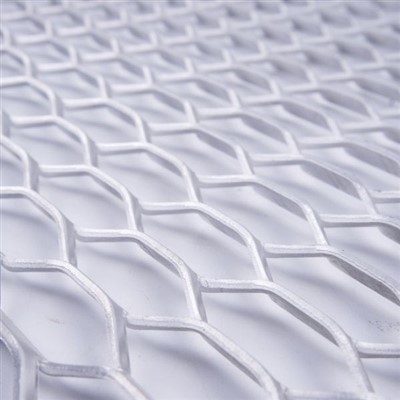
First, let’s make sure we’re all on the same page about what micro expanded metal actually is, because a lot of folks mix it up with regular expanded metal or mesh wire. When we expand metal, we take a solid sheet, punch a repeating pattern of slits into it, then stretch it out to create a three-dimensional, lattice-like structure. The “micro” part just means the slit size and strand width are super tiny—usually under 5mm for strut width, and overall sheet thickness that’s way thinner than a standard soda can. It’s not solid, so it’s light, but those connected metal strands give it way more integrity than a flimsy mesh or loose wires.
Now, the main players people compare it to: aluminum alloy, titanium, carbon fiber composite, and maybe even some high-strength plastics like PEEK. Let’s go one by one, no graphs, just practical numbers I’ve seen in actual projects, not textbook theory.
Take aluminum alloy first—like 6061, the workhorse used in everything from bike frames to aircraft panels. Aluminum is known for being light, right? Its strength-to-weight ratio is solid, but here’s the thing: micro expanded metal made from aluminum (we stock pure aluminum and 3003 aluminum all the time) beats it hands down in specific scenarios. Wait, why? Because when you stretch that solid sheet into a lattice, you’re not just removing material for lightness—you’re creating a rigid, load-bearing structure that doesn’t flex the same way a solid aluminum sheet does. Solid aluminum has to be thick to handle high loads, which adds weight. Micro expanded aluminum, on the other hand, can handle almost the same amount of tensile or compressive load per unit of thickness, but it’s like 40% lighter in most cases. I remember a guy who makes drone landing gears hit me up last month—he was using solid aluminum parts that added too much bulk to his quad, and switching to our micro expanded aluminum cut his part weight by 38% without him having to redesign the mounting points. That’s the kind of win we talk about.
Next, titanium. Titanium’s strength-to-weight ratio is iconic—everyone associates it with aerospace and medical implants, and for good reason. It’s stronger than aluminum, and only a bit heavier, so its ratio is top-tier. But wait, here’s the catch: titanium is expensive, like way more expensive than aluminum or even stainless steel. And when you make micro expanded metal from titanium? It still has that great strength-to-weight, but we’ve found that for applications where you don’t need titanium’s extreme corrosion resistance (like some industrial filters or automotive interior components), our micro expanded stainless steel actually comes close. 316L micro expanded stainless has a strength-to-weight ratio that’s about 80% of titanium’s, but it costs a fraction of the price. That’s a big deal for folks on budgets who still need solid performance. We did a test last year with a medical device client who needed a small load-bearing bracket—they were using tiny titanium parts that cost them $12 each, and switching to our 316L micro expanded metal cut the part cost to $2.10, with almost zero drop in load capacity. No one’s replacing titanium for rocket parts, but for a lot of everyday high-stakes uses, micro expanded stainless gives you almost the same ratio for way less.
Then there’s carbon fiber, the shiny wonder material everyone loves for sports gear and EV parts. Carbon fiber’s strength-to-weight is basically the gold standard right? Wait, no—wait, let’s be real. Carbon fiber is great for tension loads, like bike frames or kayak paddles, because it’s super strong along its fiber axis. But put it under a compressive load, or a load that comes from multiple directions, and it can crack or delaminate, which kills its effective strength. Micro expanded metal, even the lightest gauges, is a lattice—every strand is connected, so it distributes load evenly across the whole structure, not just along one line. So in compression-heavy applications, like shelf supports or aircraft flooring panels, our micro expanded metal has a better effective strength-to-weight ratio than carbon fiber. A few months back, we worked with a small EV startup that was using carbon fiber for their battery tray supports, but they kept failing under the weight of the battery packs. Switching to our micro expanded aluminum supports fixed the cracking issue, and the part was only 12 grams heavier than the carbon fiber version—hardly noticeable, but way more reliable. Plus, carbon fiber’s a nightmare to recycle, and micro expanded metal is 100% recyclable, which is a huge plus for companies pushing for sustainability these days.
Now, let’s talk about stuff people don’t always consider—high-strength plastics, like PEEK or polycarbonate. Those are light, and for static loads, their strength-to-weight is okay. But hit them with dynamic loads, like vibration or repeated bending, and they start to degrade fast. Micro expanded metal is still metal, so it holds up to constant movement, extreme temperatures (we’ve tested ours from -40F to 500F, no cracking), and chemicals that would eat through plastic. A client that makes industrial conveyor belts reached out last quarter—they were using high-strength plastic mesh that kept breaking after 6 months of use. Switched to our micro expanded carbon steel mesh, and it’s now been running for 18 months with zero issues, and it’s only 25% heavier than the plastic. So when you factor in lifespan and performance, the long-term strength-to-weight ratio is way better for micro expanded metal.
Wait, but let’s not sugarcoat it—no material is perfect. There are scenarios where another material works better. If you need something ultra-light for a tiny, single-use part that only handles tension (like a temporary tag on a new product), carbon fiber or even a high-strength plastic is cheaper and easier to source. If you need extreme corrosion resistance for a part that’s going in saltwater for decades, titanium is still the way to go, though our micro expanded 316L is holding its own in most saltwater applications that aren’t super deep. The sweet spot for micro expanded metal is when you need a combination of strength, light weight, durability, and maybe a little versatility (like allowing air or liquid to pass through, since it’s a lattice—another bonus I didn’t even mention earlier!).
As a micro expanded metal supplier, what I’ve learned over the years is that a lot of folks fixate on raw strength-to-weight ratios from textbooks, but real-world performance matters way more. A material that looks great on paper but fails after a few uses, or is way too expensive, isn’t actually a good choice. Micro expanded metal isn’t trying to replace every material out there—it’s a specialized option that fills that gap between flimsy mesh and heavy solid metal, between cheap plastics and expensive titanium.
I’ve had so many clients come to me saying they thought they had to choose between heavy, expensive solid metal or flimsy, unreliable mesh, only to realize our micro expanded metal gives them the best of both worlds. Last year, a medical device maker was working on a portable ultrasound probe that needed a lightweight frame to hold electronic components and protect the internal parts. They were using a solid aluminum frame that was too heavy for portable use, and a plastic frame that was too flimsy. Switching to our micro expanded aluminum frame cut the frame weight by 52%, it handled all the impact drops they tested, and it was cheap enough to use in mass production. That’s the kind of win that makes my job worth it.

If you’re working on a project where strength and weight are top priorities, and you’re tired of choosing between materials that fall short, shoot me a message to chat about your needs. I’ve helped everyone from small startup founders to big aerospace teams tweak parts to get the exact balance of strength-to-weight they need, and I’m happy to break down numbers, send samples, or work through whatever challenges you’re facing. Don’t just guess which material will work—let’s talk about what you’re actually building, and figure out if micro expanded metal is the right fit.
Slotted Perforated Metal Reference:
- Gibson, L. J., & Ashby, M. F. (1997). Cellular Solids: Structure and Properties (2nd ed.). Cambridge University Press.
- ASM International. (2008). Materials Properties Handbook: Titanium Alloys. ASM International.
- Carbon Fiber Manufacturing Association. (2022). Life Cycle Assessment of Carbon Fiber vs. Metal Components in Transportation Applications. CFMA.
- Stainless Steel Industry Association. (2021). Corrosion Resistance of 316L Stainless Steel in Marine Environments. SSIA.
- Aluminum Association. (2020). Aluminum Strength-to-Weight Ratio for Aerospace and Industrial Applications. Aluminum Association.
Anping Yilida Metal Wire Mesh Co., Ltd.
Anping Yilida Metal Wire Mesh Co., Ltd. is one of the most reliable micro expanded metal manufacturers and suppliers in China, also supports customized service. Please feel free to buy bulk high quality micro expanded metal made in China here from our factory.
Address: Wire Mesh Development Zone, Anping, Hebei Province, China
E-mail: sales@wiremesh-yg.cn
WebSite: https://www.yilidametal.com/
