If you’re working on a commercial electrical project, chances are you’ve come across aluminum cable trays. As someone who’s been supplying these for years, I get tons of questions from installers, engineers, and facility managers—none more common than, “What’s the standard size of an aluminum cable tray?” It makes total sense, too. Picking the wrong size doesn’t just lead to messy cable runs; it can cause safety issues, add unnecessary costs, and even delay a project. I’m gonna break this down like I chat with my regular clients, no stuffy jargon, just the real deets I’ve picked up from on-the-job experience and industry standards. Aluminum Cable Tray
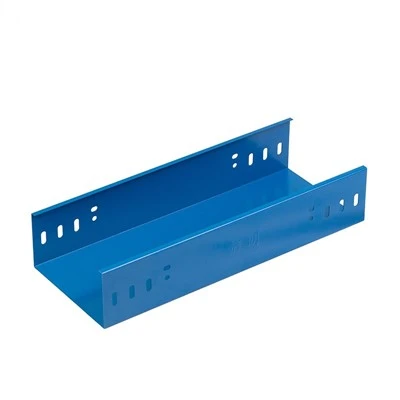
First off, let’s set the baseline: aluminum cable tray sizes aren’t one-size-fits-all, but there are standardized dimensions most suppliers (including ours) stick to. The two main specs you’ll see referenced here are the width and the height of the tray itself. This is where a lot of new folks mix things up—they think “size” only means width, but the height is super important too, because it dictates how many cables you can fit in there and how well it handles weight.
Let’s start with widths. According to the National Electrical Manufacturers Association (NEMA) standards, which are the big rulebook for cable trays in North America, standard aluminum cable tray widths range from 6 inches up to 48 inches. Wait, “up to 48” might sound wild, but that’s for big commercial jobs—like data centers, manufacturing plants, or university campuses where they’re running hundreds of cables at once. But most of the time, for small to mid-sized projects (offices, retail spaces, light industrial), the go-to standard widths are 6, 12, 18, 24, and 36 inches. We see these used 70% of the time because they balance space and ease of installation. No one wants to haul a 4-foot-wide tray through a tight hallway if a 18-inch one will do the job.
Now, height. This is the part a lot of first-timers overlook, and it can cause headaches down the line. Standard aluminum cable tray heights are 2 inches, 3 inches, 4 inches, and 6 inches. Here’s why that matters: if you’re running power cables (like 120V or 240V) and low-voltage cables (network, fire alarm, security) together, NEMA actually specifies a minimum height to separate them—usually at least 3 inches. That keeps cross-talk (signal interference) from messing up your Wi-Fi, security cams, or fire alarms. If you try to cram those two into a 2-inch tray, you might end up with dropped calls or glitchy cameras, which is a big no-no.
Wait, but what about specialty applications? I get it, standard sizes work for most jobs, but sometimes you need something custom. For example, outdoor industrial facilities might need wider trays to cover more ground, or facilities with really tall ceilings might opt for a 6-inch height to accommodate thick power cables. Our team works with clients all the time to adjust sizes—just shoot us the details of your project, and we can tweak width, height, and even material thickness to fit.
Let me also clarify something: when people talk about aluminum cable tray size, they’re usually referring to the “inside width” (the space where cables sit) vs. the “outside width” (the frame around the tray). This is a crucial distinction. The outside width is a tiny bit wider than the inside—usually ¼ to ½ an inch, depending on the manufacturer. For example, a standard 12-inch inside width tray will have an outside width of about 12.25 inches. That’s important to remember when you’re measuring the space where the tray will go—like between ceiling joists or along a wall. If you just measure the inside width, you might find the tray doesn’t fit once you account for the frame.
Another thing to note: load capacity ties directly to size. A bigger tray (wider and taller) can hold more cables, obviously, but the thickness of the aluminum also plays a role. Standard aluminum cable trays use 14-gauge, 12-gauge, or 10-gauge aluminum. Thicker gauge means more strength, so a 12-inch tray made with 10-gauge aluminum can handle way more weight than a 24-inch tray made with 14-gauge. That’s why it’s not just about picking the biggest tray you can find—you have to match the size and gauge to your specific cable load.
Let’s throw in a real example from a recent job we did to make this concrete. A local warehouse needed a cable tray run to power new forklift chargers and add network drops for their inventory scanners. They initially thought they needed a 36-inch tray, but when we calculated the total cable load (12 power cables and 8 low-voltage cables), we recommended an 18-inch wide, 4-inch high tray with 12-gauge aluminum. That worked out 30% cheaper than the 36-inch option, fit perfectly in their tight ceiling space, and had more than enough room for future cable additions. That’s the sweet spot—standard size, tailored to their actual needs, not just a random big number.
Now, I know some folks outside North America use different standards, like IEC (International Electrotechnical Commission) specs. But if you’re working on a project that follows NEC (National Electrical Code) guidelines, which most U.S. and Canadian projects do, the NEMA standard sizes I mentioned are your go-to. IEC sizes are often in metric, so if that’s what you’re using, standard widths are 150mm, 300mm, 450mm, and 600mm, with heights ranging from 50mm to 150mm. It’s basically the same logic, just converted to metric, so the space and load rules still apply.
Wait, a common question I get: can you mix different tray sizes? Sure, as long as you use the right fittings. For example, if you need to go from a 12-inch tray to an 18-inch tray, a transition fitting connects them seamlessly without leaving gaps that can snag cables. That’s part of why standard sizes are so handy—there are tons of affordable, easy-to-install fittings that work with the basic widths and heights, so you don’t have to wait for custom parts.
Now, let’s talk about why aluminum is the material of choice for these standard sizes, just to tie it all together. Aluminum is lightweight (way lighter than steel, so easier to install), corrosion-resistant (perfect for outdoor, industrial, or humid spaces), and just as strong as steel for most cable loads. It also doesn’t rust, which means less maintenance over the life of the tray. That’s why our standard sizes are all aluminum—we could offer steel, but our clients tell us aluminum is the way to go for long-term value.
I should also mention that there are some “nominal” sizes you’ll see listed. For example, a 24-inch tray is a nominal size, which means the inside width is actually 24 inches, minus a tiny tolerance. Nominal sizes are what most suppliers use because they’re universal, so you don’t have to guess if a tray labeled 24 inches will fit your 24-inch opening. That’s another reason standard sizes are so consistent—everyone uses the same nominal measurements.
Let’s wrap this up with a quick checklist for anyone picking a standard aluminum cable tray size:
- Figure out your total cable count and type (power vs. low-voltage) to pick the right height.
- Measure the available space (account for outside width) to pick the right width.
- Calculate the load weight to make sure the aluminum gauge matches.
- Stick to NEMA (or your regional standard) sizes for easier, cheaper fittings.
If you’re still not sure, that’s what we’re here for. I know picking the right tray can feel overwhelming, especially if you’re new to electrical work. As a supplier, we don’t just sell you a tray—we help you figure out exactly what size you need, no upsells, no confusing jargon. Whether you’re doing a small office remodel or a big manufacturing build, we’ve got the standard sizes and the expertise to get your project running smoothly.

If you’re ready to chat through your project, or just have more questions about aluminum cable trays, hit us up. We can walk you through size options, load specs, and even help you calculate exactly how much tray you need. No pressure, no sales pitches—just honest answers from people who’ve been doing this for years.
Perforated Cable Tray References
NEMA VE 1:2020, Standards for Cable Tray Systems
National Electrical Code (NEC), Article 318: Cable Tray
IEC 61537:2021, Cable Tray Systems for Electrical Installations
Hebei Jinglang Industrial Co., Ltd.
As one of the most professional aluminum cable tray manufacturers and suppliers in China, we also support customized service. We warmly welcome you to wholesale high quality aluminum cable tray in stock here from our factory. If you have any enquiry about quotation, please feel free to email us.
Address: Nanxinzhuang Village, Daweihe Hui and Manchu Township, Wen’an County, Langfang City, Hebei Province
E-mail: 18231629992@163.com
WebSite: https://www.jinglangcabletray.com/
