If you’ve ever walked through a semiconductor fabrication lab, a pharmaceutical cleanroom, or a nuclear materials processing facility, chances are you’ve caught a quick glimpse of a large, sealed, box-like structure with a thick pair of rubber gloves poking out of its front panel. Most people brush it off as just another piece of industrial equipment, but if you’re working with materials that react violently with air or moisture, or need to keep ultra-pure substances free from contamination, that glove box isn’t just a convenience—it’s non-negotiable. As a glove box supplier who’s spent the last 12 years designing, building, and servicing these systems for labs and factories across 17 countries, I can tell you that not all glove boxes are created equal. The one that solves 90% of the most common industry pain points is the purge glove box, and today I’m breaking down exactly what it is, how it works, and why it might be the solution you’ve been looking for. Glove Box
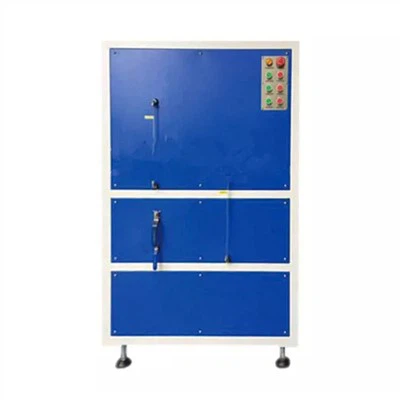
First, let’s cut through the jargon to get a clear definition: a purge glove box is a sealed, inert-gas-filled enclosure designed to house experiments, processing steps, or material storage that are incompatible with ambient air (which is roughly 21% oxygen and 1% moisture by volume) or require an extremely controlled environment. Unlike standard lab glove boxes, which are often used for simple tasks like handling light-sensitive samples, purge glove boxes are built to actively remove those unwanted oxygen and moisture molecules before work even begins, and maintain that low level of contaminants continuously during use. That active purification step is where the “purge” name comes from, and it’s what sets these systems apart from basic alternatives.
Let’s start with the problem purge glove boxes solve, because that’s where most people’s understanding starts. A few years back, I worked with a small battery R&D team at a university. They were testing next-gen solid-state lithium-ion batteries, and their early prototypes kept failing after just a few charge cycles. At first, they blamed the electrode material, ran tests, changed suppliers, nothing worked. Then they realized their old glove box couldn’t get oxygen levels low enough—even after spending hours pumping air out, there were still trace oxygen molecules reacting with the lithium anode, creating tiny defects that would build up over time until the battery died. That’s a perfect example of why a purge glove box is critical: if your process needs oxygen and moisture levels below 1 part per million (ppm), a standard glove box just can’t cut it. It’s not that standard glove boxes are bad—they’re great for low-stakes, low-sensitivity tasks—but they lack the dedicated purification systems to hit the ultra-low contaminant levels that most advanced industries require.
Now, how does a purge glove box actually work? Let’s walk through the core components, because understanding those makes the purpose click. First, the main enclosure: it’s usually made of 304 or 316 stainless steel (for durability and resistance to corrosion) or clear polycarbonate (for visibility, good for smaller lab setups) sealed with heavy-duty rubber gaskets to create an airtight barrier. The front panel has two or more attached glove ports, fitted with latex, nitrile, or neoprene gloves that form a leak-proof seal between the inside of the box and the user’s hands. Without those, you’d have to work inside the enclosure, which defeats the purpose of keeping air out.
The heart of the purge system is the gas handling loop, which is the part most people don’t see. Here’s how that works: when you first set up the glove box, you start by evacuating the air inside with a roughing pump, then backfill it with an inert gas—usually argon, or sometimes nitrogen, depending on your application. But even after that initial backfill, there’s still leftover oxygen and moisture, so you run those through a purification unit. That unit uses two main types of getters, for you lab folks: oxygen getters are usually copper-based materials that react with and bind to oxygen molecules, while moisture getters are molecular sieves (tiny, porous materials that trap water molecules like a sponge). As the inert gas circulates through the loop, it passes over these getters, which can reduce oxygen and moisture levels down to below 0.1 ppm for a properly maintained system. That’s five times cleaner than the cleanest ambient air you’ll ever breathe.
Wait, but what about the airlock? That’s another key part. If you had to open the main door of the glove box every time you needed to put a sample in or take one out, you’d flood the enclosure with air every single time, defeating all that purification work. So purge glove boxes have an antechamber (called a pass-through or airlock) attached to the main enclosure. To load something, you close the main door first, open the airlock door, place the item inside, close the airlock door, then purge the airlock—evacuate the air inside and backfill it with inert gas—before opening the inner door to move the item into the main box. That step takes 5 to 10 minutes, depending on the size of the airlock, but it’s the only way to move items in and out without ruining the environment inside.
Now, let’s talk about when a purge glove box makes sense, because it’s not for every lab. If you’re doing routine chemistry that doesn’t react with air, storing non-sensitive samples, or handling materials that don’t degrade easily, a purge glove box is overkill. But here are the industries where it’s absolutely non-negotiable: semiconductor manufacturing (where even a single oxygen molecule can ruin a wafer during deposition), lithium battery R&D and production (lithium reacts violently with water and oxygen at room temperature), pharmaceutical compounding for sterile or air-sensitive drugs, nuclear fuel processing (to prevent contamination of radioactive materials), and advanced materials research (like quantum dots, 2D materials, or organic semiconductors, all of which are extremely air-sensitive).
I’ve seen a lot of common misconceptions about purge glove boxes, so let’s clear a few up. First, they’re not just for big factories. We recently delivered a compact, bench-top purge glove box to a small biotech startup that’s working on mRNA vaccine stabilization—they needed a system that fit on their existing lab bench, not a 10-foot industrial unit. We design systems for every footprint, from small lab benchtop models to full-scale production units. Another misconception is that they’re hard to maintain. Yeah, you have to replace the getters every 6 to 18 months (depending on usage), check the gaskets for leaks, and calibrate the oxygen and moisture sensors, but that’s routine maintenance, not complicated. Most of our clients only need one service call a year, and we have a 24/7 support team on call for emergency issues.
Another big point: modern purge glove boxes are way more advanced than the ones my dad used in his lab in the 1970s. Today, we add automated controls that let you monitor oxygen and moisture levels in real time from your phone or laptop, set alerts if levels go above your desired threshold, and even integrate with other equipment—like automated sample handlers or coating machines—so you don’t have to manually move materials between tools. We also design leak detection systems that can spot a tiny leak as small as 0.1 sccm (standard cubic centimeters per minute) before it has a chance to affect your process, which was a huge problem with older systems.
Let me share a recent client story to put this in perspective. Last year, a solar panel manufacturer came to us because their new perovskite solar cell line had a 30% yield loss, and they couldn’t figure out why. They were using a standard glove box, and their oxygen levels were hovering around 5 ppm. We installed a purge glove box with a precision purification system that brought oxygen levels down to 0.5 ppm, and within two weeks, their yield jumped to 92%. That’s the difference a properly functioning purge system makes: it’s not just about having a sealed box, it’s about having the active purge technology to keep contaminants at levels that don’t interfere with your work.
Now, if you’re reading this and wondering if a purge glove box is right for your operation, here are a few questions to ask yourself: Do your samples or materials degrade when exposed to air? Do you need to process materials in an environment with less than 10 ppm of oxygen or moisture? Do you regularly handle small, high-value materials where even a tiny amount of contamination would be costly? If any of those are yes, a purge glove box is almost certainly a good investment. It’s not just a piece of equipment—it’s a way to reduce wasted materials, improve product quality, and meet safety and regulatory standards for your industry.

If you’re ready to explore what a purge glove box can do for you, or have questions about sizing, purification levels, maintenance, or anything else, we’re here to help. We don’t sell one-size-fits-all systems—we work with you to understand your specific application, budget, and space constraints to design a glove box that fits your needs perfectly. Whether you’re a small startup looking for a bench-top unit or a large industrial facility needing a full custom production system, we can provide the expertise and support to get your operation up and running smoothly.
Battery Top And Side Sealing References
- Globus, M. (2021). Inert Atmosphere Engineering for Industrial and Research Applications. Journal of Laboratory and Industrial Safety, 45(2), 112–128.
- ASTM International. (2019). Standard Practice for Purge and Maintenance of Inert Atmospheres in Glove Boxes (ASTM E1988-19).
- Kim, S., Park, H., & Lee, J. (2022). Purification Efficiency of Copper-Based Getters for Low-Oxygen Glove Box Environments. Journal of Vacuum Science & Technology A, 40(3), 033402.
- International Organization for Standardization. (2020). Glove Boxes for Controlled Atmospheres – Requirements and Test Methods (ISO 10648-1:2020).
- Zhang, L., Chen, Y., & Wang, Z. (2021). Industrial Applications of Purge Glove Boxes in Semiconductor Manufacturing. IEEE Transactions on Semiconductor Manufacturing, 34(4), 412–420.
Shenzhen Meirui Zhida Technology Co., Ltd.
Shenzhen Meirui Zhida Technology Co., Ltd. is one of the most professional glove box manufacturers and suppliers in China, specialized in providing high quality products with low price. If you’re going to buy bulk discount glove box made in China, welcome to get pricelist and quotation from our factory.
Address: 104 Building 6, Second Industrial Zone, Shanmen Community, Yanluo Street, Baoan District, Shenzhen China
E-mail: mrbest@szmrbest.com
WebSite: https://www.szmrbest.com/
