Hey everyone, and welcome back to the blog. Today, I’m tackling a question I get asked at least 10 times a week by new and repeat clients alike: Is PP resin resistant to oil? As someone who’s been supplying PP resin for over 8 years—working with everything from automotive parts to food packaging, industrial containers, and even small marine components—I’ve seen this question come up in so many different contexts, and it’s way more nuanced than a simple “yes” or “no.” Let’s break this down like we chat in our office, no stuffy lab jargon that makes your eyes glaze over. PP Resin
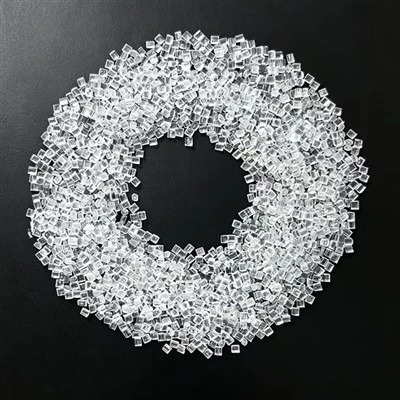
First, let’s start with the basics. PP, or polypropylene, is a thermoplastic polymer that’s super popular for a reason: it’s lightweight, cheap to mold, durable, and has a ton of chemical resistance properties. But “chemical resistance” isn’t a one-size-fits-all thing. A lot of people hear “resistant” and assume it means “immune to every liquid under the sun,” and that’s where they go wrong. Oil is a big one here because there are so many types of oil—motor oil, cooking oil, hydraulic fluid, even essential oils—and they all behave differently when they hit a plastic surface.
So, straight up: Most standard PP resins are excellent at resisting non-polar oils, at room temperature, for short to medium exposure times. Let’s test that with a common example. Last month, a client who makes food-grade containers for restaurants reached out because their old plastic lids were warping after sitting under a deep fryer station, splattered with hot cooking oil. We supplied them with food-grade homopolymer PP, and their new lids have held up way better—no warping, no oil seeping through, even after 6 months of daily use. That’s the kind of thing PP is good for. Why? Because PP has a non-polar molecular structure, and most oils are also non-polar. The rule of thumb in chemistry here is “like dissolves like,” so non-polar materials don’t mix well. That means oil molecules can’t really penetrate the PP’s surface or break down its molecular bonds, at least not easily.
But here’s where it gets tricky, and where I see a lot of suppliers (and even some clients) mix things up: PP’s oil resistance drops fast when you change a few variables. Temperature is the biggest one. If that same cooking oil is hot—like, 200°F or higher—PP’s structure starts to soften a little, right? Thermoplastics soften when they hit their glass transition temperature, and for PP, that’s around -10°C (14°F) for homopolymer, and a bit higher for copolymers, but still pretty low. So hot oil can start to creep into the small gaps in the PP’s molecular structure over time, especially with prolonged exposure. We had a client who made motor oil dipsticks a few years back—they were using standard PP and noticed that after 3,000 miles of use, the dipsticks were a little swollen and slightly discolored. That’s exactly what happens: hot motor oil (which is around 180-200°F in a running engine) is breaking down the PP a tiny bit, slowly leaching additives from the resin and causing minor swelling. It’s not a failure, but it’s not ideal for long-term use either.
Then there’s the type of oil, and additives in the resin. A lot of PP resin we supply is modified with things like antioxidants, UV stabilizers, or impact modifiers to make it better for specific uses. But some of these additives can be leached out by oil, especially non-standard oils. For example, essential oils—think lemon oil, lavender oil, those are used in a lot of cleaning products and cosmetics—are a little more polar than cooking oil, so they can pull additives out of PP over time. We had a small cosmetics client last year who was using standard PP for their pump bottles, and after a few weeks, the oil-based lotion inside had turned slightly yellow. That was the additive leaching through the PP, not the oil itself breaking down the resin. So if your end product is holding oil that’s not a standard cooking or motor oil, you might need a modified PP resin, not the off-the-shelf stuff.
Another thing people don’t always consider: duration of exposure vs. short-term contact. If you’re making a part that only needs to touch oil for a few minutes, like a disposable oil catch pan for a one-time oil change, standard PP is totally fine. It’ll hold up, no problem. But if you’re making a hydraulic tank that sits full of hydraulic fluid 24/7, or a gear housing that’s submerged in gear oil constantly, you need a more specialized PP resin. That’s where copolymer PP, or even glass-filled PP, comes in. Copolymer PP has a little bit of ethylene added to the mix, which makes it a bit more flexible and more resistant to prolonged chemical exposure. We supplied a manufacturer of hydraulic components with 30% glass-filled copolymer PP last year, and their tanks have held up for over two years of continuous hydraulic fluid exposure, with zero swelling or degradation. That’s the difference between standard and modified resin.
Wait, let’s also clear up a common myth: People often mix PP up with polyethylene (PE), which is another common plastic. PE is also non-polar, but it’s actually a little more resistant to oil than standard homopolymer PP, right? But PP is stiffer, cheaper, and easier to mold into complex shapes, so it’s the go-to for most applications where you don’t need that extra bit of oil resistance. But if oil resistance is your top priority, it’s not as simple as just PP vs. PE—you have to look at the grade. At our company, we carry 12 different PP grades, each formulated for specific oil-related uses: food-grade homopolymer for cooking oil containers, heat-stabilized copolymer for automotive parts that touch motor oil, glass-filled for industrial hydraulic components, even FDA-approved grades for oil storage that comes into contact with food.
I also want to talk about what PP isn’t good for with oil, because that’s a big part of the question too. If you’re exposing PP to oil that’s mixed with solvents—like gasoline, diesel, or kerosene—PP is actually pretty resistant to those short-term, but wait, no: gasoline is a hydrocarbon, and it can cause PP to swell significantly, especially at higher temperatures. We had a client who tried to make small gasoline canisters out of standard PP a few years back, and within a week, the canisters were so swollen they couldn’t close the lids. That’s a failure, and it’s not just about PP—most thermoplastics have issues with gasoline and other petroleum distillates. So if your oil is mixed with solvents, you might need a different material entirely, but if it’s straight oil, PP can work.
Another test I like to do with clients is a simple at-home test you can run if you’re not sure about your current resin. Take a small sample of the PP you’re using, dab a drop of your oil on it, let it sit for 24 hours, then wipe it off and check for swelling, discoloration, or softness. If it looks the same as before, it’s a good sign. If it’s swollen or discolored, that means the oil is interacting with the resin, and you need to switch to a different grade. We recommend this test all the time for new clients because it’s quick and gives you a clear answer without having to send samples to a lab.
Now, as a supplier, I’ll be straight with you: we don’t just sell “PP resin” and send you on your way. We ask a lot of questions upfront because that’s how we match you to the right grade. For example, if you tell me, “I need a plastic for a car engine part that touches motor oil, 24/7, at 190°F,” we’ll recommend a heat-stabilized, impact-modified copolymer PP, not a standard homopolymer. If you say, “I need a container for storing cooking oil at room temperature, that’s cheap to mold in bulk,” we’ll point you to our food-grade homopolymer, which is way more cost-effective and works perfectly. If you say, “My product is going to hold essential oil for 6 months,” we’ll suggest a high-purity, low-additive PP that won’t leach anything into the oil, so your product stays safe and compliant with FDA standards.
I’ve seen too many clients make the mistake of buying the cheapest PP resin for their oil-related application, and then they end up with parts that fail, which costs them time and money. That’s why we take the time to ask about the application, the type of oil, temperature, exposure time, and regulatory standards (like FDA or EU food safety rules) before we even make a recommendation. For example, a few months back, a client came to us complaining that their PP oil filters were cracking after a few uses. Turns out they were buying a low-grade, unmodified PP that wasn’t stabilized for prolonged oil exposure. We supplied them with a modified PP, and their failure rate dropped from 12% to less than 1%, which saved them thousands of dollars in returns.
Let me also address a question I get a lot from clients who are worried about oil resistance vs. other properties. PP is not just about oil resistance—it’s also about durability, weight, cost, and moldability. So if you’re choosing between PP and another material, like nylon or ABS, oil resistance is just one factor. Nylon is actually more resistant to oil than PP, but it’s more expensive, absorbs moisture, and is harder to mold into complex shapes. ABS is cheaper, but it’s not as resistant to oil as PP or nylon. So for most applications where oil resistance is needed but cost and moldability are key, PP is the sweet spot.
Wait, one more thing: UV exposure. If your product is going to be outside, like a garden tool part that touches chain oil, UV light can break down PP’s molecular structure, which makes it less resistant to oil over time. So for outdoor oil-related parts, we recommend adding a UV stabilizer to the PP resin, which increases its lifespan and keeps its oil resistance consistent. We had a client who made outdoor chainsaw oil reservoirs a couple of years ago—they were using regular PP, and after a year outside, the reservoirs were brittle and started leaking. Since switching to UV-stabilized copolymer PP, they’ve had zero leaks in 3 years. That’s a small addition that makes a huge difference.
I think the biggest takeaway here is that “Is PP resin resistant to oil?” isn’t a yes or no answer—it’s a “it depends” based on a bunch of factors. Standard PP is great for short-term, room-temperature contact with non-polar oils like cooking oil or regular motor oil. But for prolonged high-temperature exposure, oils with solvents, or applications where compliance with food safety standards is required, you need a modified PP grade. That’s why having a supplier who knows the difference between those grades is so important.

At the end of the day, we’re not just selling resin to you—we’re helping you find the right material that works for your specific product. If you’re working on a project that involves oil and you’re not sure which PP resin is right for you, feel free to reach out and chat through the details. We’re here to answer your questions, walk you through the different grades, and make sure you don’t end up with a part that fails because you picked the wrong resin. Don’t hesitate to connect with us to talk through your needs—we’re happy to help.
PBT Resin References
- Brandrup, J., Immergut, E. H., & Grulke, E. A. (1999). Polymer Handbook (4th ed.). John Wiley & Sons.
- Ashby, M. F., & Jones, D. R. H. (2012). Engineering Materials 1: An Introduction to Properties, Applications, and Design (4th ed.). Butterworth-Heinemann.
- Polypropylene Chemical Resistance Guide. (2021). Dow Chemical Company.
- Food and Drug Administration. (2020). Substances in Contact with Food: PolyPolymers and Resins. U.S. FDA.
- Automotive Plastics Materials Handbook. (2019). Society of Automotive Engineers (SAE International).
Jiangsu Kingsder New Material Technology Co., Ltd.
Jiangsu Kingsder New Material Technology Co., Ltd. is one of the most experienced pp resin manufacturers and suppliers in China, also accepts customized orders. Please rest assured to wholesale UL recognized pp resin in stock here from our factory. If you have any enquiry about quotation and free sample, please feel free to email us.
Address: No.426-2 Kunjia Road, Kunshan Development Zone, Kunshan City, Suzhou City, Jiangsu Province, P.R.China
E-mail: chloe@kingsder.com
WebSite: https://www.kingsderplastic.com/
