If you run a small fleet of electric cargo tricycles (ECTs) or rely on one for your daily deliveries, you know the battery isn’t just a part—it’s the heart of the whole operation. Last month, a regular customer of ours, a local grocery delivery business owner named Jake, reached out frustrated: his 2021 ECT battery, which he’d run on our recommended basic maintenance, only had 30% of its original range left, and the repair shop quoted him almost as much as a new battery. “I thought electric batteries were tough,” he said. “Why’d this happen so fast?” Electric Cargo Tricycle
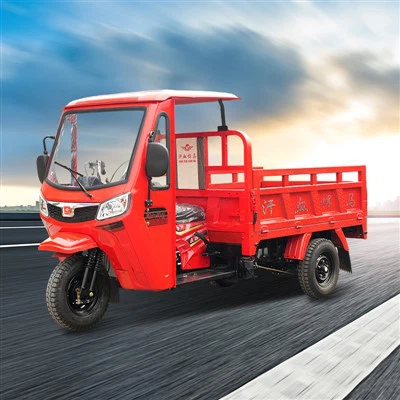
Jake’s story isn’t an anomaly. As a supplier of ECTs for urban and suburban delivery, construction, and small-scale logistics, I work with dozens of operators every month, and a common pain point isn’t mechanical failure—it’s avoidable battery damage from small, everyday choices that stack up over time. Unlike car batteries, which are designed for deep discharges, ECT batteries are often optimized for consistent, medium loads, but they’re still lithium-ion units, and they’re only as reliable as the care you give them.
Over the last seven years, as my team and I have fine-tuned our maintenance protocols based on feedback from hundreds of operators, data from our service department, and industry research, we’ve learned that protecting an ECT battery isn’t about following complicated rules—it’s about making intentional, science-backed choices that fit the way most people use their vehicles. Let’s break down what actually works, and what’s just a myth to ignore.
First, let’s talk about the number one mistake I see new operators make: letting the battery drain too low before charging. A lot of people operate under the old lead-acid battery rule of “run it almost flat before topping up,” but lithium-ion ECT batteries are built differently. Lithium-ion cells have a stable operating window: for most of our ECT units, that’s between 20% and 80% state of charge (SoC). When you drop below 20%, especially on a regular basis, the anode (the negative electrode) forms tiny, jagged lithium metal deposits called dendrites. These dendrites can puncture the separator between the anode and cathode, leading to internal short circuits, reduced capacity, or even permanent damage.
I’ve seen this firsthand with a delivery operator who ran his ECT 6 days a week, often pushing it to “almost empty” on his route because he thought charging at work would be inconvenient. After 18 months, his battery lost 45% of its capacity—we could see the dendrite buildup during a diagnostic check. The fix here is simple: keep a portable 12V charger or a spare battery (many of our customers opt for second batteries for long routes) at the job site, and plug in as soon as you dip below 25%. It takes just 10 minutes of charge to get out of the danger zone, and it doesn’t add much time to your shift. Another trick we suggest to our clients: program your in-dash display to alert you when SoC hits 25%—most modern ECTs have this feature, and it’s easy to set up.
Next, overcharging. I know what you’re thinking: “If I leave it plugged in overnight, it’ll be ready in the morning.” But lithium-ion batteries stop accepting a full charge once they hit 100% SoC, right? So why does overcharging matter? The answer is in the charging current and temperature. Most commercial ECT chargers are smart—they switch to a trickle charge once the battery is full—but they’re not perfect. If you charge in extreme heat (above 104°F / 40°C) or cold (below 32°F / 0°C), the trickle charge can still cause issues. When a battery is hot, the electrolyte inside becomes more volatile, and the constant small current can accelerate side reactions that break down the battery’s active materials. In cold, the chemical reactions slow down, and leftover charge can cause lithium plating—similar to dendrites, just triggered by temperature instead of deep discharge.
I had a farm equipment client last winter who kept his ECT parked outside overnight, plugged in, and didn’t realize his charger didn’t have a temperature cutoff. His battery lost 20% of its capacity in three months. The fix here is two-fold: don’t charge in extreme temperatures if you can avoid it, and use a charger with thermal protection. All the chargers we include with our ECTs have this feature, but if you’re using a third-party charger, double-check that it stops charging when the battery is too hot or too cold. If you have to charge outside in winter, cover the battery with a insulated blanket (we sell these as an optional add-on for exactly this reason) and charge it during the warmest part of the day, like mid-morning.
Then there’s the quiet killer: improper storage. A lot of operators only think about their batteries when they’re using them, but what about when they leave the ECT parked for a week or more—like during holiday breaks, or if you have a slow season? A common mistake here is storing a fully charged or fully drained battery. Both extremes are bad. If you store a battery at 100% SoC, the constant chemical reaction inside will slowly degrade the cells over time. If you store it at 0%, the cells can drop below their minimum safe voltage, leading to permanent capacity loss. Our recommendation for long-term storage is 40-50% SoC, at a temperature between 50°F and 77°F (10°C to 25°C). That’s the sweet spot where the battery’s self-discharge is minimized, and no side reactions are accelerated.
I had a construction client who stored his ECT for six weeks last summer after a big project wrapped up. He left it fully charged in a unshaded parking lot, where temperatures hit 95°F most days. When he pulled it back out, the battery couldn’t hold a charge for more than 8 miles—down from its original 22 miles. We tested it, and the heat and full charge during storage broke down 30% of the cathode material. Now, every time we deliver a new ECT, we walk customers through the storage checklist: top it up to half charge, park it in a cool, shaded spot, and if you’re storing it for more than three months, check the SoC every month and top it up to 50% if it drops below 30%.
Another area that’s often overlooked: weight management and driving habits specific to cargo ECTs. Unlike passenger e-bikes, cargo tricycles carry heavy loads—boxes of groceries, construction supplies, tool chests—every single day. If you overload your ECT beyond its rated capacity, you’re not just straining the motor and brakes; you’re forcing the battery to work much harder than it was designed to. When a battery discharges too quickly under high load, the cells can overheat, and the current flow can damage the electrodes. We see this a lot with operators who cram every last item onto their trike to avoid a second trip. Our ECTs have a payload rating printed on the frame and battery, and we tell customers to stick to that number—even if it means making an extra run. If you consistently overload, you’ll cut your battery life by half, no matter how good your charging habits are.
Driving habits also play a role. Sharp acceleration, constant hard braking, and navigating steep hills drain the battery faster and generate more heat. We recommend gradual acceleration (easy on the throttle) and using regenerative braking, which most modern ECTs have. Regenerative braking captures energy when you slow down, feeding it back into the battery instead of wasting it as heat. A customer who delivers office supplies switched to gentle acceleration and used regenerative braking as much as possible, and he saw his battery’s range stay consistent for two years, compared to another driver at the same company who had to replace his after 18 months.
Wait—what about battery maintenance that’s not charging-related? Like physical upkeep of the battery itself. The battery is usually mounted under the cargo bed, so it’s exposed to dirt, moisture, and impacts from curbs or rough terrain. Even a small crack in the battery casing can let in water, which causes corrosion on the terminals and internal components. We’ve had a customer who drove through a puddle of rainwater that pooled on a job site, and his battery’s terminals corroded so bad that it wouldn’t hold a charge. The fix here is simple: inspect the battery casing and terminals every month, clean any dirt or grime with a dry cloth, and if you see a crack, get it repaired or replaced right away. We offer free battery inspections for all our clients who buy ECTs from us, so that’s a good perk to take advantage of.
I know there’s a lot of info here, so let’s cut through the noise and list the five most important rules to protect your ECT battery, no matter what kind of operation you run:
- Keep your SoC between 20% and 80%—charge when you hit 25%, stop when you hit 80%.
- Never charge in temperatures above 104°F or below 32°F—use thermal protection for chargers if needed.
- Store your battery at 40-50% SoC, in a cool, shaded spot, for long periods.
- Stick to your ECT’s payload rating—don’t overload.
- Inspect the battery casing and terminals every month to prevent damage from dirt or water.

At the end of the day, the battery is the biggest investment in your ECT, right alongside the trike itself. I’ve seen operators follow these rules and get 5-7 years of battery life, compared to 2-3 years for those who skip the maintenance. For a small delivery business, that’s thousands of dollars saved on replacements, not to mention less downtime and more reliable service for your customers.
175cc Loading Tricycle If you’re in the market for an electric cargo tricycle that’s built with battery longevity in mind, or you have questions about your current battery’s care, we’d love to chat. We work with operators across the country, from local food delivery fleets to construction companies, and we tailor maintenance plans to fit your specific needs. Don’t wait until your battery dies—reach out to discuss how we can help you get the most out of your investment.
References
- Electric Power Research Institute. (2022). Lithium-Ion Battery Best Practices for Commercial Electric Vehicle Fleets. EPRI Publications.
- International Energy Agency. (2021). The Role of Battery Management Systems in Extending EV Battery Lifespan. IEA Transport Research.
- National Renewable Energy Laboratory. (2020). Effects of Temperature and Depth of Discharge on Lithium-Ion Battery Degradation. NREL Technical Report.
- Electric Cargo Vehicle Association. (2023). Maintenance Guidelines for Commercial Electric Cargo Tricycles. ECVA Industry Standards.
Chongqing Hanxuehanma Industry Co., Ltd.
As one of the most professional electric cargo tricycle manufacturers and suppliers in China, we offer a wide range of products with superior quality. Please feel free to wholesale advanced electric cargo tricycle made in China here from our factory. Customized orders are welcome.
Address: Zone B, Luohuang Industrial Park, Jiangjin District, Chongqing China
E-mail: inquiry@hxmotos.com
WebSite: https://www.hxmotos.com/
