If you’ve ever spent time at a children’s toy trade show, or sifted through product specifications for new playthings, you’ve probably run into link fittings—those versatile, interlocking components used in everything from industrial piping to construction rigging. For years, my team and I have supplied link fittings for heavy-duty applications: securing heavy machinery, creating temporary structural supports, and assembling modular conveyor systems for manufacturing plants. Recently, though, I’ve fielded a question more times than I can count from toy design engineers, production managers, and small-batch toy makers: Can link fittings actually be used in toy manufacturing? Link Fittings
The short answer is yes—but it’s not a simple, one-size-fits-all yes. Link fittings are designed with specific mechanical properties: high tensile strength, resistance to corrosion, and the ability to connect and disconnect quickly without specialized tools. These attributes are valuable in toy production, but they come with a set of constraints that make or break their suitability for children’s play. As someone who’s spent 12 years sourcing, testing, and refining link fittings for industrial and commercial use, I’ve dug into the intersection of my core product and the toy industry’s unique demands, and I want to share what I’ve learned.
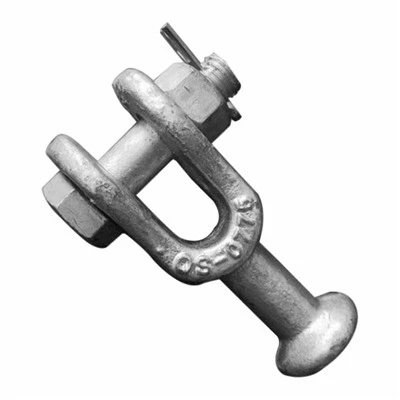
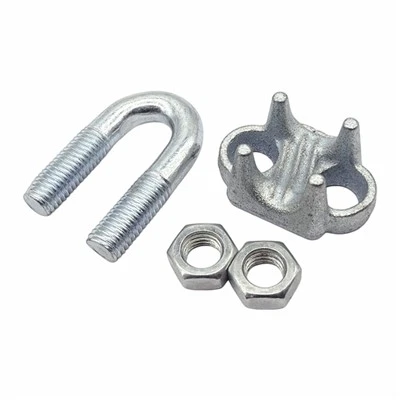
First, let’s break down what link fittings are, for context. Unlike generic plastic fasteners or standard hardware, link fittings (also called adjustable link connectors or chain links with connecting ends) typically consist of a metal core—steel, stainless steel, or sometimes zinc-alloy for light-duty use—paired with a locking mechanism (a spring clip, a threaded pin, or a quick-release clasp) that lets users attach or detach them in seconds. In industrial settings, they’re used to adjust the length of chains, secure temporary barriers, or create modular assemblies that can be reconfigured on the fly. That same adjustability is exactly what makes them appealing for toys: imagine a construction toy set where kids can swap out a 2-inch link for a 4-inch one to build a taller tower, or a playset where a removable link turns a swing set into a slide.
But here’s the first critical caveat: toy safety standards. Every region has strict regulations governing toy components, and link fittings don’t automatically qualify. In the United States, for example, the Consumer Product Safety Commission (CPSC) sets limits on small parts that can pose a choking hazard for children under 3 years old. A standard 1-inch metal link fitting? That’s right at the threshold for small-part classification, so unless it’s paired with a larger, child-resistant base, it’s off-limits for toddlers. For older children, the CPSC also requires any component to have rounded edges to prevent cuts, and materials that are non-toxic, non-leaching, and resistant to breakage. A raw steel link fitting, uncoated, could rust if exposed to saliva or water during play, leading to toxic exposure—so that’s a non-starter unless the fittings are properly sealed.
That’s not to say it’s impossible, though. Last year, a small toy startup approached me after seeing our zinc-alloy link fittings at a hardware trade show. They were designing a modular “Build & Play” set for kids ages 6 to 12, which lets users construct everything from bicycles to treehouses. We worked with them to test our standard 3-inch link fittings, adding a food-grade, lead-free powder coating to meet CPSC’s material requirements, rounding all sharp edges with a tumbling process, and adjusting the locking clasp so it couldn’t be opened with one hand (preventing younger kids from accidentally detaching parts during play). The result? The set passed third-party safety testing, and they’ve since ordered 50,000 units of our custom-coated link fittings for their first production run. That’s not an isolated case: a few months later, a manufacturer of remote-controlled toy trucks reached out for our stainless steel link fittings to use as adjustable suspension arms—they needed components strong enough to handle the stress of off-road play, and our fittings’ tensile strength (up to 800 pounds per square inch) held up far better than the plastic fasteners they’d been using.
Of course, not all link fittings are suited for toys, and that’s where a supplier’s expertise comes in. Let’s talk about the cases where link fittings fall flat. For example, toys aimed at children under 3? Almost no standard link fittings are appropriate here, because even a 2-inch link can fit into a child’s mouth, nose, or ear if it’s small enough. The CPSC’s small-part test (a clear acrylic cylinder 1.75 inches in diameter and 2.25 inches long) can fit many common link fittings, so any component used for toddlers has to be larger than that. That means you’re looking at heavy-duty, extra-large link fittings, which add cost and weight to a toy—an unviable option for most toddler toys, which prioritize portability and soft, lightweight materials.
Another misstep I’ve seen: using untested link fittings without adapting them for play. A few years back, a regional toy maker tried to use our standard steel link fittings for a backyard playset targeted at kids 4 to 8. They skipped the powder coating, and within two months, several fittings had rusted, leading to a minor skin irritation for a child who’d grabbed a wet link. That’s a avoidable mistake—one that comes from not understanding both the link fitting’s properties and the toy industry’s non-negotiable safety rules. For toy manufacturers, partnering with a supplier who knows both industrial link fittings and toy safety regulations is non-negotiable. Our team, for example, works with clients to test components against CPSC, EU’s EN 71, and other regional standards before they go into production, so they don’t waste time or money on parts that won’t pass inspection.
Beyond safety, there’s the functional side. Link fittings need to be durable enough for toy play, which is far more rough-and-tumble than industrial use. In industrial settings, link fittings are often exposed to controlled environments—factories with consistent temperature, low moisture, and minimal impact. Toys? They’re dropped, chewed on, left out in rain, and banged against walls. So a link fitting for toy use needs to have a higher fatigue resistance than the same part used for industrial piping. Our team engineers link fittings specifically for that: for example, adding a thicker core to the clasp mechanism to prevent it from breaking when a kid yanks on a toy’s arm, or using a softer coating that doesn’t chip when the toy is dropped from a 3-foot height. We’ve also adjusted the locking mechanism for toy use: in industrial settings, a quick-release clasp is designed to be opened easily by workers with gloves, but for toys, that same clasp can be too easy for a kid to open accidentally, so we add a small indent or a two-part clasp that requires two hands to disengage.
There’s also cost to consider. Link fittings are more expensive than generic plastic fasteners, which is a turnoff for budget toy lines. But for high-end, durable toys—think modular construction sets, outdoor playsets, or remote-controlled vehicles—the extra cost is worth it. A 2-inch plastic fastener might cost a few cents per unit, but it breaks after 10 uses; a zinc-alloy link fitting costs 50 cents per unit, but it lasts for thousands of plays. For parents looking for toys that stand up to rough play, that durability is a major selling point, and it translates to repeat purchases and positive reviews for manufacturers.
That’s why I’m seeing more and more toy manufacturers turning to link fittings. Last year, we supplied custom-coated link fittings for a line of “adventure play” toys targeted at kids 8 to 14, which let users build custom skateboards, scooters, and BMX bikes. The link fittings are used to adjust wheel positions and handlebar height, and they’ve gotten rave reviews from parents and kids alike for being easy to use and long-lasting. We also work with a maker of STEM toys, where link fittings are used to teach basic engineering concepts—kids learn how interlocking, adjustable links can create strong, flexible structures, a tangible lesson that’s hard to teach with static plastic pieces.
So, to circle back to the original question: Can link fittings be used in toy manufacturing? The answer is a qualified yes—when you choose the right type of link fitting, adapt it to meet toy safety standards, and work with a supplier who understands both industrial link fitting engineering and the unique demands of children’s play. It’s not a one-off adaptation; it’s a partnership between a toy maker’s design team and a link fitting supplier, where we collaborate to test, tweak, and refine components to fit both the product’s function and safety requirements.
Power Fittings As a supplier, I’ve seen firsthand how link fittings can elevate a toy line, turning a generic playset into a durable, interactive product that kids love and parents trust. But that success only happens when you skip the one-size-fits-all approach, prioritize safety and durability, and partner with someone who knows the ins and outs of both industries. If you’re a toy manufacturer, designer, or startup thinking about integrating link fittings into your next product line, don’t settle for generic industrial parts or untested custom components. Reach out, and let’s talk through how we can adapt our link fittings to meet your toy’s needs—from safety testing to custom coatings to tailored locking mechanisms. We’ve worked with small startups and large brands alike, and we know how to bridge the gap between industrial hardware and playful, safe, durable toy components.
References
- Consumer Product Safety Commission. (2023). Toy Safety Standards for Small Parts and Choking Hazards.
- European Committee for Standardization. (2022). EN 71-1: Safety of Toys – Mechanical and Physical Properties.
- ASTM International. (2021). Standard Test Methods for Tensile Strength of Metallic Link Fittings for Modular Assemblies.
Hebei Tongchuang Power Fittings Co., Ltd.
With abundant experience, we are one of the most professional link fittings manufacturers and suppliers in China. Please feel free to buy advanced link fittings for sale here from our factory. Good service and quality products are available.
Address: Houxiaohan Industrial Zone, Xingbieying Town, Hejian City, Hebei Province, P.R. China
E-mail: tongchuangepf@gmail.com
WebSite: https://www.tongchuangpower.com/
